It’s easy to assume vitamin deficiencies belong to the realm of fatigue and vague “low energy.” Yet vitamin D deficiency can be far more muscular than people expect. One common observation is that workouts feel oddly stubborn—weights don’t rise, stairs feel heavier, recovery feels sluggish. The deeper story is more fascinating: vitamin D participates in cellular signaling that helps muscles behave like well-tuned instruments, not dampened ones. When levels dip, the body’s neuromuscular performance can quietly unravel.
1) Thighs (Quadriceps): The “Power Plant” That Loses Its Spark
The quadriceps sit at the front of the thigh and are responsible for extension—standing up, climbing, sprinting, and stabilizing the knee. When vitamin D is insufficient, muscle fibers may struggle to contract efficiently. Short, repetitive movements can feel more demanding than usual, and long sessions can produce earlier burn.
There’s a subtle reason behind the fascination: quadriceps weakness isn’t always dramatic at first. It can appear as delayed strength gains, slightly uneven gait mechanics, or that feeling of “cement legs” after periods of inactivity. Vitamin D influences calcium handling and muscle function, so low levels can become a limiting factor—like trying to drive with a partially stuck throttle.
For many people, the quadriceps are also the first muscle group noticed because they’re heavily taxed in everyday life. If you repeatedly “feel it in the thighs” during training despite consistent effort, it may be worth investigating vitamin D status alongside sleep, nutrition, and training load.

2) Hamstrings: The Back-Chain That Feels Tight, Even Without Injury
Hamstrings are frequently described as “tight,” yet the sensation doesn’t always originate from stretching deficits alone. Vitamin D deficiency can contribute to muscle imbalance and altered recruitment patterns—meaning the body compensates. This compensation can masquerade as tightness and may increase the risk of strain, particularly when movement quality is already under strain.
Here’s the deeper nuance. Muscles don’t operate in isolation; they coordinate through complex neuromuscular pathways. When vitamin D is low, signal reliability can diminish. The hamstrings may then do too much work during hip hinge patterns, or they may fail to contribute when they should, creating a tug-of-war between stabilizers.
Common clues include persistent posterior-chain discomfort, reduced explosiveness during deadlifts or sprint starts, and hamstring discomfort that lingers longer than expected. The fascination lies in how “tight” can be a symptom of disrupted control rather than simple stiffness.

3) Glutes: The Hip Stabilizers That Seem to “Switch Off”
Gluteal muscles—especially the gluteus medius and maximus—stabilize the pelvis and coordinate hip mechanics. Vitamin D deficiency can influence strength, endurance, and motor control in ways that make glutes feel reluctant. Many people observe that hip thrusts stall, side-lying abductions feel weaker, or the pelvis seems less stable during single-leg work.
There’s an almost paradoxical pattern: glutes may feel “weak,” but the real issue can be suboptimal recruitment. The nervous system might not call on them efficiently, forcing surrounding muscles to compensate. Over time, this can contribute to movement quirks such as inward knee collapse or uneven hip rotation.
Long after a session ends, the soreness can also differ—less of a clean training ache and more of a diffuse heaviness. When vitamin D levels normalize, some individuals notice their training feels smoother, like a familiar motor returning to the correct rhythm.

4) Calves: The Leg Muscles That Signal Deficiency in Subtle Ways
Calves are often overlooked until they begin to protest. Tight Achilles tendons, calf cramps, or an inability to build consistent calf strength can be linked to broader muscular conditions—including vitamin D deficiency. Vitamin D supports muscle performance and function, and when it’s lacking, even smaller stabilizer muscles can show early signs of stress.
Calves also reflect how the body handles load and recovery. If you increase walking volume, start hill work, or begin jumping drills and your calves respond with disproportionate fatigue, vitamin D deficiency may be part of the picture. It doesn’t mean every ache originates from vitamin D. However, deficiencies can amplify other stressors by reducing muscular resilience.
The “deeper reason” fascination here is the quiet chain reaction. Lower efficiency in larger muscles can shift burden to the calves and feet—tiny shock absorbers trying to do the work of a whole system.

5) Upper Body Muscles (Deltoids & Rotator Cuff): The Hidden Territory
Vitamin D deficiency doesn’t only live in the legs. Upper-body muscles—particularly shoulder stabilizers like the deltoids and rotator cuff—can also be affected. Many people assume shoulder issues are purely mechanical: posture, desk work, or technique. Those can be true, but deficiency may contribute to reduced strength and slower recovery.
Observations include difficulty progressing on overhead presses, increased discomfort during external rotation, and a shoulder that feels “tired” quickly—even when training volume hasn’t changed much. The rotator cuff requires precise coordination; if cellular support falters, movement can become less smooth and more effortful.
This is where fascination deepens. The shoulder complex is a symphony of tendons, scapular stabilizers, and neuromuscular timing. Vitamin D deficiency can be one missing note—subtle enough to be overlooked, yet influential enough to be felt.

How to Recognize the Pattern: Beyond “Feeling Tired”
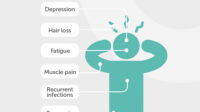
Vitamin D deficiency often reveals itself through a constellation rather than a single symptom. Common themes include muscle weakness, slower recovery, diffuse aches, and decreased performance. Some people also experience bone discomfort or a higher tendency toward injury during training blocks.
Consider deeper context too. Limited sun exposure, darker skin pigmentation (which reduces cutaneous vitamin D synthesis), higher body fat percentage (which can sequester vitamin D), and dietary gaps all increase risk. Lifestyle matters, but so does seasonality—winter months can be especially revealing.
Yet not everyone will connect the dots. Muscles can adapt, and compensation can mask weakness until training demands rise or hydration and sleep fall out of sync.
What to Do Next: Testing, Nutrition, and Smart Supplementation
Blood testing is the most reliable way to understand your vitamin D status. A clinician can interpret results and help determine a safe approach. Supplementation is often used, but dosing should be individualized—especially for people with medical conditions affecting absorption or calcium metabolism.
Diet can contribute, though it’s usually not the full solution. Fatty fish, fortified dairy alternatives, and certain fortified foods can help. But if sun exposure is low, food alone may not close the gap.
Finally, pair correction with training that respects recovery. If vitamin D deficiency has been suppressing muscular performance, a rushed return to high intensity can backfire. Gradual progression, adequate protein, consistent sleep, and mobility work can help your muscles relearn stability and strength.
The Takeaway: Muscles Don’t Lie—They Warn
The next time you notice stubborn leg weakness, unexplained tightness, or shoulder fatigue that doesn’t fit the training plan, consider the possibility of vitamin D deficiency. The affected muscle groups—quadriceps, hamstrings, glutes, calves, and upper-body stabilizers—reflect a whole-body participation in cellular support, not just a simple “energy” issue.
Vitamin D is not merely a nutrient. It’s a backstage regulator, influencing how muscles contract, recover, and coordinate. When levels are restored, many people experience a return to smoother movement—less resistance, more control, and strength that finally feels usable again.