Vitamin D is often introduced as a bone-and-skin nutrient, yet its influence extends into the immune landscape with a surprising elegance. Think of your innate immune system as a rapid-fire security crew: always on watch, quick to recognize danger, and skilled at mounting first responses before the adaptive immune system even warms up. In this primer, vitamin D emerges as a molecular “coordinator” that can tune how those early defenses behave—sometimes amplifying protection, sometimes preventing excessive inflammation.
Vitamin D at a Glance: From Sunlight to Immunological “Tuning”
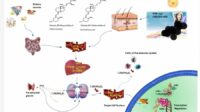
Before vitamin D can affect immunity, it must be synthesized, activated, and interpreted by cells. Sunlight enables the skin to produce vitamin D precursors, which travel through the bloodstream to the liver for initial conversion. The immune relevance appears when vitamin D undergoes further activation—primarily in the kidneys, but also locally in tissues that harbor immune cells. Once the active metabolite arrives, it binds to the vitamin D receptor (VDR), a transcriptional regulator that influences gene expression.
In innate immunity, this matters because early immune responses rely heavily on gene programs: the production of antimicrobial peptides, the calibration of inflammatory signaling, and the orchestration of cell-surface receptors that determine how aggressively a threat is handled. Vitamin D, by engaging VDR, can shift those programs toward a “balanced vigilance,” which is crucial when the immune system must respond without spiraling into collateral damage.
The Innate Immune System: The First Responders and Their Tools
The innate immune system includes barriers (like skin and mucosal linings), sentinel cells (such as dendritic cells and macrophages), and rapid responders (like neutrophils, natural killer cells, and innate lymphoid cells). These actors share a common philosophy: recognize patterns quickly, respond immediately, and contain threats while the more customized adaptive immune response is being prepared.
Pattern recognition receptors (PRRs) detect microbial signatures and danger signals. Upon engagement, innate cells unleash cytokines, chemokines, and enzymes, creating a localized environment that is inhospitable to invading pathogens. But innate immunity is a double-edged mechanism. Overactivation can lead to excessive inflammation, impaired tissue function, and inflammatory disorders.
Vitamin D enters as an upstream regulator, influencing how PRR-driven pathways translate into actual immune behavior. It does not “replace” innate immunity—it acts as a volume knob and timing controller.
Antimicrobial Peptides: Vitamin D’s Direct Antipathogen Influence
One of vitamin D’s most tangible connections to innate defenses involves antimicrobial peptides. Among them, cathelicidins and defensins stand out for their ability to disrupt microbial membranes, interfere with pathogen viability, and modulate immune signaling simultaneously.
When innate cells—especially macrophages and epithelial cells—receive vitamin D signals, they can enhance expression of these peptides. This is particularly relevant at body surfaces where microbes are most likely to breach the body, such as the respiratory tract and skin-adjacent tissues. The result is not just a stronger “attacker,” but a more coordinated defense that can also influence how immune cells communicate.
In many scenarios, antimicrobial peptides serve as both weapons and messengers, linking pathogen control with inflammatory calibration. This dual role helps explain why vitamin D deficiency can correlate with heightened susceptibility to certain infections.
Macrophages and Monocytes: The Phagocytic Calculators
Macrophages are long-lived sentinels that can phagocytose microbes, secrete cytokines, and guide inflammatory resolution. Monocytes are their circulating precursors, ready to transform into tissue-resident macrophages. Vitamin D can influence macrophage differentiation and function, nudging these cells toward a phenotype that can clear pathogens while limiting unnecessary inflammation.
In simplified terms: vitamin D can encourage microbial-killing capability and promote mechanisms that reduce inflammatory excess. This includes modulation of pathways that govern tumor necrosis factor-like signals and other pro-inflammatory mediators. The immune system’s goal is rarely “more inflammation always.” Rather, it seeks effective containment followed by timely termination.
When vitamin D signaling is adequate, macrophages are better positioned to perform that choreography—recognize, engulf, destroy, and then avoid turning the stage into wreckage.
Neutrophils and Rapid Inflammation: Calming the Storm Without Halting Defense
Neutrophils are swift responders, often arriving early and unleashing potent antimicrobial mechanisms. They can generate reactive oxygen species, release granule contents, and form structures that trap pathogens. Yet neutrophil activity must be tightly regulated because excessive or prolonged activation contributes to tissue injury.
Vitamin D may participate in that regulation by affecting inflammatory signaling and the expression of receptors that influence neutrophil recruitment and activation. Some research frameworks suggest vitamin D can reduce overzealous cytokine patterns, helping prevent a “runaway inflammatory loop.”
The ideal outcome resembles a well-run emergency drill: fast action when needed, then an orderly retreat once the threat is contained. Vitamin D appears to support that tempo.
Dendritic Cells and Antigen Presentation: Bridging Innate and Adaptive Immunity
Dendritic cells function as translators between the innate and adaptive systems. They capture antigens, process them, and present them to T cells, thereby shaping the trajectory of long-term immunity. While this seems like an adaptive story, it begins with innate decisions—how dendritic cells mature and what molecular signals they display.
Vitamin D can influence dendritic cell maturation and cytokine production. This can affect the balance between different immune T-cell responses by altering the “context” provided during antigen presentation. In effect, vitamin D acts like a translator’s editing toolkit: it can refine the tone of immune instructions rather than simply forwarding raw information.
This is a key reason vitamin D is discussed beyond infections, including its potential role in immune-mediated conditions where the immune system may overreact to harmless triggers.
Natural Killer Cells and Early Surveillance
Natural killer (NK) cells contribute to innate defense by surveilling for abnormal cells—such as those infected by viruses or displaying stress-related markers. Their function depends on an interplay between activating and inhibitory signals. Vitamin D’s influence on NK-cell activity has been proposed in several immunological contexts, though effects can vary across tissues and experimental conditions.
The conceptual takeaway is that vitamin D may modulate aspects of early surveillance and cytokine secretion. In a healthy setting, such modulation supports efficient pathogen control while preventing chronic inflammatory imbalance.
Even when vitamin D does not “turn on” NK cells in isolation, it may shape the surrounding cytokine environment that determines how NK responses unfold.
Barrier Immunity: Skin and Mucosa as Immune Frontlines
Innate immunity begins at the boundaries. Skin and mucosal surfaces are not passive walls; they are living immunological structures rich in epithelial cells, resident immune cells, and signaling molecules. Vitamin D can influence epithelial differentiation and the production of antimicrobial factors, strengthening barrier defenses.
At mucosal sites—particularly in the respiratory tract—this becomes especially relevant. The lining must remain capable of repelling microbes while tolerating harmless antigens. Vitamin D’s regulatory role may help maintain that functional equilibrium, supporting robust defense without excessive inflammation that can impair tissue integrity.
When barrier integrity falters, microbes gain traction, and innate immune responses may be forced to compensate. Adequate vitamin D status can reduce the need for such reactive overcompensation.
Inflammation Resolution: Preventing Immune Overreach
Effective innate immunity is not only about attacking pathogens. It is also about resolving inflammation. Chronic inflammation can distort tissue architecture and promote maladaptive immune signaling. Vitamin D is frequently discussed as a modulator that may help shift immune responses toward resolution pathways.
This includes effects on cytokine networks and immune cell behaviors that influence how long inflammatory signals persist. In practical terms, vitamin D may assist the immune system in switching from “fight mode” to “cleanup and recovery mode.”
In some contexts, this could reduce the risk of inflammatory tissue damage, while in others it may influence susceptibility to immune dysregulation. The thread connecting all scenarios is balance: enough immune activity to eliminate threats, not so much that the body becomes collateral damage.
Signs of Deficiency and Why They Matter for Innate Defense
Vitamin D deficiency can arise from limited sunlight exposure, darker skin pigmentation, older age, malabsorption syndromes, and certain dietary patterns. But the immunological concern is not merely “low levels” in a biochemical sense—it is how that absence reverberates through immune gene regulation.
When vitamin D signaling is insufficient, immune cells may produce less antimicrobial output and show altered inflammatory tuning. The result can be a heightened vulnerability to infections, and in some individuals, a predisposition toward inappropriate inflammatory responses.
Not every person with low vitamin D will experience dramatic effects. The immune system is redundant and resilient. Still, vitamin D deficiency can tip the odds, especially in environments where pathogen exposure is frequent or in individuals with existing inflammatory risk factors.
What Readers Can Expect: Evidence-Informed Takeaways and Practical Themes
When exploring vitamin D and innate immunity, readers will encounter several recurring content formats. First, there are mechanistic narratives that describe receptor signaling, antimicrobial peptide expression, and immune cell phenotype shifts. Second, there are diagram-driven summaries that map pathways from vitamin D activation to downstream immune outcomes. Third, there are clinical discussions that compare vitamin D status with infection frequency or inflammatory markers, often emphasizing variability between studies.
Another common thread is the careful distinction between correlation and causation. Many studies investigate associations, and interventions aim to determine whether replenishing vitamin D improves innate immune performance. Readers should expect nuanced conclusions: vitamin D may be helpful in deficient individuals and may have limited benefit when levels are already sufficient.
Finally, a professional primer will usually include “boundary conditions”—how factors like baseline vitamin D, supplementation dose, timing, vitamin D form, and individual health status can influence results. Innate immunity is context-dependent, and vitamin D’s effects are rarely one-size-fits-all.

Closing Perspective: Vitamin D as a Regulatory Axis for Early Protection
Vitamin D’s relationship with the innate immune system is best understood as regulatory rather than purely reactive. It influences how immune cells recognize threats, how they execute antimicrobial functions, and how they prevent inflammatory excess from turning into harm.
In the world of first responders—macrophages, neutrophils, dendritic cells, epithelial barriers, and NK cells—vitamin D plays the role of a molecular choreographer. It supports swift defense, promotes microbial clearance, and nudges immune responses toward resolution. That combination is what makes vitamin D such a compelling primer topic for anyone interested in immune function beyond the basics.