On quiet mornings, many people with psoriasis notice the skin’s mood can change as if it has its own weather system. One season brings relative calm; another seems to ignite tenderness, scaling, and the familiar sense of friction beneath the surface. In that search for steadier skin health, vitamin D frequently enters the conversation—yet it often arrives in two disguises: D2 and D3. The common observation is simple: “Some forms of vitamin D feel more effective.” The deeper fascination lies in why—biochemistry isn’t just a textbook story. It’s a lived pattern, written in receptors, pathways, and the way the body translates a supplement into cellular decisions.
Why vitamin D becomes a conversation starter for psoriasis
Psoriasis is not merely a cosmetic issue; it’s an immune-mediated condition where the skin’s renewal cycle accelerates, inflammatory signals amplify, and keratinocytes behave like they’re caught in a loop. Vitamin D is often discussed because it acts like a regulatory signal rather than a mere nutrient. It influences immune modulation, skin barrier integrity, and the balance between pro-inflammatory and anti-inflammatory messaging.
When people look at their routines, it’s easy to notice a correlation between sunlight exposure and symptom changes. That observation hints at a mechanism: sunlight helps the body produce vitamin D, and vitamin D then participates in immune calibration. The mind tends to follow the pattern; science helps explain it. Still, the lingering question remains: why do D2 and D3 differ, even though both ultimately serve vitamin D-related functions?
D2 vs D3: the “same family” that behaves differently
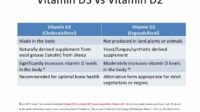
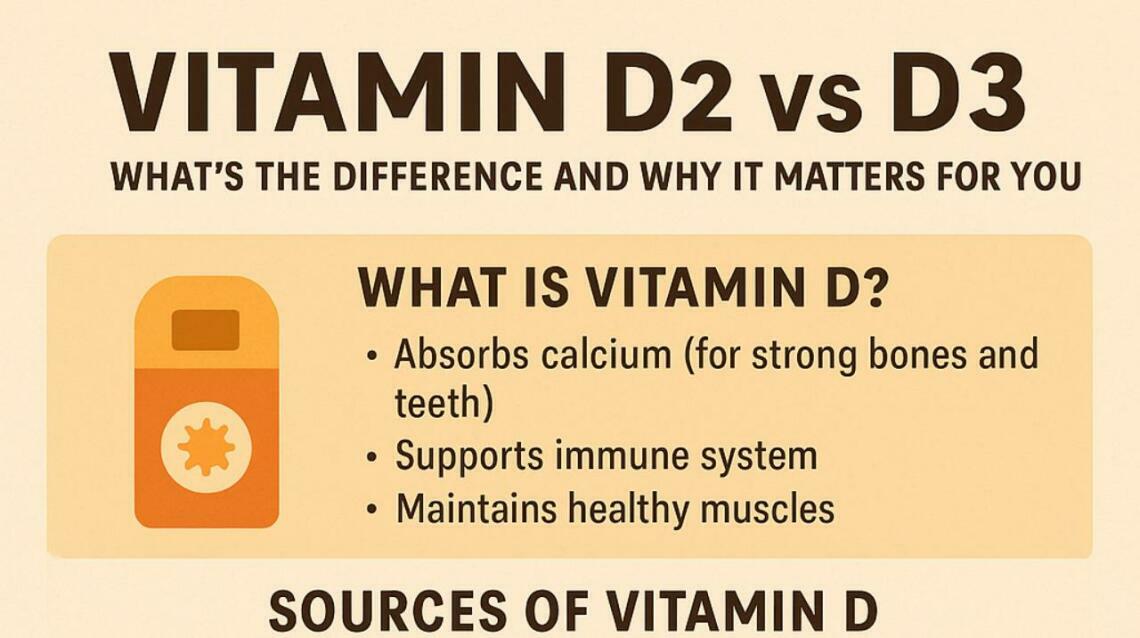
Vitamin D2 (ergocalciferol) and vitamin D3 (cholecalciferol) are siblings. They share the broad theme—supporting calcium metabolism and immune function—but they can diverge in how the body handles them. Think of them as two keys cut for the same lock. They may open the door, yet one key may turn more smoothly, linger longer in the tumbler, or fit the grooves more precisely.
Practically, D3 is typically associated with more reliable increases in circulating vitamin D levels in many real-world contexts. That doesn’t mean D2 is useless. It means the body’s translation process—absorption, transport, conversion, and receptor-level interactions—can yield different results depending on the starting form.
The absorption and conversion pathway: where “form” becomes fate
After ingestion, vitamin D doesn’t immediately become active. It travels through metabolic steps involving conversion in the liver and then further activation in other tissues. During that journey, differences between D2 and D3 may shape the eventual bioavailability of active forms.
D3 is often described as having a steadier trajectory toward raising and maintaining serum 25-hydroxyvitamin D, a key marker clinicians use when assessing vitamin D status. D2 can also raise levels, but the pattern may be less durable for some individuals. For someone living with psoriasis, durability matters: skin inflammation doesn’t respond to short-lived signals alone. It responds to consistent regulatory cues that help nudge the immune system away from overactivation.
Receptor-level effects: vitamin D as an immune “conductor”
Vitamin D exerts influence through the vitamin D receptor (VDR), which is present in many cell types, including immune cells and keratinocytes. When vitamin D signaling is appropriately calibrated, it can support differentiation of skin cells, encourage healthier barrier behavior, and modulate inflammatory cascades.
This is where fascination deepens. The immune system behaves like a network, not a switch. Psoriasis involves many pathways firing at once—cytokines, antigen presentation dynamics, and inflammatory signaling loops. Vitamin D’s role resembles that of a conductor attempting to smooth a chaotic orchestra. If D2 and D3 differ in how effectively they sustain the signaling environment, the “tone” of immune conversations may shift accordingly.
Skin barrier health: beyond “moisturize and wait”
Skin health in psoriasis is often described in terms of visible scale and redness, but the underlying problem includes barrier dysfunction and altered keratinocyte behavior. Vitamin D contributes to barrier-related processes, including regulation of antimicrobial peptides and support for skin homeostasis.
When vitamin D signaling is optimized, the skin may regain a more stable equilibrium. It’s not that vitamin D erases psoriasis overnight. Instead, it can reduce inflammatory pressure and help the skin’s renewal system behave less like a runaway train. In that context, D3 is frequently favored because many people experience more consistent vitamin D status, and that consistency may translate into steadier cellular regulation.
Common observation: “I feel better on D3” (and what might explain it)
Many people report that D3 seems to “stick” better—symptoms improve more noticeably, or energy and skin comfort feel more stable across weeks. That observation is common enough to feel like a pattern, yet it remains difficult to summarize in a single sentence because individuals differ in absorption, baseline vitamin D levels, sun exposure, dietary habits, body composition, and metabolism.
Still, deeper reasons often hide behind the anecdote. D3 may achieve higher or more sustained circulating levels, which can mean more reliable activation of vitamin D-dependent pathways. A longer-lasting vitamin D signal can influence gene expression and immune modulation over time. In psoriasis, timing and consistency often matter just as much as the magnitude of a change.
How to think about dosing: consistency over drama
Vitamin D decisions should be personal and ideally guided by lab measurements. A clinician may check baseline 25(OH)D levels and tailor dosing based on deficiency status and individual risk factors. For skin health, the goal is not just a number; it’s biochemical stability that supports the immune and skin environment.
Dosing schedules can be daily or intermittent, and the choice may affect how vitamin D levels fluctuate. If someone switches between forms without monitoring, it can be difficult to interpret results. A steady approach—whether with D3 or D2—paired with appropriate monitoring can reduce guesswork.
Safety considerations: avoid the trap of “more is better”
Vitamin D is fat-soluble, meaning it can accumulate. Excess intake can lead to hypercalcemia and related complications. That’s not a scare tactic; it’s a reminder that supplementation should be deliberate. People with psoriasis often explore multiple therapies—topicals, biologics, systemic medications—so vitamin D intake should be coordinated to prevent accidental overloading.
Watch for changes in calcium-related symptoms such as unusual thirst, frequent urination, constipation, or persistent fatigue. More importantly, rely on lab tests rather than intuition alone. Vitamin D’s job is to orchestrate immune balance; it should never become the uncontrolled variable.
Who might benefit from D3: practical scenarios
While every body is unique, D3 is often chosen when someone needs dependable maintenance of vitamin D status. It may be especially relevant for individuals with limited sun exposure, higher skin photoprotection habits, malabsorption concerns, or those who previously noticed more stable results with D3.
That said, D2 can still be a valid option, particularly in settings where it’s preferred, available, or recommended. The key is matching the form to the person and then checking outcomes with labs and symptom trends.
Combining vitamin D with psoriasis skin care: the “ecosystem” mindset
Vitamin D is not a standalone spell. Psoriasis skin care works best as an ecosystem: gentle cleansing, consistent moisturization, strategic use of keratolytics or topical anti-inflammatory agents, and sun management when appropriate. Vitamin D supports the underlying immune regulation, but it doesn’t replace topical care that directly addresses scale, cracking, and barrier dryness.
Some people also pair vitamin D supplementation with lifestyle shifts—reducing smoking, improving weight management, and controlling stress rhythms—because psoriasis is sensitive to systemic inflammation. In that sense, vitamin D is one piece of a broader constitutional picture.
Choosing between D3 and D2: a decision framework
If the central goal is psoriasis and long-term skin comfort, consider a framework: start with baseline vitamin D status, choose a form that supports more durable levels for your body, and monitor both lab markers and skin response over time. Instead of focusing on a “winner” in a vacuum, focus on the compatibility between supplement form and your physiology.
Many people gravitate toward D3 because of the practical way it tends to maintain vitamin D levels. Yet the most effective choice is the one that aligns with your results, tolerability, and clinician guidance.
Closing reflection: vitamin D as a steadying force
Psoriasis can make the body feel unpredictable, as if the skin is constantly negotiating with inflammation. In that landscape, vitamin D—especially D3 for many people—can act like a steadying influence, helping immune signals and skin processes move toward balance. The fascination isn’t only that one form might “work better.” It’s that small biochemical differences can echo into the visible texture of everyday life.
Choose deliberately, measure thoughtfully, and let your body’s response be part of the story. Over time, the skin often teaches through patterns—less itch, fewer flare-ups, smoother transitions—revealing what “better” truly means for you.