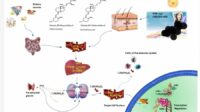
Have you ever wondered how your immune system decides which antibodies to send out—and how it knows when to press the accelerator? Picture vitamin D as a quiet conductor in the background of an orchestra: you might not notice the music until it’s missing. But what happens if that conductor is under-rehearsed? Here’s a playful provocation to start: could low vitamin D be like sending invitations to a party with the wrong address? The twist is that antibody production is not a simple on/off switch. It’s a choreography of signals, checkpoints, and timing. And vitamin D may influence that choreography in more ways than most people expect.
Why Antibodies Need More Than “Immune Muscles”
Antibodies are more than sticky proteins that latch onto invaders. They’re the end-product of a complex immunological arc, beginning with antigen recognition and culminating in clonal expansion and affinity maturation. In other words, your body doesn’t just build antibodies—it builds better antibodies over time.
First, immune cells must receive the right cues to activate. Then they must proliferate efficiently. Finally, they must refine antibody specificity so that the response becomes both targeted and durable. Even small disruptions in signaling can tip the balance toward weak responses or altered immunological memory.
Vitamin D enters this narrative as a modulator—an influence on how immune cells behave, rather than a sole ingredient that “creates antibodies” by itself. Think of it as tuning the instrument, not composing the symphony.
Vitamin D’s Immunological Role: The “Signal Modulator”
Vitamin D functions through its active form, primarily calcitriol (1,25-dihydroxyvitamin D). Immune cells—such as B cells and T cells—can respond to vitamin D signaling. When that signaling is properly engaged, it may help orchestrate immune responses that are proportionate and well-regulated.
To understand why this matters, consider that antibody production involves a partnership between B cells (the antibody factories) and T helper cells (the administrative planners and quality-control supervisors). Vitamin D appears to influence pathways that affect cytokine patterns and activation thresholds, thereby shaping how vigorously the immune system proceeds.
Some people assume immunity is purely energetic: more immune activity equals more antibodies. Yet the body often prefers precision over volume. Too much inflammation can backfire, while too little activation can stall the antibody response.
The B-Cell Connection: Building Antibody Factories
B cells are central to humoral immunity. Once activated, they differentiate into plasma cells—specialized antibody-secreting cells—and memory B cells. Vitamin D may affect how easily B cells become activated, how they differentiate, and how they communicate with other immune cells.
In practical terms, a balanced vitamin D status could support an orderly pipeline: better initiation, improved differentiation, and a more coherent antibody output. Conversely, insufficient vitamin D might contribute to a suboptimal environment, where B cells receive mixed or weaker signals.
Here’s the potential challenge: you might still mount antibodies after an infection or vaccination, but the “quality metrics” could be less favorable—such as the durability of responses or the refinement of antibody specificity.
T Helper Cells and Cytokine Tone: The Quality Control Crew
Even if B cells are ready to build antibodies, they often rely on cytokine guidance from T helper cells. Cytokines act like language between immune actors. They influence whether the immune system leans toward an inflammatory mode, a regulatory mode, or a balanced middle path.
Vitamin D is frequently discussed in relation to immune regulation and cytokine modulation. This doesn’t mean it suppresses immunity. Instead, it may help prevent immune overreaction while maintaining adequate functional readiness.
Imagine antibody production as a courtroom: B cells are the lawyers collecting evidence; T cells are the judges and procedural officers. Vitamin D may help ensure the courtroom doesn’t become chaotic—so that the antibody “verdicts” are accurate and consistent.
Antibody Quantity vs. Antibody Effectiveness
One of the most important nuances is that “more antibodies” is not always the same as “better antibodies.” Antibody effectiveness depends on multiple factors: binding affinity, class/subclass distribution, neutralizing capacity, and the ability to persist long enough to provide protection.
Vitamin D may be relevant to this effectiveness landscape by shaping immune maturation processes. For instance, affinity maturation—the gradual improvement of antibody binding strength—requires coordinated signaling and cellular interactions. If those interactions are altered, the resulting antibodies may be less optimized.
This is where the earlier provocation returns. If vitamin D is low, the body might still manufacture antibodies, but they may arrive with a slightly flawed routing system—less precise, less durable, or less effective against the intended target.
Vaccination, Memory, and the Timing Problem
Vaccines aim to train the immune system to produce antibodies and memory cells. But training quality depends on the host’s immunological environment at the time of immune activation. Vitamin D status could, in theory, influence how well immune responses develop after vaccination.
There’s also a timing issue. Antibody responses evolve over days and weeks. Vitamin D signaling is not necessarily instantaneous; it may contribute to a supportive backdrop that allows the immune process to run smoothly.
So the challenge isn’t only whether vitamin D is present—it’s whether it’s present at the right stage when immune decisions are being made.
Allergies and Autoimmunity: When Antibodies Get Confusing
Antibody production isn’t confined to protective immunity. Some immune conditions involve antibodies that contribute to pathology. For example, certain allergic processes involve immunoglobulin-driven mechanisms that can intensify inflammatory symptoms.
Vitamin D is often discussed in the context of immune balance, including the interplay between protective responses and dysregulated inflammation. In some scenarios, the goal is not merely producing antibodies but producing the “right kind” of immune response.
In autoimmune contexts, the immune system mistakenly targets self. Antibody dynamics can be part of the story. While vitamin D is not a standalone solution, its potential influence on immune regulation may be relevant to how these processes unfold.
Deficiency, Risk Factors, and the Real-World Constraints
Low vitamin D is common, largely due to limited sun exposure, higher skin pigmentation in some populations, northern latitudes, indoor lifestyles, and certain dietary patterns. Also, absorption problems—such as some gastrointestinal disorders—can reduce vitamin D availability.
A key practical point: vitamin D status is often assessed using blood measurement of 25-hydroxyvitamin D. That gives a more reliable snapshot than dietary intake estimates alone.
If vitamin D is low, the immune system may be operating with less favorable signaling conditions—like running complex machinery with slightly under-calibrated sensors. Antibody responses might still occur, but the robustness and refinement could be affected.
How to Think About Supplementation Without Guessing
Supplementation can help when vitamin D is insufficient, but it’s best approached thoughtfully. Over-supplementation can also cause problems, so targeted adjustment guided by measurement is usually preferable to blind dosing.
Another nuance is that vitamin D doesn’t act in isolation. Immune function depends on nutrition as a whole—protein sufficiency, micronutrients like zinc and vitamin A, adequate energy balance, and healthy sleep patterns all matter.
Vitamin D may be a meaningful lever, but it’s one lever in a multi-control panel. Pulling it without attending to the rest may produce disappointing results—or unintended imbalance.
What You Can Do Now: A Balanced Immune Strategy
If the idea of vitamin D influencing antibody production feels both exciting and unsettling, you’re not alone. It highlights a common theme in health: your immune system is influenced by everyday fundamentals, not only dramatic “events.”
Consider practical steps: check vitamin D status if risk factors exist, maintain reasonable safe sun exposure when appropriate, support a nutrient-dense diet, and consult clinicians before making substantial supplement changes. These actions won’t guarantee immunity, but they can create a more supportive biological environment for antibody responses.
Ultimately, the immune system’s story is one of coordination. Vitamin D may act like a gentle traffic coordinator on a busy immunological highway—helping cells arrive at the right destination, at the right time, with the right instructions.

So, can low vitamin D make antibody production stumble? The honest answer is that immunity is multicausal, but vitamin D is increasingly recognized as a meaningful modulator. When it’s insufficient, the immune system may lack a key regulatory signal—turning precision into guesswork. And in the world of antibodies, guesswork can be expensive.