Have you ever stared at your vitamin D blood test result and thought, “Wait… did my body really do that?” Imagine the lab numbers as a weather report—sometimes they’re accurate, sometimes they’re simply reflecting the atmosphere around the measurement. Now here’s the playful challenge: what if your vitamin D is being misrepresented—not because of your sun-soaked skin or your supplement habits, but because the test itself (or the context around it) quietly nudged the reading in the wrong direction?
First, a quick reality check: vitamin D isn’t a single simple thing
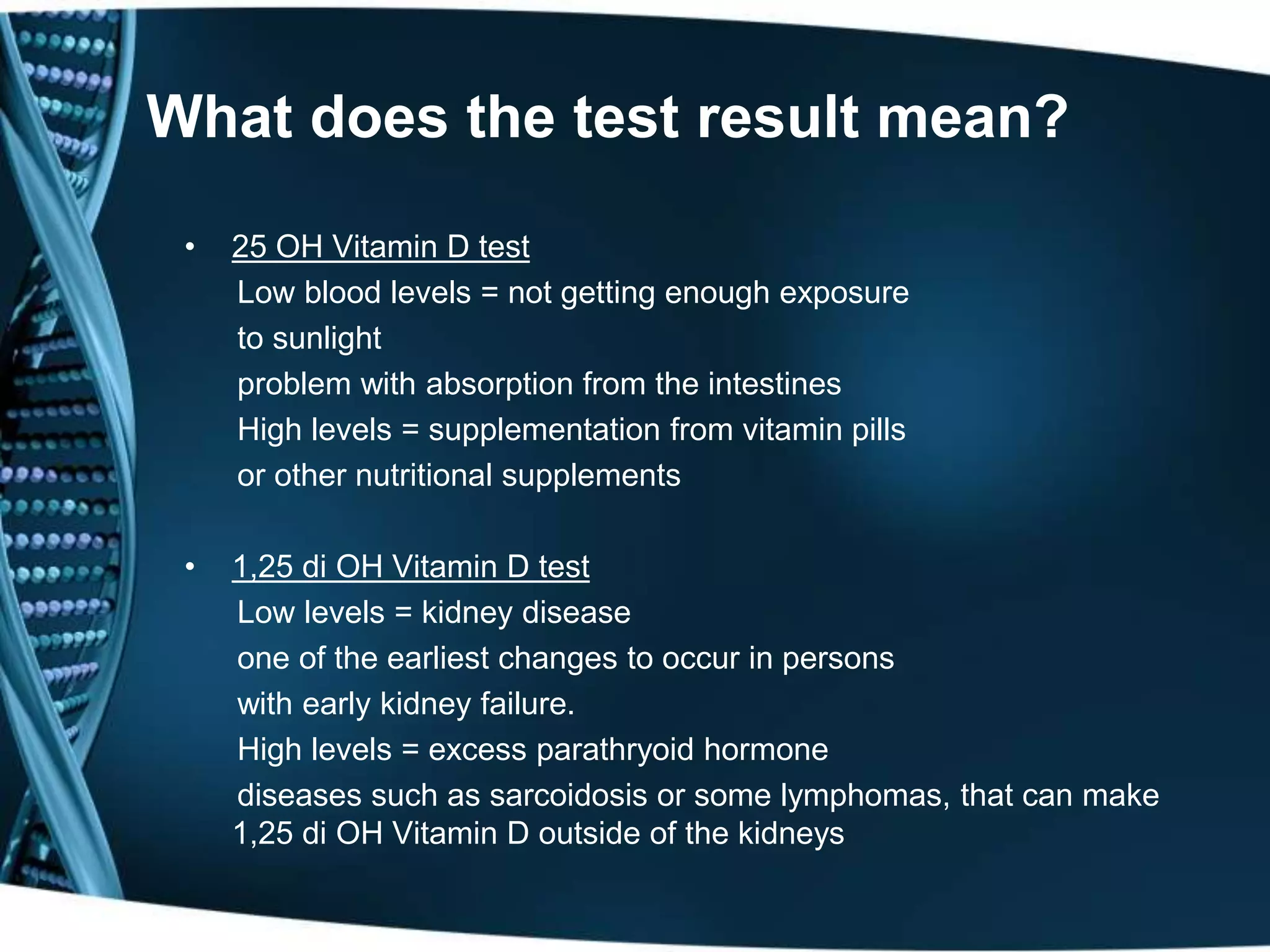
Vitamin D in your bloodstream is mostly transported and measured as specific metabolites. Many tests estimate “25-hydroxyvitamin D” (often written as 25(OH)D). That name sounds tidy, but in practice it’s a bit like trying to summarize a symphony by counting only one instrument. Your result may reflect a mix influenced by absorption, conversion, storage in fat, and binding proteins.
This matters because “vitamin D status” is not always equivalent to “vitamin D availability.” The same measured concentration can feel different depending on how much is bound, how much is usable, and how rapidly tissues are drawing from reserves.
Measurement variability: the lab’s method can tilt the number
Not all vitamin D assays are created equal. Different laboratories may use distinct platforms—immunoassays, chromatography-based methods, and other analytical techniques. Even with the same blood sample, methods can produce slightly different outcomes. The reason is technical, but the effect is personal: your result can swing toward “low” or “high” depending on the analytic chemistry.
Think of it as reading a thermostat through a tinted window. The room hasn’t changed; the lens has. That’s why repeat testing at the same lab is often wiser than switching labs between draws—unless your clinician explicitly interprets the differences.
Timing and dosing: supplements can create misleading “snapshot” effects
Vitamin D levels behave like a bouncing ball. They rise after supplementation, then drift with time. If the blood draw occurs soon after a dose—especially high-dose vitamin D2 or vitamin D3—the result may appear falsely “high” relative to your baseline. Conversely, testing during a trough can make levels look falsely “low.”
Short-term spikes can happen with loading regimens, intermittent boluses, or inconsistent adherence. Even seasonal changes can act like a timer that’s already set the stage for the next test.
In plain terms: the test is a snapshot, not a diary.
Vitamin D form matters: D2 versus D3 can behave differently
Vitamin D comes in different forms. Many supplements use vitamin D2 (ergocalciferol) or vitamin D3 (cholecalciferol). These forms can differ in how they’re metabolized and how the assays detect them. Some testing approaches may respond differently to D2-derived metabolites compared with D3-derived metabolites, producing a reading that feels unexpectedly “too high” or “too low” for your true physiological status.
Also, people sometimes assume “vitamin D” is a single standardized entity, but the body processes these forms through pathways that may diverge. That biological fork in the road can change both the kinetics and the interpretation.
Binding protein interference: your transport network is not neutral
Vitamin D circulates bound to proteins—especially vitamin D–binding protein (DBP). When DBP levels change, the proportion of bound versus free vitamin D metabolites shifts. Standard blood tests typically measure total 25(OH)D, which includes both bound and unbound fractions.
If DBP is altered by pregnancy, estrogen therapy, liver disease, or certain genetic variants, the “total” value can misrepresent the amount of vitamin D that is effectively available to tissues. The result may read high even when utilization is impaired, or low even when reserves are buffered by binding dynamics.
Obesity and body composition: sequestration can disguise deficiency
Vitamin D is fat-soluble, meaning adipose tissue can serve as a storage vault. In individuals with higher body fat, vitamin D may be sequestered away from circulation, leading to lower measured blood levels. That can look like a straightforward deficiency, but it can also complicate dosing and interpretation.
The challenge is that “low in the blood” doesn’t always mean “low in the body,” at least not in the same way. Still, blood levels are what most clinicians use to guide therapy, so the clinical conclusion may be appropriately cautious even if the mechanism is more nuanced.
Absorption issues: gut problems can throttle the upstream signal
Even if you take vitamin D consistently, absorption determines what enters the bloodstream. Conditions that impair dietary fat absorption—such as celiac disease, inflammatory bowel disease, pancreatic insufficiency, bariatric surgery, or cholestatic liver disorders—can reduce uptake of fat-soluble vitamins.
In these scenarios, your test might look falsely low because the pipeline is clogged. The vitamin might be present in your supplement routine, but it never effectively reaches the circulation.
Liver and kidney metabolism: your conversion factories may be sluggish
The liver and kidneys work as metabolic artisans. The liver converts vitamin D into 25(OH)D, and the kidneys further process it. If liver function is impaired, formation of measurable 25(OH)D may be reduced. Kidney disease can alter downstream active metabolites and disrupt the overall vitamin D axis.
Even when 25(OH)D appears “normal,” the downstream bioactivity may be abnormal. That mismatch can feel like a contradiction, but it’s more like reading the invoice without checking the delivery.
Medication and endocrine interactions: common drugs can nudge results
Certain medications can increase metabolism or alter vitamin D status. Anticonvulsants, glucocorticoids, some HIV treatments, and others can reduce vitamin D levels over time. Hormonal therapies can also raise DBP and shift total 25(OH)D readings.
Thyroid and parathyroid signaling can also influence calcium-phosphate balance and the way clinicians interpret your vitamin D context. The blood test becomes part of a larger constellation rather than an isolated verdict.
Acute illness, inflammation, and seasonal variables: the body changes the rules
Your immune system and metabolic state can affect vitamin D metabolism and related biomarkers. Acute illness may alter binding proteins, fluid balance, and hepatic processing. Meanwhile, seasonality changes sunlight exposure, which gradually modifies baseline levels.
If you’re tested right after travel, during a winter slump, or after a period of limited sun exposure, the value can reflect context-driven biology rather than your “true average.”
Sample handling and pre-analytical errors: small mistakes, big consequences
Pre-analytical factors—things that happen before the lab runs the assay—can influence results. Improper storage, delays in processing, temperature fluctuations, hemolysis, or collection errors can introduce noise. While modern lab practices reduce these risks, no system is perfectly immune to occasional drift.
This is one reason why clinicians sometimes repeat tests when results don’t align with symptoms, risk factors, or treatment response. When reality and numbers diverge, verifying the sampling can be an elegant first step.
Interpreting “high” and “low” safely: context prevents the wrong conclusion
A vitamin D result that’s “high” can occur from recent supplementation or assay-related differences between D2 and D3. A result that’s “low” can be driven by absorption issues, altered binding proteins, body composition effects, or timing misalignment. Either way, interpreting vitamin D correctly means asking: How does this value fit with your timeline and your physiology?
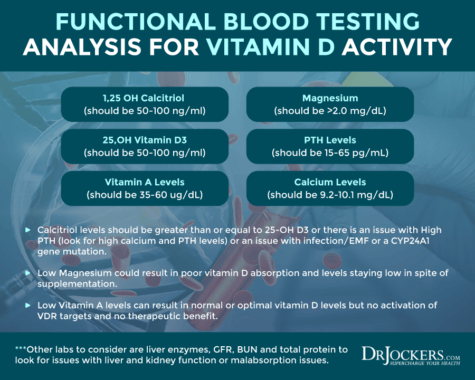
Symptoms also matter, but symptoms alone aren’t diagnostic. Blood chemistry, kidney function, calcium levels, parathyroid hormone, and medication history often complete the picture.
When to consider retesting or deeper evaluation
If your vitamin D result is surprising—especially if it contradicts supplement use, diet, sun exposure, or prior trends—retesting can clarify whether the number was a transient artifact. Repeating the test at the same lab, reviewing supplement timing before the draw, and discussing medication factors can reduce interpretive fog.
Sometimes clinicians consider additional markers, such as calcium, phosphate, parathyroid hormone, or even vitamin D metabolites in select situations. The goal is not to chase the exact decimal point—it’s to confirm the biological story behind it.
Closing thought: treat your number like a clue, not a verdict
False “highs” and “lows” can emerge from testing method variability, timing of supplementation, vitamin D form differences, binding protein shifts, absorption barriers, metabolic organ function, medication effects, seasonal context, and even sample handling. In other words, the vitamin D blood test is powerful—but it’s not omniscient.
So the next time you see that result, keep the playful question alive: Is it your vitamin D, or is it your measurement timeline? With the right context, the clue becomes clearer, and the body’s story becomes less mysterious.