Imagine your gut as a busy railway station. Trains arrive with nutrients, some passengers sprint through swiftly, and others linger when the platform signals are misaligned. Now picture the station’s wiring—micronutrient absorption, intestinal motility, immune signaling—getting slightly scrambled. That’s where the question of “D3 vs D2” stops being a trivia contest and starts feeling like a practical puzzle: which vitamin D route actually helps when malabsorption is on the schedule? And here’s the twist—there’s a potential challenge baked into the problem. With malabsorption, even a “perfect” supplement plan can become a theatrical prop if absorption pathways are compromised. So the real test isn’t just potency—it’s accessibility.
First, what D3 and D2 really are (and why it matters in a distressed gut)
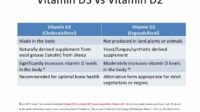
Vitamin D comes mainly in two dietary forms that people talk about constantly: D3 (cholecalciferol) and D2 (ergocalciferol). Both can support overall vitamin D status, but they aren’t identical in origin, metabolism, or how the body tends to handle them. D3 is commonly associated with endogenous synthesis—your skin making it after sunlight exposure—so it often feels intuitively “closer to home.” D2, by contrast, is more common in certain plant-based sources and fortified foods.
In gut-health contexts, “how your gut treats a compound” is the silent mediator. If the intestinal environment is inflamed or absorption is inefficient, the differences between D3 and D2 may become less about chemical trivia and more about real-world bioavailability. Some forms may navigate the gut’s biochemical landscape with slightly different friction, especially when bile flow, mucosal integrity, and transporters aren’t functioning at optimal levels.
Here’s a playful thought: if your intestines are a customs checkpoint, D3 and D2 may not go through the same lane. One might clear faster; the other might get flagged for extra inspection.

Malabsorption isn’t one disease—it’s a whole ecosystem of dysfunctions
Malabsorption is an umbrella with many weather patterns underneath. Celiac disease, inflammatory bowel disease, pancreatic insufficiency, small intestinal bacterial overgrowth, bile acid disorders, chronic diarrhea, and certain bariatric surgeries can all disrupt nutrient uptake. The gut’s ability to absorb fat-soluble vitamins like vitamin D depends on several coordinated systems: adequate bile acids for emulsification, functional enterocytes for uptake, and an intact mucosal surface.
Now for the challenge: vitamin D can be “present” in the bloodstream later, but it may not be “present” at the right time or in the right concentrations if absorption is inconsistent. In these scenarios, choosing between D3 and D2 might matter less than the delivery method, the dose timing, and whether the underlying malabsorption driver is being addressed.
Still, the form of vitamin D can influence outcomes. When absorption is compromised, small differences in bioavailability can become clinically meaningful. In other words, the same dose can produce different blood level responses depending on the gut’s health and the form administered.
Bioavailability: the gut’s “delivery physics” for vitamin D
Bioavailability is where D3 vs D2 becomes more than preference. Vitamin D must be absorbed through the intestines, incorporated into transport pathways, and then converted in the body to its active metabolites. In a malabsorption setting, each step is vulnerable. If absorption is reduced, the bloodstream may receive less vitamin D overall.
Some people find that D3 tends to raise and maintain vitamin D status more effectively than D2 in real-world settings, though individual responses vary. The reason is likely multifactorial: absorption efficiency, conversion kinetics, and differences in how each form binds and circulates. D3 is sometimes described as having greater “staying power,” but the more useful way to think about it is this: when the gut is unreliable, the supplement should be dependable.
However, it’s important not to oversimplify. If someone has severe fat malabsorption, any oral form may underperform without addressing the absorption barrier (for example, ensuring adequate bile support or using specialized formulations). In that situation, the form is relevant, but it’s not the only lever.
Conversion pathways: how the body activates vitamin D when the system is under strain
Vitamin D isn’t “turn-key” at the first moment it enters the body. It undergoes conversions—first in the liver to 25-hydroxyvitamin D, then in the kidneys and other tissues to the active forms that interact with vitamin D receptors. Inflammatory states and metabolic stress can complicate this timeline. Sometimes, even if blood levels rise, activation and receptor activity may not fully translate into clinical improvement.
So how does D3 vs D2 fit? D3 and D2 have different behavior in these conversion steps. That means that malabsorption isn’t only a matter of getting vitamin D into the bloodstream; it’s also about how efficiently the downstream system transforms it. If your gut is struggling, you want a starting material that the body can process reliably.
Try this metaphor: D2 and D3 are different raw materials delivered to a factory with broken machinery. Even if both arrive, one material might be easier to refine when the assembly line is operating at reduced capacity.
Practical dosing considerations: consistency beats heroics
For many people, dosing strategy matters as much as the form. A single large bolus may be tempting—especially when symptoms feel urgent. Yet with malabsorption, consistency often outperforms intensity. Splitting doses can reduce peaks and troughs, potentially improving the stability of blood levels.
Also consider timing with meals. Since vitamin D is fat-soluble, taking it with dietary fat can improve absorption for some individuals. But here’s a caution: people with particular malabsorption syndromes may have altered fat digestion. In such cases, “take it with a fatty meal” may not be universally helpful. Sometimes the gut needs supportive measures first.
So the challenge becomes a logistics puzzle: which meal, which dose schedule, and which formulation work best with your digestive architecture?
Signs your gut might be sabotaging vitamin D uptake
Malabsorption can be stealthy. Some clues include persistent gastrointestinal symptoms, unintended weight changes, chronic diarrhea, bloating, or a history of conditions that commonly impair absorption. In the vitamin D domain, indirect indicators might include musculoskeletal discomfort, fatigue, or a documented pattern of low vitamin D levels despite supplementation.
Still, symptoms aren’t proof. The most dependable approach is lab monitoring—25-hydroxyvitamin D levels—along with context. If vitamin D remains stubbornly low, a clinician may evaluate calcium, parathyroid hormone, magnesium, and markers that clarify the malabsorption mechanism. In gut-focused care, it’s often the pattern that reveals the truth.
And don’t forget this: sometimes the body needs more than vitamin D. Magnesium, for example, plays a supporting role in vitamin D metabolism, and low magnesium can make correction feel oddly resistant.
When D2 might still make sense (and when D3 may be the more intuitive option)
D2 isn’t inherently “bad.” For certain individuals—depending on dietary preference, access, formulation, and response—D2 can still raise vitamin D levels. Some people may respond adequately to D2 with consistent monitoring. If the goal is simply to correct deficiency, either form might be workable in mild or moderate situations.
But in malabsorption, the margin for error shrinks. If absorption is impaired, the choice of form can influence how efficiently vitamin D becomes available. Many clinicians and patients lean toward D3 as the more reliable option for stability, particularly when repeated lab tests show partial correction on D2 or minimal response.
Still, the best plan is individualized. What matters most is the actual blood response and how it aligns with symptom improvement and overall mineral balance.
Delivery forms: drops, tablets, and the question of “how it travels through the gut”
Beyond the D3 vs D2 debate, formulation is a quiet heavyweight. Liquid drops, softgels, fortified preparations, and specialized delivery systems can differ in how they’re emulsified and absorbed. For individuals with compromised digestion of fats, a formulation that improves solubility or uses alternative carriers may be beneficial.
This is where the gut-health narrative becomes tactical. A person can buy the “right” vitamin and still underperform if the delivery method doesn’t align with their digestive capacity. For example, in certain gastrointestinal conditions, absorption patterns are unpredictable. Therefore, a clinician might recommend a formulation designed to bypass common bottlenecks.
Here’s another playful question: what if vitamin D isn’t the problem—what if it’s the suitcase it’s delivered in?
A cohesive strategy: combine choice, monitoring, and gut-focused intervention
Gut health improvements rarely come from a single lever. Addressing malabsorption typically involves treating the underlying cause—whether inflammation, microbiome imbalance, pancreatic enzyme support, bile issues, or structural changes post-surgery. As the gut environment stabilizes, absorption may improve, and vitamin D supplementation becomes more predictable.
In the meantime, choosing between D3 and D2 should be guided by actual outcomes: follow-up 25-hydroxyvitamin D measurements, assessment of calcium and parathyroid hormone, and attention to magnesium status. If one form produces better correction, continuing it—paired with appropriate dosing and meal timing—becomes a pragmatic, data-driven decision.
Ultimately, the gut is not just a passive tube. It’s a dynamic, immunologically active interface. In a malabsorption context, vitamin D choice is a reasonable starting point—but the winning strategy respects the entire digestive orchestra.
Bottom line: the real contest is reliability in a compromised system
D3 vs D2 for gut health and malabsorption is less about branding and more about bioavailability under pressure. When absorption is impaired, the margin for inefficiency matters. D3 often appears to offer more consistent correction in many real-world situations, while D2 may still work for some individuals—especially when monitoring confirms adequate response.
So ask the question in a way that leads to action: Which form helps you reach and maintain target vitamin D levels despite your gut’s constraints? When that answer is supported by labs and guided by gut-focused care, the “puzzle” stops being a mystery and becomes a plan.