There’s a particular moment in the vitamin D journey—quiet, biochemical, and easy to overlook—when a nutrient stops being just a molecule and starts becoming a message. For both vitamin D2 and vitamin D3, that message travels through a shared pathway toward calcidiol (25-hydroxyvitamin D). Yet the first step matters. Not because the destination is different, but because the route is shaped by how each form arrives and how efficiently the body can turn it into the form most often measured. The real difference between D3 and D2 isn’t merely “conversion.” It’s the subtle choreography of transformation that invites a shift in perspective.
Two Forms, One Plot: What “Conversion to Calcidiol” Really Means
Vitamin D2 and vitamin D3 are cousins rather than strangers. Both ultimately aim toward calcidiol, the primary circulating form of vitamin D. But when people talk about “conversion,” they often compress the process into a single word. The reality is more nuanced—an orchestration involving enzymatic kinetics, binding behavior in blood, and the liver’s preference for certain molecular cues.
Calcidiol is more than an intermediate. It’s the diagnostic anchor. Clinicians frequently assess vitamin D status by measuring circulating 25-hydroxyvitamin D, which reflects what’s been produced from earlier steps. That means the D2-versus-D3 distinction can echo for weeks, even after the initial dose is long gone.
Where D3 Begins to Feel Different: The Starting Identity
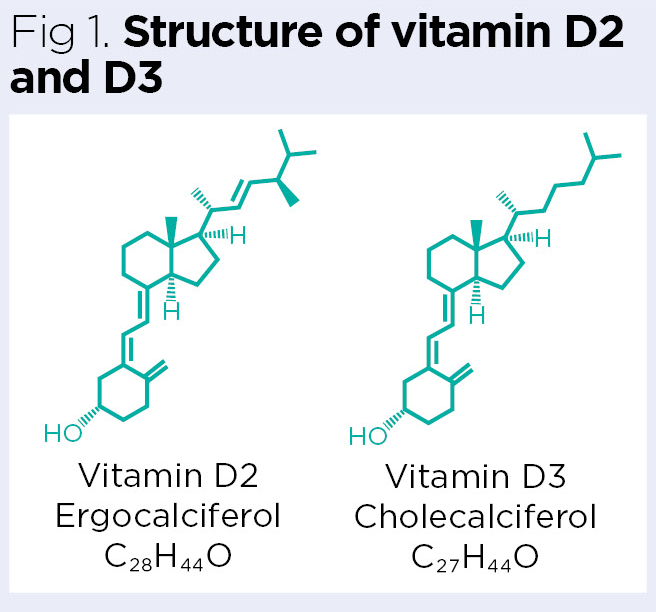
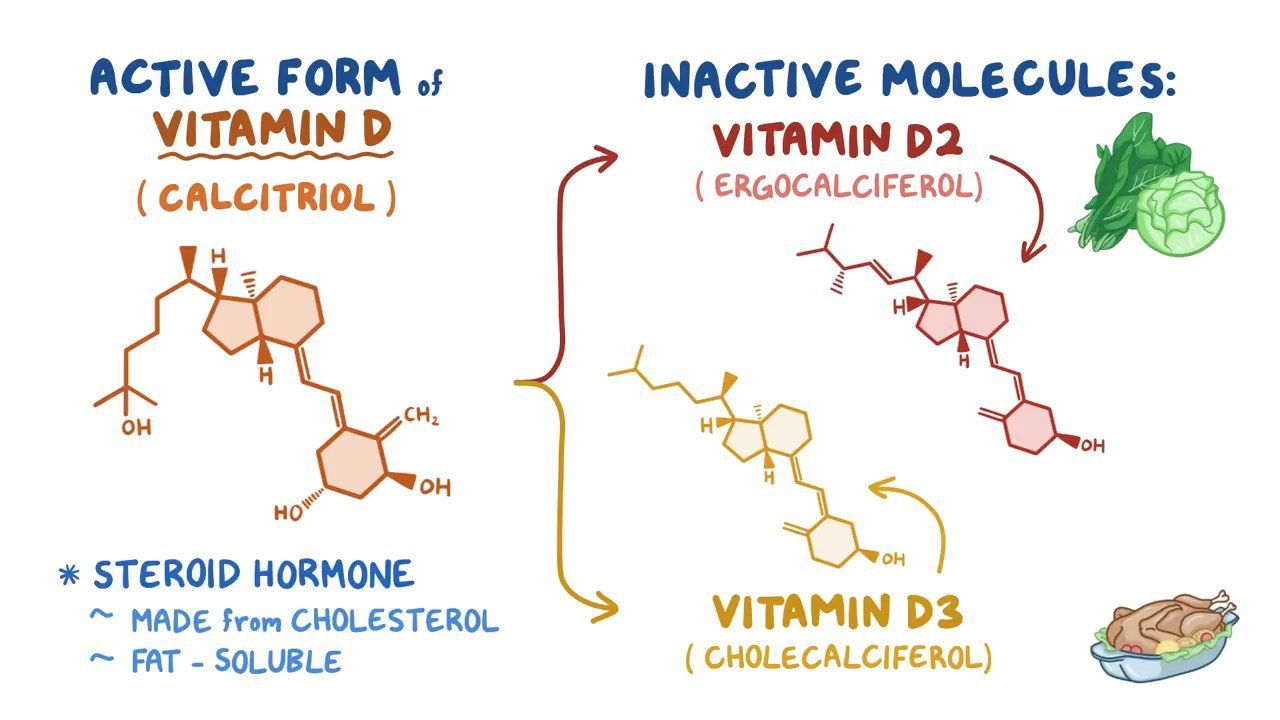
Vitamin D3 (cholecalciferol) and vitamin D2 (ergocalciferol) originate from different biological histories. D3 is the familiar product of skin exposure to sunlight acting on 7-dehydrocholesterol. D2, in contrast, is commonly associated with plant and fungal sources. This origin matters because the molecular “starting identity” influences how the body treats the compound during hepatic processing.
Consider it like language dialects. The destination phrase may be the same, but pronunciation and pacing can differ. In biochemistry, those small differences can translate into measurable variation in circulating calcidiol over time.
The Liver’s Role: A Gatekeeper with Preferences
Both D2 and D3 undergo hydroxylation in the liver, where the body transforms them into calcidiol. This step is central: the liver acts as a gatekeeper converting the less-hydroxylated precursors into a more stable and transport-friendly form.
Here’s the curiosity hook: calcidiol production is not purely a matter of whether conversion can occur. It’s also about efficiency—how quickly the transformation happens, how much calcidiol accumulates in circulation, and how sustained that level remains. D3 has repeatedly shown a tendency toward stronger contribution to measured 25-hydroxyvitamin D status compared with D2, especially under real-world supplement conditions.
Conversion Isn’t Just Chemistry—It’s Dosimetry in Disguise
“Conversion to calcidiol” can sound like a single, straightforward event. But the body treats vitamin D as a distributed system: after conversion, calcidiol must circulate, bind, and remain bioavailable enough to serve downstream steps, including the eventual formation of calcitriol (the hormonally active form).
Conversion, therefore, behaves like dosimetry in disguise. Two people taking the same amount can end up with different circulating calcidiol concentrations because the entire process—from absorption to binding and turnover—forms an interconnected network.
When you view vitamin D through that systems lens, the D3-versus-D2 difference becomes less about a “yes/no conversion switch” and more about what the body produces and retains.
Calcidiol Levels: Why D3 Often Wins the Spotlight
Calcidiol is the common checkpoint. Many practical questions become answerable here: Which form raises 25-hydroxyvitamin D more effectively? Which one maintains levels longer? Which one supports a steadier platform for future activation?
D3 has a reputation for producing higher and more durable improvements in circulating calcidiol in a variety of contexts. That doesn’t mean D2 fails to convert—it means the conversion and retention dynamics often differ. The result is a different “height and duration” profile in the calcidiol curve.
Think of it as two roads leading to the same city, but one road tends to deliver more cargo and keep it there longer.
Binding Dynamics: The Invisible Hand in Vitamin D Status
Once calcidiol exists in blood, it doesn’t float freely like an unclaimed package. It travels with binding proteins that influence stability, distribution, and how much remains accessible for conversion into calcitriol. Binding dynamics can amplify differences between upstream sources.
If D3’s metabolites and subsequent intermediates interact with the transport system in a way that supports persistence, then calcidiol levels may rise more substantially and decline more slowly. This isn’t merely a biochemical curiosity—it’s why the “same intermediate” can still yield different measurable outcomes.
Downstream Momentum: From Calcidiol to Calcitriol
After calcidiol is established, the next transformation—calcidiol to calcitriol—occurs primarily in the kidneys and other tissues. Calcitriol is the active form that participates in calcium and phosphate regulation, immune modulation, and cellular signaling pathways.
Here’s the chain reaction logic: if D3 tends to raise calcidiol more effectively, it can provide a stronger substrate for calcitriol generation when the body calls for it. The key difference, then, is not only the early conversion step. It’s the momentum of the entire pathway.
In a narrative sense, D3 doesn’t simply reach the middle of the story—it brings more material to the plot’s next act.
Bioavailability and Absorption: The “Front Door” Matters
Before the liver even begins its hydroxylation work, the vitamin must be absorbed and transported. Lipid solubility, formulation style, and individual factors like gut health can influence how much of a supplement actually enters circulation to become eligible for conversion.
Vitamin D2 and D3 can behave differently in absorption efficiency and distribution across the body, depending on the product and context. That’s why a comparison of “conversion to calcidiol” must acknowledge the front door: bioavailability can subtly tilt outcomes before biochemical processing begins.
Perspective Shift: The Measure Is Not the Vitamin—It’s the Intermediate
Many people assume vitamin D status is synonymous with taking vitamin D. But the body’s story is better read through the intermediate: calcidiol is the practical “report card” on what has been produced and maintained.
So the real question becomes: Which form tends to build a more reliable calcidiol foundation? D3 often stands out in that regard, not because D2 is irrelevant, but because D3’s pathway frequently results in stronger calcidiol accumulation.
When you shift perspective from “vitamin form” to “intermediate performance,” the comparison becomes both clearer and more compelling.
Curiosity for the Real World: Supplement Choice and Consistency
Choosing between D2 and D3 isn’t only about theoretical conversion. It’s about consistency—how your body receives, transforms, and holds onto vitamin D over time. Factors such as dosage schedule, baseline levels, sun exposure, and metabolic differences can alter the outcome.
If the goal is to influence calcidiol reliably, D3 is often considered the more predictable lever. Still, individual responses vary, and assessment through lab measurement is the most grounded approach.
Conclusion: The Key Difference Lives in the Bridge, Not the Destination
Vitamin D2 and vitamin D3 both converge toward calcidiol, and that shared convergence can mask the deeper distinction. The key difference lies in how effectively each form contributes to that bridge stage—how much calcidiol is produced, how it persists, and how it fuels the next transformation toward active signaling.
When the view changes from “conversion exists” to “conversion performance,” the story becomes richer. D3 often provides the stronger momentum toward calcidiol, and that subtle advantage can be the difference between a brief rise and a steadier foundation.