Muscle weakness can feel like a slow-moving plot twist: one day your body cooperates, the next it suddenly files everything under “difficulty.” And then—like an unexpected scene change—people start debating two common tools: D3 and D2 (vitamin D forms). The question is simple, right? Which one actually helps muscle function? But here’s the playful challenge: imagine your muscles are a band. Vitamin D is the stage crew. Should D3 be the meticulous stage manager, or does D2 do the job just as well—maybe with a different lighting rig?
Setting the Stage: Why Vitamin D Matters for Muscle Strength
Before comparing D3 versus D2, it helps to understand why vitamin D even belongs in this conversation. Vitamin D acts like a regulatory switch for muscle physiology. It influences muscle fiber performance, helps maintain calcium homeostasis, and supports neuromuscular coordination. When vitamin D levels are low, muscles can feel sluggish, weak, or less responsive—sometimes more noticeable in the thighs, hips, and core stability.
Weakness can emerge in subtle ways. You might notice stairs feel steeper than they used to. Rising from a chair may require extra effort. Balance can get a little jittery, as though proprioception (your body’s spatial “GPS”) is running on half-battery mode.
That’s why many studies examine vitamin D supplementation and muscle outcomes: changes in strength, function tests, physical performance, and fall risk. The underlying logic: if vitamin D status rises, muscle performance may follow.
D3 vs D2: The Chemical Difference That Sparks the Debate
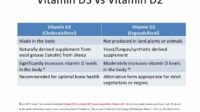
D3 (cholecalciferol) and D2 (ergocalciferol) share the same broad job description: they’re both vitamin D. But their structural “scaffolding” differs. D3 is typically produced in the skin after sunlight exposure, while D2 is more common in certain supplements and food sources.
Those structural differences may influence potency and how the body processes them. The intriguing idea is that D3 might elevate blood 25-hydroxyvitamin D more effectively or more persistently than D2. Yet muscle outcomes do not always mirror blood levels in a perfectly linear way—biology rarely plays by neat rules.
So the real question becomes: if both forms improve vitamin D status, do they produce comparable improvements in muscle weakness?
What Studies Typically Measure: Blood Levels and Functional Outcomes
Most research doesn’t stop at “vitamin D went up.” It tracks two categories of endpoints. First, biochemical outcomes: circulating 25(OH)D, the main marker used to assess vitamin D status. Second, functional outcomes: strength (often grip strength or leg strength), mobility (walk tests), physical performance (timed up-and-go, chair stand), and sometimes neuromuscular measures.
It’s crucial to remember that muscle weakness is not one single entity. Some people experience sarcopenic patterns (age-related muscle loss). Others have deficiency-driven weakness. Still others have weakness linked to inflammation, inactivity, or medication effects. Studies attempt to control these variables—but the human body refuses to be standardized like lab equipment.
Therefore, results can vary depending on baseline vitamin D status, dose, treatment duration, adherence, and participant characteristics such as age and activity level.
Evidence on D3 and Muscle Strength: Do Gains Favor One Form?
Many studies suggest that both D3 and D2 can correct vitamin D deficiency, and when deficiency is corrected, muscle function may improve. However, the strongest needle-moving factor often appears to be how effectively the intervention raises and maintains 25(OH)D.
Since D3 often shows a greater or longer-lasting increase in blood vitamin D levels, it may indirectly benefit muscle performance. That said, “indirect” doesn’t mean “guaranteed.” Muscle strength improvements depend on multiple pathways: calcium availability, muscle protein turnover, nerve signaling, and even inflammatory modulation.
In practice, if D3 elevates 25(OH)D more efficiently, the odds of reaching a threshold for muscle-related effects may be higher. Still, there are studies where D2 produces comparable functional improvements—especially when dosing is adjusted or when participants start with pronounced deficiency.
So rather than a universal “D3 wins” narrative, research often leans toward a conditional conclusion: the form that raises vitamin D status more reliably may produce more consistent muscle benefits.
Duration and Dosage: The “Time-at-Target” Effect
Imagine vitamin D as a catalyst for muscle physiology, but it doesn’t work like a light switch. Studies commonly run for months, not days. If the body spends enough time at a beneficial 25(OH)D level, neuromuscular improvements become more plausible.
Dosing matters too. D2 and D3 are not interchangeable in a simple “same label, same outcome” way. Because their potency and pharmacokinetics can differ, some trials administer different doses to achieve similar blood level changes.
As a result, comparing outcomes across studies requires attention to dose equivalence. A trial using high-dose D2 for a deficiency-correcting protocol may find muscle benefits on par with D3. A trial with lower dosing might show D2’s effect as less robust.
This is why muscle weakness research can feel like a maze: two routes can reach the same destination, but only if the journey is planned correctly.
Baseline Vitamin D Status: The Role of “Starting Fuel”
Not everyone begins the study with the same vitamin D reserves. People with deficiency are the most likely to show improvements after supplementation. If someone already has adequate vitamin D, the ceiling effect kicks in—there’s less room for measurable gains in muscle performance.
When deficiency is severe, correcting it can reduce muscle soreness, improve strength metrics, and enhance functional mobility. In that scenario, whether the supplement is D2 or D3 may matter less than the fact that vitamin D status rises meaningfully.
Conversely, in those with borderline or adequate baseline levels, differences between D3 and D2 may become more visible—because one form might elevate levels more effectively, leading to a better chance of crossing a physiological threshold.
In other words: the “starting fuel” changes the race dynamics.
Mechanistic Clues: How Vitamin D Could Improve Muscle Performance
Muscle weakness isn’t merely a lack of strength—it’s also the performance of complex biological systems. Vitamin D influences muscle cells by interacting with vitamin D receptors, which may affect gene transcription related to muscle function.
There are also downstream roles in calcium regulation and mitochondrial function, both of which can affect energy availability and contraction efficiency. Nerve signaling may improve as well, influencing motor unit recruitment and coordination.
These mechanisms are not guaranteed to produce immediate changes. They resemble a slow choreography. Vitamin D must first adjust the internal biochemical stage, and then muscle function follows.
This mechanistic reality helps explain why some studies find biochemical improvements without dramatic functional effects—especially if supplementation duration is short or baseline deficiency is mild.
Who Might Benefit Most: Older Adults, Inactivity, and High-Risk Groups
Research often focuses on older adults, people with limited sun exposure, individuals with darker skin, those who are overweight, and people with dietary insufficiency. Some also include participants with higher risk of falls or reduced physical capacity.
In these populations, addressing vitamin D insufficiency can support muscle strength and balance. The practical outcome may be fewer “micro-failures” during movement: less wobble, better recovery after stumbles, and improved confidence when standing up or walking.
Whether D3 or D2 provides the edge may depend on which regimen most effectively corrects vitamin D status for that individual. In real-world settings, consistency and absorption can matter as much as the supplement form.
Safety and Practical Considerations: Avoiding the Overcorrection Trap
Vitamin D is generally safe when dosed appropriately, but excessive intake can lead to hypercalcemia and related complications. Studies typically monitor blood calcium and 25(OH)D levels, adjusting doses accordingly.
The “challenge” here is deceptively playful: it’s easy to treat vitamin D like an ordinary wellness product, then accidentally push levels too high. Muscle weakness improvement shouldn’t require a gamble with blood chemistry.
For anyone considering supplementation—especially those with kidney disease, certain granulomatous disorders, or those taking calcium supplements or specific medications—medical guidance is essential.
So… Which Form Should You Choose for Muscle Weakness?
If the goal is to treat muscle weakness linked to low vitamin D, the studies often converge on one core principle: vitamin D status needs to rise substantially, and it needs to stay there long enough for muscle physiology to respond.
D3 is frequently associated with more robust increases in 25(OH)D in many comparative contexts. But D2 can still work, particularly when dosing is sufficient and baseline deficiency is clear. The most evidence-aligned strategy is to choose the form and dose that corrects your vitamin D level effectively—then reassess using blood work and functional outcomes.
Think of it like tuning a guitar. The specific string (D3 or D2) matters less than whether the instrument reaches the right pitch—and holds it.
Visual Quick Guide: A Mindset for Comparing Options
Here’s a simple way to remember the comparison: blood level elevation + duration + baseline deficiency = likely functional improvement.


Final Thought: The Answer Is Conditional, Not Contradictory
Muscle weakness research doesn’t deliver a simple winner-takes-all headline. Instead, it offers a nuanced picture: both D2 and D3 can support muscle function when they correct vitamin D deficiency. Differences in potency, blood-level persistence, and dosing design may make D3 more reliably effective in certain settings, while D2 can match outcomes when used in adequate protocols.
The most “study-aligned” approach is to treat vitamin D as a measured target, not a guess. Correct the deficiency, monitor the response, and prioritize functional improvement—because stronger muscles are the point, not the label on the bottle.