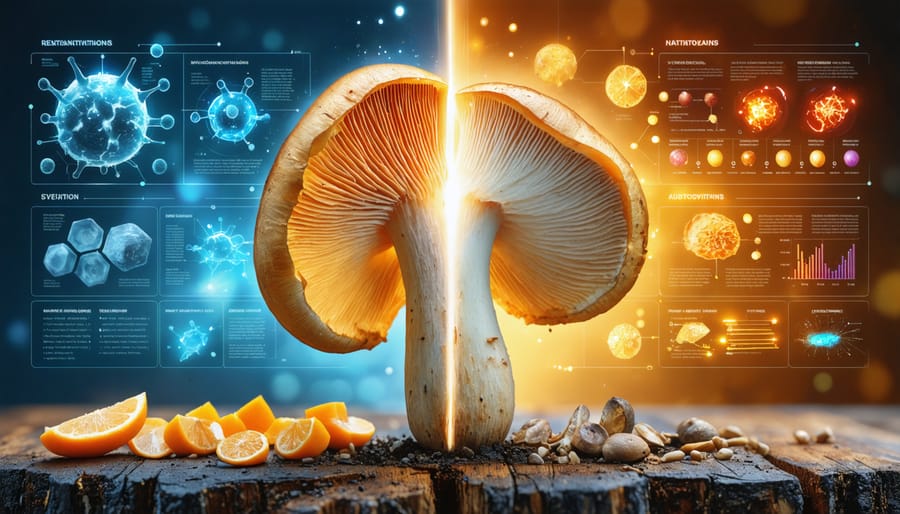
Walk into any kitchen aisle and you’ll hear the same hushed curiosity: “Do mushrooms really help with vitamin D?” The question often turns into another—almost instinctive—wonder. “Does it change when I cook them?” It feels like a small culinary detail, yet vitamin D can behave like a shy molecule, responding to light, heat, and even the quiet chemistry inside a mushroom’s tissues. The difference between raw and cooked mushrooms isn’t merely a matter of taste or texture. It’s a small story about transformation—one that’s fascinating precisely because it isn’t obvious at first glance.
Why We Notice Vitamin D First (Even When We Don’t Mean To)
Vitamin D is one of those nutrients people talk about with an almost seasonal reverence. In many regions, sunlight is inconsistent, and the body’s relationship with vitamin D becomes a topic of concern. Mushrooms enter the conversation like an unexpected ally. Yet the common observation—that “cooking might ruin nutrients”—casts a shadow over the idea of cooking mushrooms for vitamin D.
Here’s the twist: vitamin D in mushrooms is not simply “present” or “absent.” It’s influenced by the mushroom’s exposure to light and the way its internal structure responds to heat. Raw mushrooms may carry one profile; cooked mushrooms can present a subtly different narrative. That difference can feel surprising, because most people assume cooking is always a nutritional downgrade. Sometimes it is. Sometimes it’s more complicated—more alchemical—than that.
Raw Mushrooms: The Starting Line of the Story
Raw mushrooms, especially those that have been exposed to light during growth or processing, can contain vitamin D-related compounds that are not yet fully “settled” into the final forms we measure. Raw mushrooms also preserve their structural integrity: cell walls remain intact, enzymes remain active, and the physical environment inside the fungus stays relatively undisturbed.
In practical terms, raw mushrooms often feel more “alive” on the plate. They can taste earthy, crisp, and direct. But nutritionally, raw preparations also mean there is less disruption to the tissues that can help convert or stabilize vitamin D components.
There’s also an experiential angle. People who snack on raw mushrooms may notice they are light, even delicate. That sensation matters: when tissues are intact, diffusion is slower, and certain compounds remain where they are—like secrets kept behind a door.
Cooking as a Molecular Editor: What Heat Really Changes
Cooking is often described in culinary terms—sauté, roast, simmer—but the molecular experience is different. Heat can act like an editor that reorders how compounds are stored, released, or transformed. With mushrooms, you’re not only changing flavor; you’re changing the structure of their matrix.
Cell walls soften. Liquids escape. Lipids may become more available. Enzymatic activity can pause and then cease. The result is a more permeable internal landscape, which can influence how vitamin D compounds are extracted, measured, or even converted.
Depending on the cooking method, you may also increase the bioaccessibility of vitamin D—meaning it becomes easier for the body to access what’s there. That doesn’t always equate to “creating” more vitamin D out of nowhere, but it can make existing forms more usable.
For example, gentle cooking can preserve delicate compounds better than aggressive methods. High heat for long periods can degrade certain constituents, while moderate roasting may bring about a sweet spot where vitamin D compounds remain relatively stable while accessibility improves.
Raw vs Cooked: The Common Observation People Make
The everyday expectation is blunt: “Cooking reduces nutrients.” While that generalization isn’t entirely false—heat can degrade vitamins that are heat-sensitive—it can flatten the truth. Vitamin D-related behavior doesn’t always follow the same rulebook as water-soluble nutrients.
Many people notice that cooked mushrooms still seem nutritionally “useful.” That observation aligns with what happens when heat changes the tissue architecture rather than simply burning nutrients away. Cooked mushrooms are often softer, easier to chew, and their contents are more exposed. Even if the raw mushroom contained a comparable amount on paper, the cooked mushroom can offer a more practical intake pathway.
In other words, raw can be like a sealed letter; cooked can be like an opened envelope. The message might not be radically rewritten, but the way you read it becomes dramatically different.
Light, Not Just Heat: The Hidden Driver Behind Vitamin D Variation
Vitamin D in mushrooms is heavily linked to light exposure. Mushrooms can synthesize vitamin D precursors when irradiated—then convert them into vitamin D forms. This means that two mushrooms, even of the same species, can diverge substantially depending on how they were grown, processed, or stored.
This is where the fascination deepens. Cooking alone doesn’t create the initial raw material. If a mushroom never experienced the right kind of light, the “potential vitamin D” may be limited from the start. But if a mushroom was light-treated—sun-kissed in its growth phase or illuminated during processing—then cooking can become the step that determines how readily vitamin D compounds are retained and utilized.
So, raw vs cooked isn’t the whole equation. It’s more like a two-part duet: light sets the stage, and heat determines the performance.
Species Matter: Not All Mushrooms Play the Same Vitamin D Game
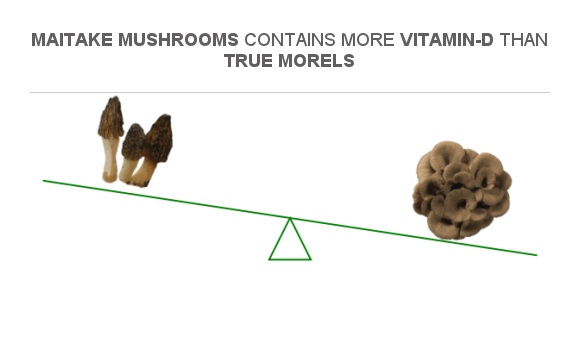
Morel, maitake, and other varieties can carry different baseline vitamin D profiles, even before cooking begins. These differences emerge from species-specific biochemistry and how their tissues respond to light and thermal stress.
Some mushrooms may be naturally better at holding onto vitamin D forms during cooking. Others may experience greater shifts depending on moisture loss and internal structural changes. Texture can be a clue: a mushroom that breaks down easily may release contents more readily, but it may also be more vulnerable to certain degradations.
If you’re trying to be strategic, think beyond the recipe. Think about the mushroom type. The “raw vs cooked” comparison becomes dramatically more meaningful when you focus on the species you’re actually eating.
Cooking Methods: Roasting, Sautéing, Simmering—Different Outcomes
Not all cooking methods are equal. Roasting can encourage moisture evaporation and reduce water activity, potentially supporting stability for certain compounds. Sautéing often introduces oil, which can change extraction dynamics and influence how compounds interact with fat. Simmering is typically gentler, but longer exposure to heat and water can shift what ends up in the edible matrix.
There’s also the matter of surface area. Sliced mushrooms cook faster, meaning the timeline of heat exposure is shorter. Whole mushrooms may retain moisture and cook more slowly, producing a different internal heat profile.
If you want a practical rule, consider this: shorter, moderate cooking often behaves more kindly than prolonged high heat. Yet the “best” method is not one-size-fits-all. It depends on the mushroom variety, thickness, and whether the goal is flavor, texture, or vitamin D usability.
What “Vitamin D Difference” Really Means on Your Plate
When people ask about vitamin D between raw and cooked mushrooms, they’re often imagining a single number that either increases or decreases. Reality is more nuanced. A measured vitamin D value may shift because of conversion, stability, moisture content, and how the food matrix releases compounds under preparation and testing conditions.
Cooked mushrooms are frequently more concentrated per bite because water is lost. That concentration effect can make vitamin D appear higher relative to weight—even if the absolute retained amount is similar. Meanwhile, cooking can also alter the distribution of vitamin D-related molecules, making them more available in digestion.
So the “difference” may reflect both chemistry and practicality. It’s not merely a loss or gain; it’s a change in how vitamin D is presented to the body.
Fascination With a Purpose: Turning Curiosity into a Routine
It’s easy to treat this topic as trivia—an interesting fact to mention at a dinner table. But there’s a deeper reason people keep returning to it: mushrooms offer a rare overlap between pleasure and potential. They can be savory, satisfying, and versatile. They can also be prepared in ways that respect their biology.
If you want to lean into the fascination, aim for consistency. Choose mushrooms you like. Cook them in a way that matches your taste preferences. Pay attention to thickness and timing. And consider that light exposure—directly or via processing—may matter as much as whether you serve them raw or cooked.
When you combine those elements, raw vs cooked stops being a debate and becomes a personal experiment. One week you might try lightly sautéed mushrooms with a squeeze of lemon and herbs. Another week you might enjoy them roasted with a pinch of black pepper. Over time, you’ll notice how texture and flavor guide your choices—and how those choices influence the nutrition story you’re actually eating.
A Simple Takeaway: Choose With Intention
The difference in vitamin D between raw and cooked mushrooms is not a single-direction rule. Cooking can either enhance usability through improved access and concentration, or it can reduce certain sensitive components depending on method and heat exposure. Meanwhile, light exposure before cooking often plays an outsized role in what vitamin D is available in the first place.
So, the next time you decide between raw slices and a steaming pan, treat it like a small decision about biochemistry. You’re not just changing texture—you’re participating in a transformation that has been quietly brewing inside every mushroom cell.