There’s a particular kind of curiosity that arises when people hear the words “high-dose D2” and “high-dose D3.” The conversation often begins with a simple assumption—vitamin D is vitamin D, so toxicity should behave the same way. Yet the body rarely follows that kind of neat bookkeeping. Beneath the familiar headline lies a more nuanced story about chemistry, dosing psychology, absorption habits, and the body’s own regulatory temperament.
In practice, D2 and D3 can both elevate calcium and increase toxicity risk when taken in excessive amounts. But they don’t always do it in identical ways, and the “how” matters—especially when dosing is high, prolonged, or guided by incomplete information. The result is a common observation: people notice the same symptom pattern, then wonder why the risk can feel unpredictable. The deeper answer is that the fascination is justified, because the biology behind vitamin D is both elegant and unforgiving.
Vitamin D Basics: Two Forms, One Mission
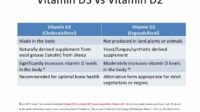
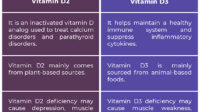
Vitamin D is best understood as a prohormone rather than a conventional nutrient. Your skin can synthesize D3 with sunlight; D2 is typically supplied by plants and certain supplements. Once inside the body, both forms are metabolized into active compounds that influence calcium absorption, bone mineralization, and—indirectly—neuromuscular and immune function.
In both D2 and D3, the journey follows a similar outline: ingestion or synthesis, liver conversion, then kidney-mediated activation. But similarity doesn’t guarantee identical kinetics. Even small differences in processing, binding, and circulating half-life can influence how quickly vitamin D levels rise and how long they remain elevated.

Why High Doses Change the Conversation From “Support” to “Safety Risk”
At physiologic levels, vitamin D behaves like a careful conductor, coordinating calcium traffic between gut, blood, and bone. At high doses, that conduction can become too forceful. Vitamin D toxicity most often presents through hypercalcemia—too much calcium in the bloodstream—followed by downstream effects like kidney strain, dehydration, constipation, confusion, and in severe cases, cardiac rhythm disturbances.
The shift is not only about dose magnitude. It is also about time. A modest excess repeated daily can accumulate into a high plateau. Some people assume that because they feel fine today, the biology must be fine too. That assumption is remarkably human. It’s also exactly how delayed toxicity can sneak in.
Another contributor is dosing psychology: “more” can feel like “more protection,” particularly when individuals are chasing winter resilience, mood stability, or athletic performance. The mind likes tangible numbers—5,000 IU, 10,000 IU, 50,000 IU—yet the body experiences those numbers as a slow chemical tide.
D2 vs D3: The Subtle Differences That Matter at High Intake
D2 (ergocalciferol) and D3 (cholecalciferol) differ structurally, and that has consequences for how the body stores and uses them. D3 is generally considered more potent at raising and maintaining serum 25-hydroxyvitamin D. In other words, D3 tends to produce more durable increases in the blood marker clinicians monitor.
D2 can still raise levels effectively, but several studies suggest its persistence and effect on total circulating vitamin D may be less robust than D3. That difference is not merely academic. When people take high doses, the question becomes not only “Will my level rise?” but “How high will it plateau, and how quickly will it come down?”
For someone taking aggressive dosing—especially over weeks rather than days—the faster and steadier accumulation profile of one form can translate into a higher likelihood of crossing the safety threshold. The other form may rise too, but the pattern could differ, creating the illusion that toxicity risk is “random,” when it is actually driven by kinetics.
The Common Observation: Similar Symptoms, Different Timelines
A frequently observed pattern is that toxicity symptoms—nausea, fatigue, thirst, frequent urination, weakness—look similar regardless of which supplement was used. That similarity tempts people into flattening the comparison. However, the deeper truth lies in timelines. Some people may experience a slower buildup and a delayed symptomatic window; others may reach a more rapid biochemical peak.
The body’s calcium regulation operates with feedback loops. When those loops detect sustained high vitamin D activity, parathyroid hormone (PTH) often drops, and calcium absorption continues unabated. Kidneys then attempt to compensate by increasing excretion. This compensatory phase can feel like “just dehydration” or “stress,” delaying recognition.
Thus, fascination persists: people see an identical outcome and assume identical causes. Biology offers a more interesting answer—same destination, different road conditions.
How Toxicity Actually Develops: Serum 25(OH)D, Calcium, and the Kidney Factor
Clinically, the toxicity concern is usually tied to elevated serum 25-hydroxyvitamin D (25(OH)D) and resulting hypercalcemia. Vitamin D increases intestinal calcium absorption. Over time, that can overwhelm buffering capacity. If calcium climbs too high, it can deposit in soft tissues, aggravate kidney function, and impair normal neurologic and cardiovascular signaling.
The kidneys deserve particular respect. They are both a target and a safety valve. When hypercalcemia forces increased urine calcium output, dehydration and electrolyte imbalance can follow. That’s why toxicity is not solely a “vitamin problem.” It becomes a systems problem involving renal clearance, hydration status, and individual susceptibility.

Risk Factors That Intensify Toxicity—No Matter the Form
Even with the same vitamin D formulation, some people face higher risk. Key factors include:
1) High baseline levels: If someone already has elevated 25(OH)D, additional dosing can quickly overshoot.
2) Prolonged high dosing: Weekly “megadoses” or long-term high daily intake can accumulate silently.
3) Kidney disease: Reduced renal handling increases the chance of calcium elevation.
4) Primary hyperparathyroidism: When PTH signaling is dysregulated, calcium balance becomes harder to control.
5) Concomitant supplements: Calcium supplements, multivitamins with calcium, and certain medications (like thiazide diuretics) can amplify risk.
6) Granulomatous disorders: Conditions such as sarcoidosis can increase active vitamin D production outside normal regulatory pathways.
These risk factors hint at why people remain fascinated. Vitamin D toxicity is not purely a math equation. It is a personalized choreography.
Practical Guidance: How to Reduce Toxicity Risk With High D2 or D3
The safest strategy is not to avoid vitamin D entirely—it is to dose intelligently. When high intake is considered (whether D2 or D3), testing is your compass. Measuring serum 25(OH)D and, when appropriate, calcium can reveal whether the body is trending toward safety or toward excess.
Hydration matters, too. Hypercalcemia often worsens with dehydration, and dehydration can be the silent accomplice to symptoms that appear “sudden.” Also, be cautious with stacking: pairing vitamin D with calcium supplementation without a plan can turn a controlled intervention into an inadvertent escalation.
Finally, choose consistency over guesswork. Taking large amounts intermittently can create peaks; taking moderate amounts steadily can create a plateau. Both can be risky, but understanding the pattern helps clinicians interpret labs and symptoms.
Closing Perspective: The Allure of Vitamin D—and the Boundary of Safety
High-dose D2 and D3 capture attention because vitamin D occupies a rare position: it affects mood, immune conversation, bone resilience, and general vitality. It feels like a “whole-body” lever. Yet that sense of control is precisely why safety boundaries are essential. The body is not a passive container; it is an adaptive system that interprets vitamin D as instructions for calcium behavior.
The difference between D2 and D3 becomes most consequential when dosing is high, monitoring is sparse, or risk factors are present. Toxicity can still occur with either form. But the likelihood and pattern can diverge—making “similar symptoms” a reminder that outcomes may look alike while mechanisms and timelines may not.
In that gap between assumption and mechanism lies the deeper fascination: the science doesn’t merely warn. It invites careful thought—so the benefits of vitamin D can be pursued without courting avoidable risk.