
You’ve probably heard the debate in fragments—an offhand comparison at a pharmacy counter, a scrolling headline, a friend swearing their supplement “just works.” Yet the question beneath it all is quieter and more personal: Which form of vitamin D truly earns your trust? If vitamin D2 and vitamin D3 feel like two indistinguishable twins, this article is the mirror that reveals their different identities. By the time you reach the end, you’ll be able to choose with a steadier mind—one that’s less swayed by marketing fog and more guided by biological nuance.

Begin with the misconception: vitamin D is not a single story
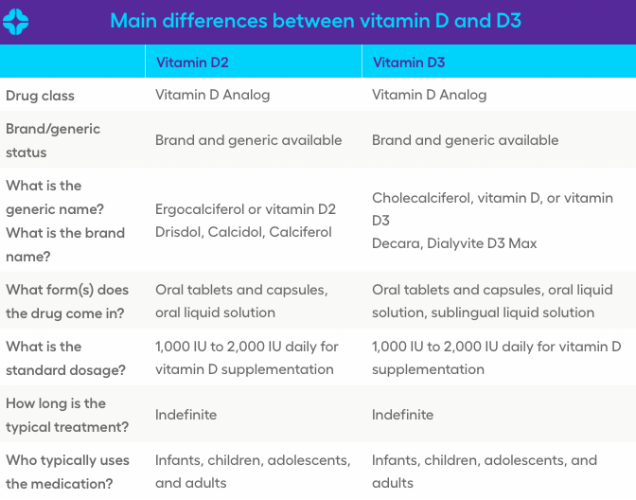
Vitamin D often gets treated like a single ingredient, a one-note solution. But “vitamin D” is more accurately a family of compounds, with D2 and D3 taking the stage as the most discussed. They don’t behave identically once they enter the bloodstream. The difference is subtle at first—almost semantic—but it becomes audible over time.
Here’s the shift in perspective: think of D2 and D3 not as alternatives on a shelf, but as distinct travelers with different routes through the body’s metabolic infrastructure. One may reach the destination faster, linger more effectively, or influence downstream processes with greater consistency. That matters when you’re trying to maintain bone health, immune resilience, and hormonal signaling over months—not just days.
D2 vs D3: the origin myth and the real biochemical divergence
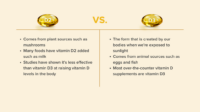
D3 is typically associated with sun-derived pathways and animal-based sources, while D2 is more commonly linked to plant-derived and fungal pathways. That’s the origin narrative. The real divergence, however, appears later—after ingestion—when the body must convert vitamin D into active metabolites.
The conversion process resembles a relay race with precision timing. D2 and D3 may be legible to the same metabolic teams, yet their handoffs can differ in efficiency and duration. That difference isn’t merely academic. It influences how stable your vitamin D levels are across seasons, particularly during winter or periods of low sunlight.

How the body “scores” each form: stability, potency, and persistence
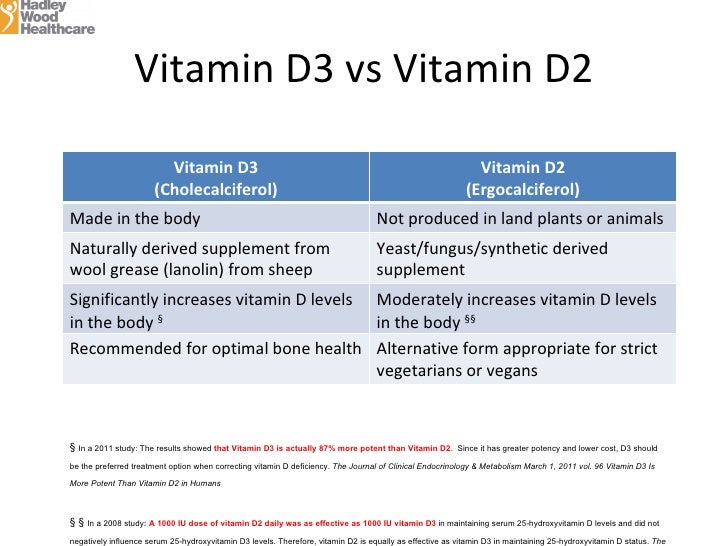
Some vitamin supplements deliver short-lived results. Others are better at maintaining a consistent baseline—like a thermostat that doesn’t swing wildly. In practice, vitamin D3 has often demonstrated a pattern of greater persistence in circulation compared with D2. That persistence is a practical advantage when your goal is not temporary correction, but dependable maintenance.
To be clear: both forms can contribute to raising vitamin D status. The question is which form is more likely to sustain levels with less fluctuation. When you’re thinking long-term—bone density, muscle function, immune modulation—consistency becomes more than a comfort. It becomes a strategy.
Now imagine your vitamin D levels as a long-burning ember rather than a flash flame. D3 tends to behave more like the ember for many people, providing a steadier glow through time.
The downstream effects: bone, muscle, and the immune “ecosystem”
Vitamin D plays a supportive role in calcium absorption and bone mineralization. Without sufficient vitamin D signaling, bones can’t fully capitalize on dietary calcium. Over time, that can mean weakened structure and slower recovery for tissues under stress.
Muscle function is another chapter. Vitamin D is implicated in muscle performance and coordination, supporting the subtle neuromuscular processes that help you move with control. When vitamin D levels are adequate, the body can more effectively synchronize contraction dynamics.
Then there’s the immune ecosystem—complex, adaptable, and sensitive to biochemical context. Vitamin D is often discussed as a modulator rather than a commander. It influences immune signaling pathways in ways that may help the body respond with calibrated restraint. This is where the “choose this one” verdict becomes emotionally tangible: you’re not only buying a number on a lab report. You’re investing in a regulatory environment.
Lab numbers and reference ranges: interpreting the real meaning of “low”
Many people focus solely on reaching a target value, as if vitamin D were a coin you either have or don’t. But interpretation matters. Different assays and reference ranges can produce different readings, and the same number can represent different risks depending on age, baseline lifestyle, skin pigmentation, and comorbid conditions.
A smarter approach is to ask a layered question: Is your vitamin D status trending toward sufficiency or deficiency? Is it stable, or does it bounce? Stability is not trivial. If one form helps your levels stay more consistent, it can reduce the whiplash of repeated “dose-recovery cycles.”
Absorption in the real world: consistency beats perfection
Even the best form can fail if the routine is inconsistent. Absorption is shaped by factors like dietary fat intake, dosing frequency, and adherence. D3 often pairs naturally with common supplementation practices, especially when taken with a meal that contains some fat.
But don’t assume “best form” automatically equals “best outcome.” If you rarely take your supplement, or you take it at random, the body won’t build a stable reserve. The most elegant biochemistry is still dependent on human behavior.
Here’s a quiet truth: the most effective option is the one you can maintain. Still, among the two forms, D3 tends to be more forgiving in the long game—like a forgiving compass that keeps you oriented when the day gets busy.
Vegetarian, vegan, and ethical considerations: choosing without compromise
Ethics matter. Many people seek vegan-friendly options and want vitamin D that aligns with dietary boundaries. D2 is often considered in these contexts because it’s commonly derived from non-animal sources.
Yet ethics isn’t the only variable. If your primary goal is maximizing stable vitamin D status, it’s worth acknowledging that D3 may have advantages for persistence. Some vegan alternatives attempt to bridge this gap, but availability and formulation vary.
So what’s the verdict for ethics-minded readers? Choose thoughtfully. If D2 is your only compatible option, you can still make progress—especially with appropriate dosing and periodic monitoring. If you can access an ethics-aligned D3 product, it may offer a more efficient path. Either way, the ethical choice benefits from the same discipline: verify with labs and adjust with professional guidance.
Common dosing patterns: daily, weekly, and the logic of spacing
Vitamin D dosing often comes in daily or weekly rhythms. Spacing affects how your levels rise and settle. Some people prefer daily consistency; others prefer fewer administrations. The “choose this one” angle isn’t about how often you take it—it’s about the form’s tendency to maintain levels over time.
For many, a daily regimen reduces peaks and troughs. For others, weekly dosing can still work well if it produces stable concentrations without causing noticeable swings. When D3 is part of the plan, the stability advantage may be amplified.
Still, resist the temptation to self-prescribe high doses based on anecdote alone. Vitamin D is powerful. Like any influential compound, it rewards precision.
Safety and caution: how to avoid the trap of excess
Vitamin D is fat-soluble, meaning it can accumulate. Excess vitamin D can contribute to problematic calcium balance. That doesn’t mean you should fear supplementation. It means you should treat it like an informed intervention, not a casual habit.
The best safeguards are boring in the best way: reasonable dosing, lab monitoring when appropriate, and attention to total intake from food plus supplements. If you’re managing conditions related to calcium metabolism, kidney function, or granulomatous disease, your provider should guide the dosing strategy.
Curiosity can be productive—especially when it leads to better measurement.
The final verdict: choose vitamin D3 for most people, then personalize
So, what’s the ultimate conclusion? If you’re deciding between D2 and D3 with the goal of achieving and maintaining vitamin D status more consistently, vitamin D3 typically earns the nod. Its tendency toward steadier circulation and persistent biological influence makes it a strong default choice for many adults.
But the verdict isn’t a one-size stamp; it’s a decision framework. If you need a plant-based form, D2 can still be a legitimate tool—especially when paired with periodic testing and thoughtful dosing. If ethical constraints allow, D3 offers a more compelling profile for long-term stability.
When you look back at this debate, you realize it wasn’t really about “better” in the abstract. It was about which option helps you maintain adequacy with fewer surprises. And that’s the kind of choice your body can feel—slowly, quietly, and over time.
Practical next step: If you haven’t had your vitamin D status checked recently, consider discussing a lab test with a clinician. Then choose the form that best fits your lifestyle, ethics, and ability to maintain a consistent routine.