
Here’s a question that sounds like it belongs in a comedy sketch but has real-world consequences: What’s the difference between “D3” and “D2” when the stakes are COVID-19 prevention? You might think more vitamin equals more protection. Yet science tends to be far more mischievous. It asks us to consider timing, dose, baseline vitamin D status, study design, and even how different populations metabolize the same nutrient. And then it throws in a potential plot twist: not all vitamin D forms behave identically in the body.

In the case of COVID-19, researchers have spent years evaluating whether vitamin D supplementation—particularly cholecalciferol (D3) versus ergocalciferol (D2)—can reduce the risk of infection or improve outcomes. Some findings are encouraging. Others are equivocal. The story is less “one magic bullet” and more “a complicated orchestra” where each instrument plays a slightly different note.
Vitamin D, Meet the Immune System: Why Form Matters
Vitamin D is often framed as “immune support,” but it’s better described as a regulatory hormone with far-reaching effects. Once ingested, it influences gene expression related to innate immunity, epithelial barrier function, and the modulation of inflammatory cascades. In plain terms: it may help the body respond more nimbly to pathogens—and avoid some of the immune overreactions associated with severe respiratory disease.
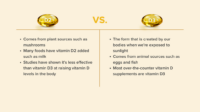
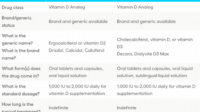
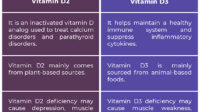
Still, even if vitamin D’s biological pathway is shared, its two common dietary supplements differ structurally and may differ in potency and persistence. D3 (cholecalciferol) is the same form produced in human skin under ultraviolet light. D2 (ergocalciferol) is commonly derived from plant sources or produced commercially.
That distinction matters because the body’s handling of these forms—absorption, conversion efficiency, and serum half-life—can affect how consistently vitamin D levels remain elevated after supplementation.

D3 vs D2: The Central Hypothesis and the Everyday Challenge
The central hypothesis is elegantly simple: if vitamin D supports immune function, then supplementing it should reduce COVID-19 risk, especially in individuals who are deficient or insufficient. But the challenge arrives like an overenthusiastic gremlin in the data: trials vary widely.
They differ in:
• Starting vitamin D status (deficient vs sufficient participants)
• Baseline risk factors (age, comorbidities, exposure intensity)
• Dosing regimens (daily, weekly, monthly, or high-dose boluses)
• Whether dosing was adjusted to reach target blood concentrations
• Outcome definitions (infection, symptom severity, hospitalization, or mortality)
So when researchers compare D3 and D2, the question isn’t just “which is better?” It’s also “under what conditions does a benefit appear, and for whom does it vanish?”
What Studies Commonly Measured: Serum 25(OH)D as the Bridge
Most vitamin D trials use serum 25-hydroxyvitamin D—often written as 25(OH)D—as the biomarker that reflects vitamin D body stores. This marker becomes the bridge between supplementation and potential immune effects.
In many investigations, D3 is observed to raise serum 25(OH)D more robustly or more consistently than D2. That matters because immune modulation depends on achieving and maintaining adequate circulating levels.
Yet serum level elevation doesn’t automatically translate into fewer infections. Immunity is a living system, influenced by countless variables. A person can show improved blood markers and still experience infection due to exposure intensity, timing, viral variants, mask use, vaccination status, and individual physiology.
Still, when studies report differences between D3 and D2, researchers often interpret them through the lens of whether D3 produces more durable improvements in vitamin D status.
Clinical Outcomes: Infection Risk, Severity, and Hospitalization
Across trial landscapes, vitamin D supplementation shows mixed results—some analyses suggest reduced risk of respiratory infections, while others find no meaningful difference. COVID-19 specifically adds extra complexity because outcomes depend on how rapidly the illness is detected and managed.
When considering D3 versus D2, the pattern many studies aim to uncover is whether one form more effectively lowers infection incidence or reduces severity thresholds—such as hospitalization, need for oxygen, or progression to critical illness.
In several study frameworks, benefits appear more plausible when:
• Participants begin with low vitamin D levels
• Adequate dosing achieves meaningful serum increases
• Supplementation is sustained rather than episodic
In contrast, if supplementation is started in people already replete in vitamin D, the “ceiling effect” can dilute any observable advantage. In these situations, D3 may still outperform D2 in raising levels, but the clinical difference might be too small to detect—or simply irrelevant for individuals whose immune systems already have sufficient vitamin D availability.
Timing and Dosing Regimens: The Plot Twist Nobody Can Ignore
One potential reason for inconsistent findings is timing. Vitamin D is not an instant immune override. It’s more like a long game. Many regimens used in trials involve bolus dosing (large doses at intervals). Some clinicians hypothesize that bolus strategies may create temporary spikes without maintaining an optimal steady-state level.
Here’s the playful but serious twist: If you “feed” the immune system irregularly, will it learn the rhythm? Dosing schedules can affect how stable serum 25(OH)D levels remain over time.
D3 and D2 may differ in how quickly they reach peak levels and how long they sustain them. Even if both forms increase 25(OH)D, differences in kinetics could influence how immune responses unfold during viral exposure.
Therefore, a trial might show modest results overall, yet still hint that one form aligns better with an effective dosing cadence.
Safety Considerations: When the Immune System’s Volume Knob Gets Turned Too Far
Vitamin D has a safety ceiling. Excessive supplementation can contribute to hypercalcemia, which carries potential risks to kidneys and cardiovascular health. That concern matters particularly for trials using high-dose strategies.
While both D3 and D2 are used in supplementation, their dosing equivalencies and the way they accumulate can influence risk. Most COVID-19 supplementation protocols were designed to remain within established tolerable intake ranges, but it’s still important to consider that a “more is always better” approach can be biologically careless.
In practical terms: the best form is not simply the one that raises levels fastest; it’s the one that supports immune function without nudging the body toward biochemical imbalance.
Population Differences: Who Benefits Most from Which Form?
Results often vary across age groups, skin pigmentation, geographic latitude, comorbidities, and socioeconomic factors that affect baseline nutrition and sunlight exposure. People at higher risk of vitamin D deficiency—such as older adults, those with limited sun exposure, or individuals living in northern latitudes—may be more likely to benefit from supplementation.
In these contexts, D3’s tendency to produce a stronger and more stable rise in serum 25(OH)D may be particularly relevant. Meanwhile, in populations with adequate baseline levels, both D3 and D2 might show limited additional impact.
So the “D3 vs D2” question may be less like a sports rivalry and more like a matchmaking exercise: the “right partner” depends on baseline status and the circumstances surrounding supplementation.
Real-World Translation: From Studies to Sensible Decision-Making
What does the evidence suggest for day-to-day choices? It’s rarely a single answer, but several principles emerge. First, vitamin D supplementation works best when it corrects deficiency or insufficiency. Second, regimen design matters: sustained adequacy is likely more useful than sporadic dosing. Third, D3 often appears more effective at raising serum 25(OH)D than D2, which could be one reason it shows more consistent biochemical improvements in trials.
However, clinical outcomes aren’t guaranteed. A person can optimize vitamin D levels and still face COVID-19 risk due to exposure, vaccination status, and other protective behaviors.
If you’re considering supplementation, it’s wise to think in terms of personalized calibration—ideally informed by serum testing and guided by healthcare professionals—rather than relying on a “blanket formula.”
Bottom Line: A Comparative Answer With Nuance
Studies evaluating D3 versus D2 for COVID-19 prevention suggest that both forms can raise vitamin D status, but D3 more frequently demonstrates stronger or more durable increases in serum 25(OH)D. That biochemical advantage may help explain why some trial outcomes appear more favorable when participants receive D3—especially among those who are deficient.
Yet COVID-19 is not a controlled lab variable. It’s a dynamic respiratory infection shaped by timing, variant behavior, host immune response, and interventions beyond supplements. The evidence therefore leans toward nuance: D3 may be a better “vitamin D delivery system,” but the protective effect—if present—depends on deficiency correction, dosing strategy, and who is receiving it.
So the playful question remains: Is D3 the hero and D2 the sidekick? The studies don’t fully crown either one. They suggest instead a more grounded conclusion: the form that builds stable vitamin D stores, used at the right time and in the right people, is the one most likely to help.