
Vitamin D quietly steers a surprising number of body systems—immune vigilance, bone mineralization, and even mood regulation. Yet not all vitamin D is created equal. In everyday life, you’ll encounter two broad paths: vitamin D2 obtained from fortified foods and vitamin D3 derived from lichen-based supplements. One approach is woven into meals you already eat; the other is delivered with intentional precision. Understanding how these forms behave, how your body responds, and how to choose a sensible intake strategy can turn “getting enough vitamin D” from a vague goal into a practical routine.

Vitamin D2 vs Lichen-Derived D3: What’s the Real Difference?
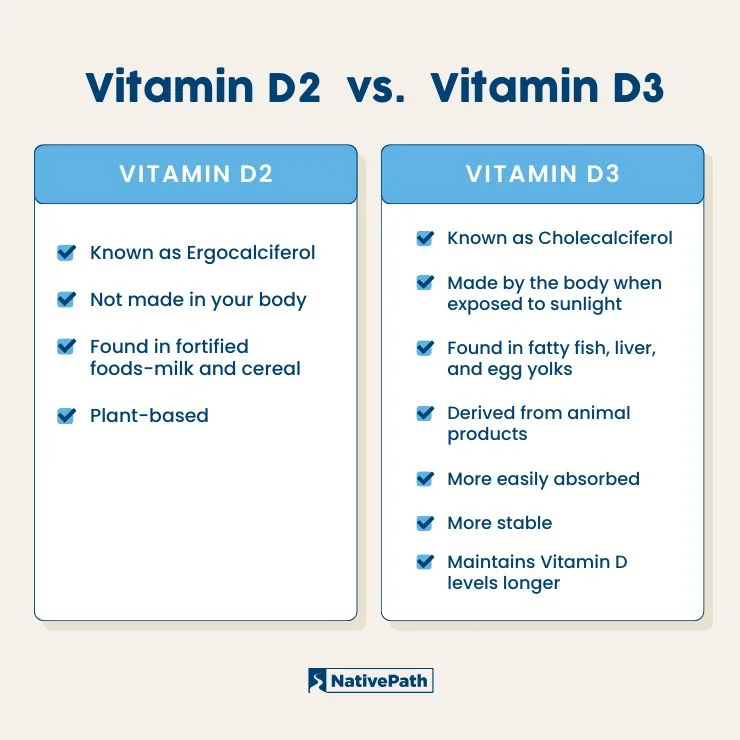
Vitamin D2 (ergocalciferol) is commonly associated with plant-derived sources and fortified products. Lichen-derived vitamin D3 (cholecalciferol) is produced by obtaining a precursor from lichen organisms and converting it into a D3 form through controlled processing. The numbering matters because D2 and D3 do not behave identically inside the body.
Both forms can raise blood levels of 25-hydroxyvitamin D, often used as a marker of vitamin D status. Still, their biochemical “journey” can differ in potency and duration. In practice, this means people may notice different responses depending on which form they consume, how much they take, and their baseline vitamin D status.
Think of vitamin D like a raw ingredient. Your body converts it downstream into its active signaling form, so the starting material’s characteristics, along with absorption and metabolism, influence the final outcome.
Fortified Foods and Vitamin D2: The Meal-Based Route
Fortified foods are a familiar vehicle for vitamin D2. You might see vitamin D added to items such as milk alternatives, plant-based beverages, breakfast cereals, yogurts, and some spreads. This is convenient: the nutrient is folded into everyday consumption, so supplementation feels less “separate” from life.
However, fortified foods can be an uneven quilt. Serving sizes vary, labels can be confusing, and vitamin D levels may be modest. If you’re already eating fortified foods consistently, you may maintain a stable intake without adding capsules. But if you rely on food alone, especially during seasons with low sun exposure, your total vitamin D intake can drift downward.
For many readers, the key challenge isn’t availability—it’s predictability. Fortified foods require routine, and routine requires attention. A single missed breakfast or a brand swap can alter your intake more than you expect.
Lichen D3 Supplements: Precision, Convenience, and Consistency
Lichen-based vitamin D3 supplements provide a targeted strategy: a measured dose designed to improve consistency. This matters because vitamin D status tends to be sensitive to both seasonal sun variation and overall dietary patterns.
Lichen D3 is especially relevant for people who prefer non-animal sources of D3. Some individuals seek an option aligned with vegetarian or vegan lifestyles. Even when diet is otherwise strong, a supplement can fill in the gap created by limited sunlight, indoor work, or geographic latitude.
When a supplement is well formulated, it can be absorbed efficiently, particularly when taken with food. The dose—whether a small daily amount or a larger weekly plan—can be tailored to your goals and guided by lab monitoring.
Absorption and Bioavailability: How Your Body Actually Takes It Up
Absorption is where “on paper” claims meet real physiology. Vitamin D is fat-soluble, which means the presence of dietary fat can improve uptake. Fortified foods may contain varying amounts of fat depending on the product. A fortified beverage might be fortified but lightly fat-based; a fortified yogurt might provide more fat matrix to carry the nutrient.
Supplements often include a carrier system—sometimes oil-based or emulsified—designed to support absorption. This can reduce variability. Short story: two people with identical intake on labels may not end up with identical blood levels because their meals and gut environments differ.
Even the timing can matter. Taking vitamin D with a meal—especially one that includes some fat—often promotes more reliable absorption. Small behaviors, repeated consistently, tend to win over occasional “hero” doses.
Potency, Duration, and Blood Level Changes
Readers usually care about outcomes: Are my stores rising? Are they staying up? While individual results vary, many people observe that D3 may maintain vitamin D levels more effectively than D2 over time. This doesn’t mean D2 is “weak.” It means the practical math—dose, response, and sustainability—can favor D3 for certain goals.
Fortified-food intake can be steady but may not achieve a high enough ceiling. Supplementation can more readily reach a therapeutic range. This is not a license for guesswork, though. The healthiest approach includes realistic dosing and periodic assessment, particularly if you’ve had prior deficiencies or conditions affecting absorption.
In everyday terms: if your lifestyle makes consistent, high intake from fortified foods difficult, lichen D3 supplementation often becomes the sturdier bridge.
Who Might Prefer Vitamin D2 from Fortified Foods?
Vitamin D2 can be a sensible match for readers who enjoy a food-first mindset. If your diet consistently includes fortified beverages or fortified dairy alternatives, you may achieve a reliable baseline. It can also appeal to people who want to avoid supplements or who prefer to keep routines minimal.
Fortified foods can be particularly useful for maintenance rather than correction. For someone with adequate baseline levels, maintaining through food can be adequate—especially in warmer months or if sun exposure is regular.
Still, the most important question is not “Is it available?” but “Is it sufficient for your needs?” Label math and intake patterns decide the rest.
Who Might Prefer Lichen D3 Supplements?
Lichen-derived D3 can be compelling if you need certainty. People who work indoors, live at higher latitudes, wear sun-protective clothing routinely, or experience limited dietary fortification often benefit from the controlled dosing of supplements.
It can also appeal to readers who want a non-animal D3 source while still choosing D3’s potential advantages in maintaining vitamin D status. If you’ve ever had inconsistent lab results or felt that seasonal change disrupts your energy and resilience, a supplement can function like a seasonal anchor.
For those aiming for targeted correction, supplements may be easier to calibrate, especially when a healthcare professional recommends specific dosing intervals.
Reading Labels: Avoiding Common Confusion
Food labels and supplement panels each have their own quirks. For fortified foods, pay attention to vitamin D quantity per serving and servings per day. “Fortified” does not automatically mean “high-dose.” Also be mindful of product substitutions: a switch in brands can quietly lower vitamin D.
For supplements, check the form (D3) and dose per serving. Look for directions that clarify whether you should take it daily or less frequently. Also note whether it is oil-based or contains excipients that may affect tolerance.
Some readers also compare “international units” (IU) to actual nutrient amounts. Confusion here can derail plans. When in doubt, interpret the label consistently and consider professional guidance rather than trial-and-error.
Side Effects and Safety: Building a Thoughtful Strategy
Vitamin D is powerful, which is why “more” is not always better. Excess intake over time can lead to unwanted effects, often related to elevated calcium levels. The risk isn’t theoretical—high-dose regimens without monitoring can overshoot.
For most people, following recommended doses and using lab work when appropriate keeps the strategy safe. If you have kidney conditions, granulomatous diseases, or a tendency toward high calcium, safety may require extra caution.
Fortified foods tend to be harder to overconsume accidentally, but supplements make precision easy—precision also means responsibility. Choose a plan that respects both your needs and your limits.
How to Choose Between Them: A Practical Decision Framework
Start with your pattern. If you already consume multiple fortified products daily, and you receive adequate sun exposure, vitamin D2 from foods may be enough to maintain baseline stores. If your intake is inconsistent or sun is limited, lichen D3 supplements often provide a more dependable floor.
Then consider your goal. Maintenance favors fortified foods. Correction or long-term consistency often favors a measured supplement approach. Finally, consider your values: dietary preference, tolerance, and lifestyle simplicity.
If you’re uncertain, lab monitoring can turn debate into clarity. Testing 25-hydroxyvitamin D provides an objective snapshot, and adjustments can be made with fewer assumptions.
Expectations and Content You’ll See: What Readers Should Prepare For
The topic often appears in different content styles. Some articles focus on “food vs supplement,” emphasizing convenience and ethics. Others compare molecular forms, discussing how D2 and D3 differ in biological behavior. You may also find readers’ testimonials—useful for motivation, but not a substitute for individualized dosing.
Look for content that includes practical guidance: how much to take, how to take it (with meals), and when to reassess with follow-up labs. The best resources don’t just proclaim superiority; they outline realistic decision paths for different lifestyles.
In addition, watch for “all-or-nothing” thinking. Many people do well by blending strategies: reinforced intake from fortified foods plus a carefully chosen supplement amount when sunlight is scarce. Hybrid approaches can reduce variability while respecting dietary habits.

Bottom Line: Build a Vitamin D Plan That Fits Your Real Life
Vitamin D2 from fortified foods and lichen D3 supplements both aim at the same destination: healthier vitamin D status. The difference is the route. Fortified foods offer integration into meals, often ideal for maintenance and readers who prefer a food-first rhythm. Lichen D3 supplements offer precision, consistency, and a convenient bridge when food intake and sun exposure can’t keep up.
The best plan is the one you can follow consistently, paired with sensible dosing and, when appropriate, lab confirmation. Vitamin D isn’t a one-time achievement. It’s an ongoing practice—steady enough to support long-term resilience, flexible enough to adapt across seasons.