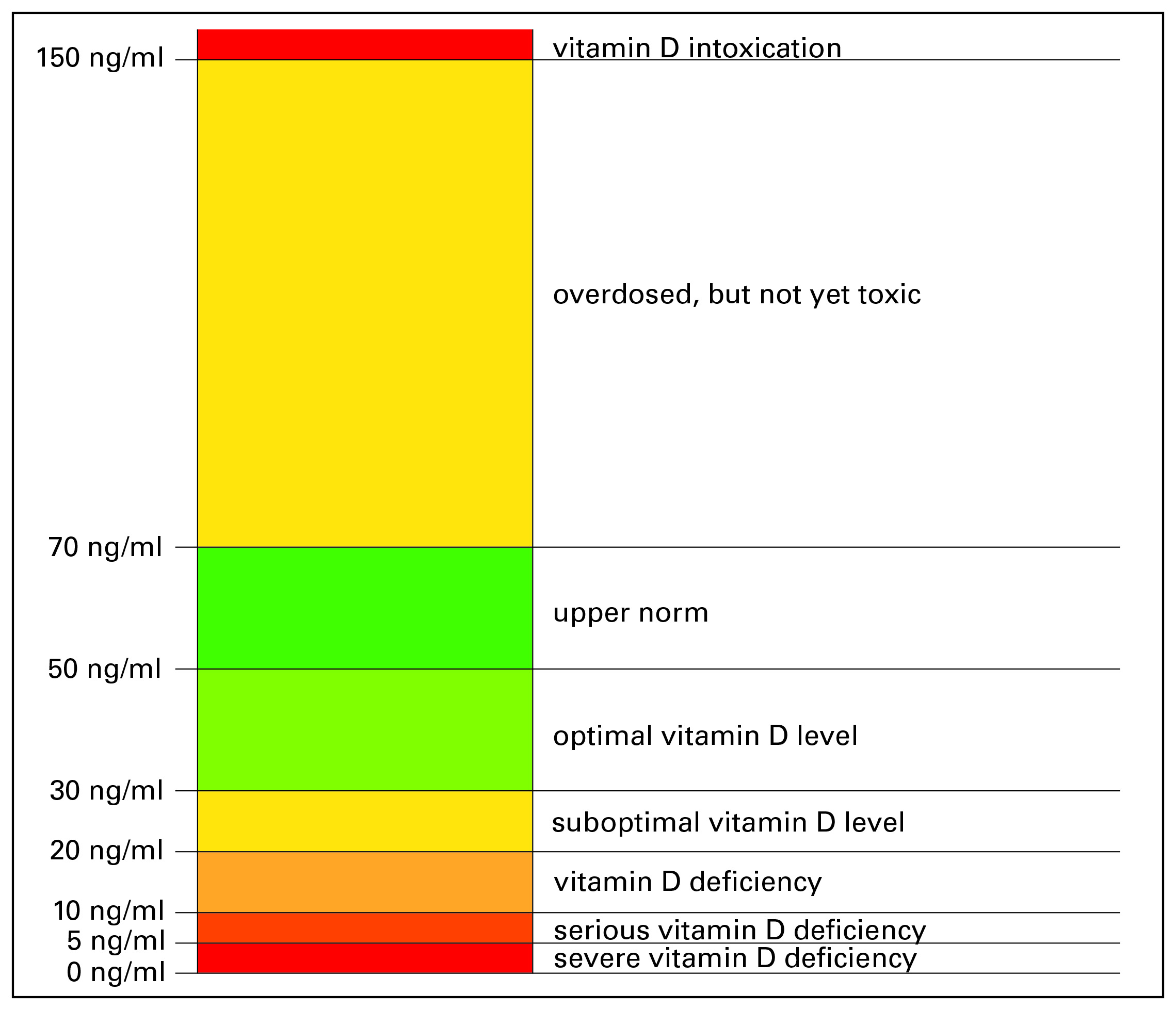
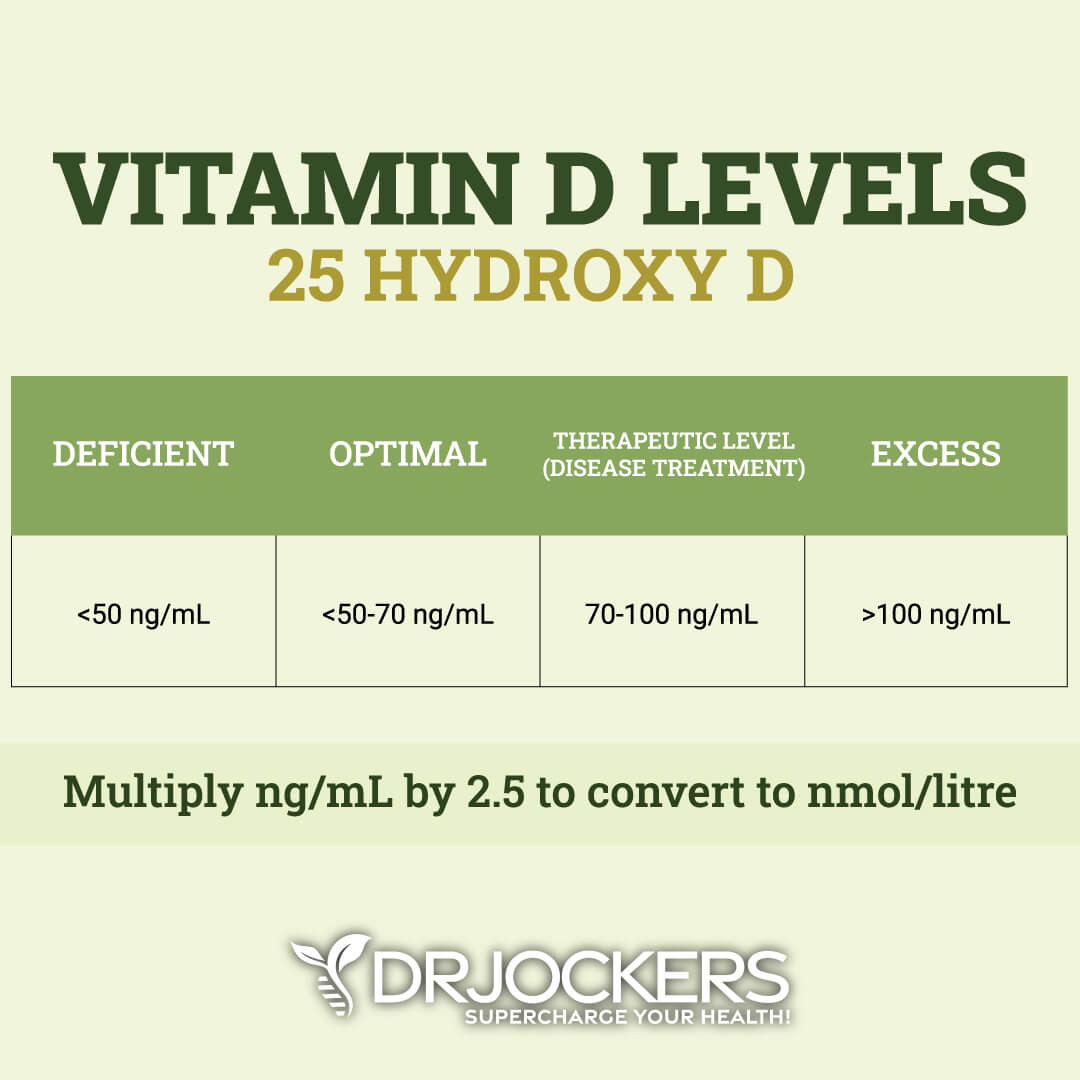
Seeing a vitamin D number creep above 100 ng/mL can trigger an instant wave of worry—especially when the result feels like it belongs to someone else. Yet reality is rarely that simple. Vitamin D is a peculiar nutrient: partly hormone, partly “stored energy” for future use, and often influenced by lifestyle patterns that make the lab value look dramatic. So the question becomes less about the magic number itself and more about context—how the level was reached, what “healthy” means for your body, and whether anything indicates an overabundance.
What “over 100 ng/mL” really means
Vitamin D in blood is typically measured as 25-hydroxyvitamin D, a circulating reservoir form that reflects what’s been accumulated from sunlight exposure, diet, and supplements. A value above 100 ng/mL often feels like a siren. But the laboratory figure is not a direct measure of toxicity by itself. It’s closer to a snapshot of inventory than a direct thermometer of danger.
To interpret it, it helps to understand that “high” isn’t one uniform category. Some people hover around elevated ranges due to consistent supplementation or seasonal variation in sun exposure. Others spike quickly after high-dose protocols. The body’s handling—especially kidney function, calcium balance, and how long the elevated state lasts—can be decisive.
Many clinicians become most concerned when elevated vitamin D is paired with signs of calcium dysregulation. That’s when the story shifts from “surprisingly high” to “biochemically consequential.”
Danger vs acceptability: the calcium connection
The deeper reason vitamin D numbers fascinate and alarm is that vitamin D doesn’t merely “sit there.” It actively tunes the absorption of calcium from the gut. In well-calibrated systems, that feedback loop can be beneficial. In an over-corrected system, it can tip into hypercalcemia.
When vitamin D is excessively high, the body may absorb too much calcium. Over time, this can stress tissues and organs—particularly through effects on kidneys. Typical laboratory echoes include elevated serum calcium and sometimes suppressed parathyroid hormone (PTH). Urinary calcium can also rise, increasing the risk of kidney stones for susceptible individuals.
So, a key question is not “Is it above 100?” but “Is calcium behaving?” Without those accompanying markers, “over 100” remains an ambiguous signal—an alarm that might be loud, but not necessarily correct about what’s happening in the body.
Why people reach vitamin D levels above 100
Numbers above 100 often arise from specific patterns. The most common culprit is supplementation—especially when dosing is aggressive, frequent, or combined across multiple products. Many people don’t realize that a “multivitamin,” an additional “vitamin D capsule,” and sometimes fortified foods can stack more than expected.
Another frequent driver is higher baseline sun exposure plus supplements. In some climates and lifestyles, consistent outdoor time can raise 25-hydroxyvitamin D enough that even a moderate supplement pushes the level into an elevated zone.
Less commonly, certain health conditions can alter vitamin D metabolism. Granulomatous disorders or some inflammatory states can increase conversion to active forms of vitamin D, changing the risk profile. In such cases, the body’s regulatory circuitry may behave differently, and the same lab value might carry more meaning.
There’s also a subtle logistical issue: timing. If a person takes a large dose shortly before testing, the result can reflect short-term elevation rather than a steady plateau.
The body’s “regulatory choreography”
Vitamin D metabolism is a choreography with multiple steps: conversion in the liver to 25-hydroxyvitamin D, then further conversion in the kidneys (and sometimes other tissues) to the active hormone form. Parathyroid hormone, calcium, and phosphate participate in the rhythm.
When vitamin D is high enough, the system can respond by reducing PTH. That reduction may look like a “good sign” of biological stability. But stability without checking calcium can be misleading.
Furthermore, vitamin D can persist in the body due to its fat-soluble nature. It’s not like vitamin C, which is rapidly cleared. This persistence creates a lingering effect—meaning that a high value may remain high for weeks or months, even after supplementation stops.
That persistence is part of why people become fascinated by vitamin D. The nutrient feels slow-moving and powerful, almost like a weather pattern. But with slow-moving power comes slower correction when adjustments are needed.
Symptoms and risk: what to watch for
Vitamin D excess can be silent early on. When it does cause harm, symptoms often relate to hypercalcemia. Think fatigue that feels unusual, increased thirst, frequent urination, nausea, constipation, or muscle weakness. Some people notice cognitive fog or a generalized “off” feeling.
Kidney-related warning signs matter too. Kidney stones can appear as sharp flank pain, sometimes with blood in urine. In advanced cases, chronic strain on renal function can become more apparent through labs and imaging.
It’s important to avoid a binary mindset. Many individuals with high vitamin D feel completely fine and have normal calcium levels. For others, the elevated number may be a precursor to problems. That’s why pairing lab values with clinical context is not optional—it’s the difference between reassurance and neglect.
What labs should be checked alongside vitamin D
If someone reports vitamin D above 100 ng/mL, sensible follow-up often includes calcium, albumin (to interpret calcium), phosphate, PTH, and sometimes 24-hour urine calcium. Renal function tests—such as creatinine or estimated glomerular filtration rate—are also commonly considered.
These tests help determine whether the high vitamin D has translated into a biochemical ripple effect. Without them, “over 100” is like seeing a storm cloud without knowing whether lightning is happening.
It’s also useful to review supplement history: exact dose (in IU), frequency, duration, and whether multiple products contain vitamin D. Accuracy matters, because one misremembered tablet count can change the interpretation dramatically.
How high is too high, and why guidelines differ
You might notice that recommendations vary: some organizations suggest an upper threshold for routine supplementation, while others allow higher ranges under medical oversight. This variation exists because the evidence base for “harm” at specific numbers is not perfectly uniform across populations.
Different studies examine different dosing strategies, different baseline vitamin D statuses, and different follow-up durations. Some look at symptoms; others focus on lab markers like calcium. Over time, the “danger line” gets drawn more sharply for some endpoints and less for others.
Another layer is individual variability—body weight, absorption efficiency, baseline deficiency severity, sun exposure, and comorbidities all influence outcomes. What is tolerable for one person may be excessive for another.
That’s the deeper reason the topic feels like a puzzle: vitamin D is both dosage-dependent and idiosyncratic.
Common misconceptions: “high vitamin D means high calcium” (sometimes)
A frequent misconception is that any vitamin D number above 100 automatically equals toxicity. Yet the body may buffer excess vitamin D without immediate hypercalcemia. Another misconception is that vitamin D must always be pushed upward to “optimize health.” But chronic over-supplementation can convert an intention—correcting deficiency—into a long-term imbalance.
Some people also assume their lab result represents a stable state. It might be a transient peak, particularly if the test timing coincided with a recent high-dose regimen. Others assume the range is universal. It isn’t. Interpretation requires alignment between lab results, symptoms, and supplement behavior.
So—dangerous or acceptable?
Answering the question requires nuance. A vitamin D level over 100 ng/mL can be acceptable in the sense that it does not automatically prove toxicity. But it is rarely something to ignore casually. The number is a prompt: reassess dosing, check accompanying labs, and review personal risk factors.
If calcium and related markers are normal, kidney function is intact, and there are no symptoms, many clinicians consider the situation manageable—often by reducing or pausing supplementation and rechecking levels after an interval.
If calcium is elevated, PTH is suppressed significantly, urinary calcium is high, or symptoms suggest hypercalcemia, the situation shifts toward potentially dangerous territory. In that scenario, medical guidance becomes urgent, not optional.
In short: “over 100” is a threshold for investigation, not a guarantee of catastrophe.
Practical next steps: recalibrate with intention
Begin with a careful audit. Identify every source of vitamin D: supplements, multivitamins, fortified beverages, and dosing schedules. Then coordinate follow-up labs—calcium, PTH, phosphate, kidney function, and possibly urine calcium—guided by a healthcare professional.
Often, the immediate move is dose reduction or temporary discontinuation. Because vitamin D is fat-soluble, levels may remain elevated for weeks. Patience is part of the therapy, not an obstacle.
Re-testing helps confirm whether the adjustment worked. The goal is not to chase a specific digit, but to land in a range that supports healthy calcium handling without overreaching.
A final perspective: why this number grips our attention
Vitamin D levels inspire both obsession and anxiety because they sit at the crossroads of biology and behavior. Sun exposure, food choices, supplement culture, seasonal rhythms, and lab interpretation all converge in a single number. A chart can look dramatic; a lab report can feel like a verdict.
But the body doesn’t interpret numbers the way we do. It interprets them through systems—calcium regulation, kidney resilience, hormonal feedback loops, and time. That’s why the story of vitamin D over 100 ng/mL is ultimately less about panic and more about precision: asking better questions, checking the right markers, and recalibrating the plan.