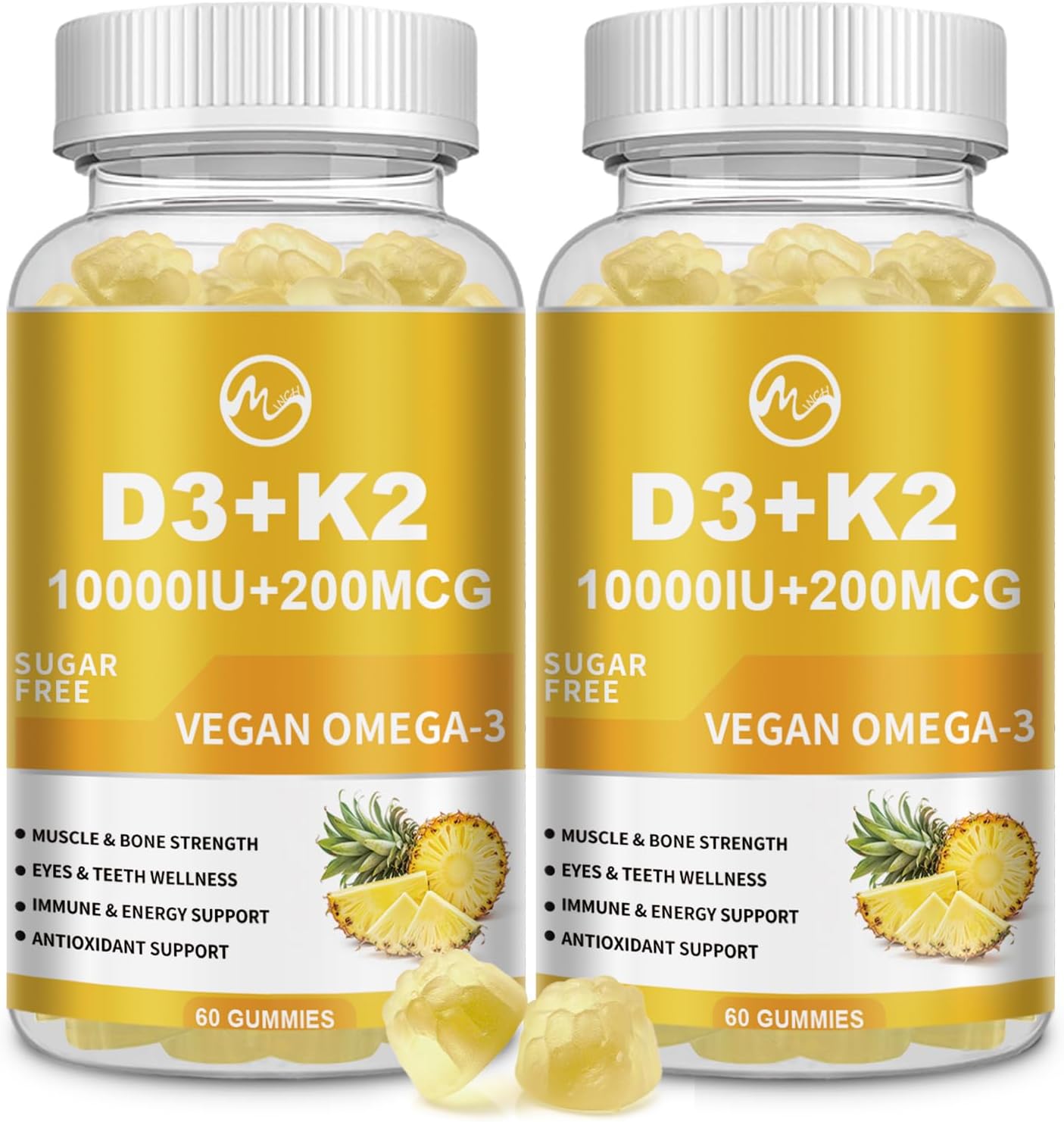
Vitamin D3 and K2 often travel as a pair in modern wellness conversations, but the relationship between them is frequently misunderstood. Some people treat them like interchangeable supplements; others believe they’re a cure-all. The truth is more nuanced—rooted in biochemistry, influenced by diet and sunlight, and moderated by individual risk factors. Let’s untangle the benefits, the possible risks, and the myths that keep repeating, so you can make choices with clarity rather than hype.
Why Vitamin D3 Is So Important (and Why Your Body Can’t Always Produce Enough)
Vitamin D3—commonly called cholecalciferol—is a fat-soluble vitamin that behaves like a hormone precursor. Your skin can synthesize it when exposed to UVB radiation, but real-world conditions often disrupt that pathway. Latitude, winter months, sunscreen habits, indoor lifestyles, and skin pigmentation can all reduce cutaneous production.
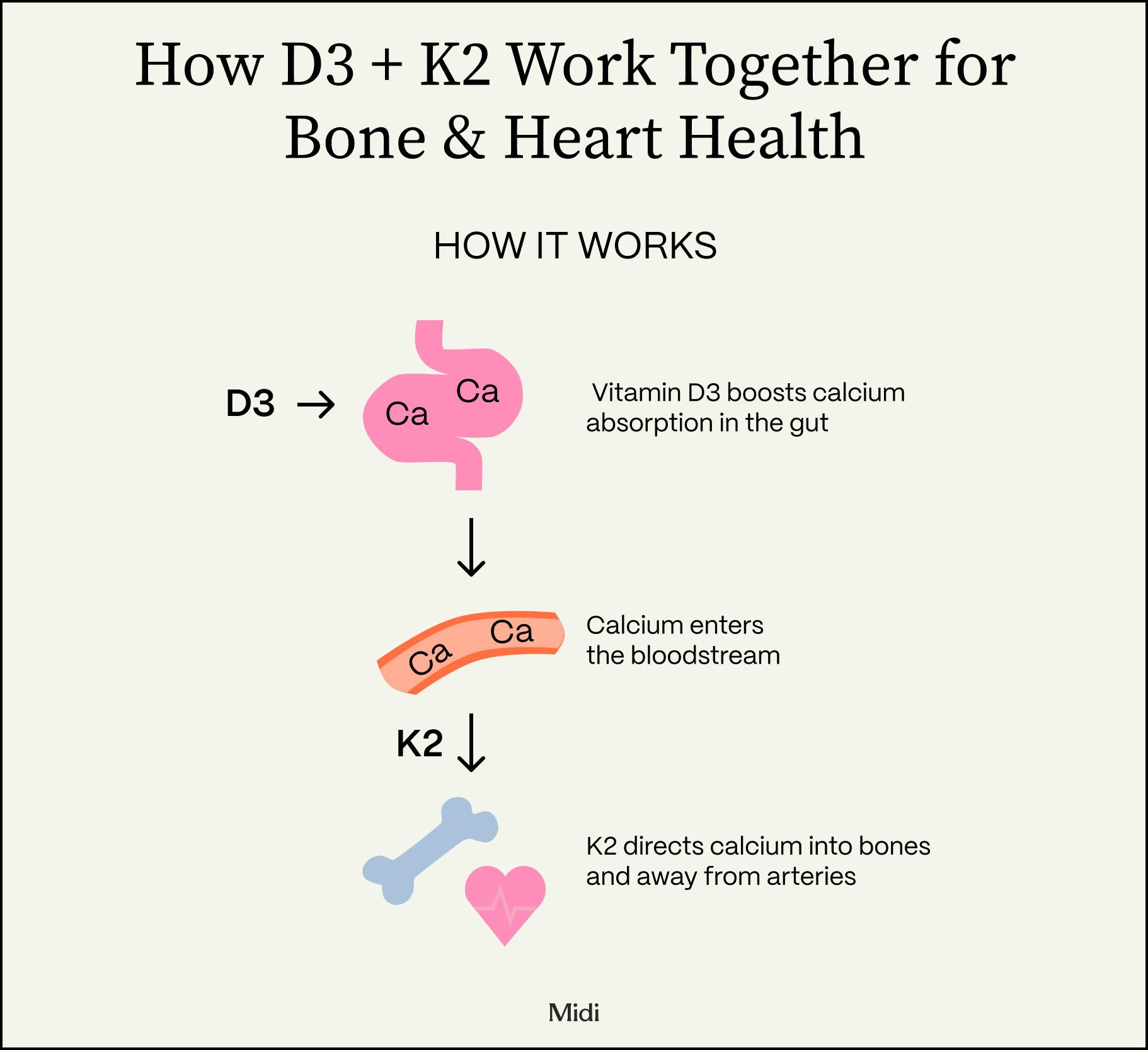
Once D3 is made or absorbed, it travels through the liver and kidneys where it gets converted into its active forms. These active compounds influence calcium absorption in the gut and help regulate immune signaling. In practical terms, adequate vitamin D status supports skeletal integrity, muscle function, and a more orderly inflammatory response.
Yet there’s a frequent misconception here: “I feel fine, so I’m fine.” Vitamin D deficiency can be stealthy. It may not announce itself with dramatic symptoms. Over time, low levels can contribute to bone demineralization, increased fall risk in older adults, and sometimes a sense of fatigue or muscle weakness.

Vitamin K2: The Quiet Conductor of Calcium’s Destination
Vitamin K2—menaquinone forms—plays a different role than vitamin D3. If vitamin D3 helps pull calcium into the bloodstream, K2 helps decide what happens next. It activates proteins involved in directing calcium to the bones while inhibiting its inappropriate deposition in soft tissues.
In the body, this is not a dramatic switch. It’s a regulatory choreography. K2 supports proteins such as osteocalcin (bone-related) and matrix Gla protein (vascular and tissue related). When K2 signaling is insufficient, the system may still absorb calcium, but the “delivery route” can become less efficient.
Because of this functional relationship, D3 and K2 are often discussed together. But the pairing is not magic; it’s an attempt to mimic optimal nutrient coordination. Think of it as aligning two steps of a supply chain rather than adding a single missing part.
How D3 and K2 Work Together: The Synergy Myth (and the Realistic Version)
Online, the synergy narrative can become inflated. Some people claim that taking both automatically prevents arterial calcification or guarantees stronger bones. That’s too simplistic. Biological systems are influenced by more than two nutrients: genetics, magnesium status, dietary calcium intake, kidney function, physical activity, and overall caloric balance matter.
Still, there is a credible rationale for their combined use. Vitamin D3 increases calcium availability, while K2 influences calcium’s biological “address label.” In many individuals, especially those with inadequate dietary intake of K2, supplementing K2 alongside D3 may improve the odds of calcium being utilized where it belongs.
But “better odds” is not a guaranteed outcome. The most dependable approach is to consider lab testing (vitamin D status), dietary patterns, and whether you have risk factors for bone loss or vascular complications.
Benefits People Commonly Seek (and What They Can Expect)
When D3 and K2 are used appropriately, the most discussed benefits fall into three categories: bone support, calcium metabolism, and possibly cardiovascular risk modulation.
Bone health: Adequate vitamin D helps maintain normal calcium absorption. K2 may support bone mineralization by activating osteocalcin-related pathways.
Calcium metabolism: Together they may reduce the likelihood of calcium drifting into tissues where it shouldn’t accumulate. This is the rationale behind many “bone-to-blood vessel” conversations.
Cardiovascular support (with caution): Some research suggests associations between K2 intake and lower progression of vascular calcification. However, results are not universally consistent, and supplements aren’t a substitute for blood pressure management, lipid control, smoking cessation, and exercise.
Expect benefits to be gradual rather than immediate. Long-term nutrient repletion typically requires months, not days.
Different Forms of Supplements: Gummies, Capsules, Drops, and Methylated Realities
Not all D3 and K2 products are created equal. Gummies can be appealing because they’re easy to take and often flavored. But gummies also vary widely in sugar content, dosing accuracy per serving, and stability. Capsules and tablets may offer more precise dosing, though they still differ by formulation and bioavailability.
Liquid drops can be convenient for those who dislike pills. Still, absorption depends on the carrier oil and whether the product is taken with a meal containing fat.
For vitamin K2, form matters. K2 is commonly found as MK-7 or MK-4. MK-7 has a longer circulation profile, while MK-4 may have different kinetics and dosing conventions. People often overlook that “K2” is not a monolith; it’s a family.
One more factor: vitamin D3 is fat-soluble. Taking it with a meal can improve uptake. Taking fat-soluble vitamins on an empty stomach may reduce absorption efficiency.
Risks and Side Effects: When “More” Becomes “Problematic”
Vitamin D3 risks are primarily dose-related. Excess vitamin D can cause hypercalcemia—too much calcium in the blood—which may lead to nausea, constipation, confusion, excessive thirst, frequent urination, and in severe cases, kidney injury. The body can only buffer so much before systems begin to misfire.
K2 is generally considered to have a lower toxicity profile because it doesn’t raise calcium levels by itself. However, safety depends on context. The most critical risk involves drug interactions rather than direct toxicity.
Allergic reactions and sensitivities: Some products contain gelatin, pectin, dyes, or flavorings. Anyone with sensitivities should read labels carefully.
Quality and labeling: Third-party testing isn’t glamorous, but it matters. Supplements can vary in potency and purity. Choosing reputable brands with transparent testing can reduce the likelihood of under-dosing or contamination.
Drug Interactions: The Big Red Flag for Blood Thinners
If you take warfarin or other vitamin K antagonists, you need professional guidance before using K2. This is not a minor detail. Vitamin K is directly involved in clotting factor activation, and interfering with that pathway can change your bleeding or clotting risk.
In such cases, clinicians may recommend avoiding K2 entirely or carefully coordinating dosage changes with INR monitoring. Even consistent intake of vitamin K from foods can matter, so supplementing K2 without oversight can be a dangerous shortcut.
Also consider interactions with other medications that influence calcium balance, bone metabolism, or kidney function.
Common Myths That Keep Circulating
Myth 1: “Vitamin D3 and K2 are only for older adults.” Deficiency can occur at any age. People with limited sun exposure, darker skin tones, malabsorption issues, obesity, or certain dietary patterns may benefit from assessment regardless of years.
Myth 2: “If you take D3, you automatically need K2.” Not everyone. Some individuals have adequate K intake from diet, and others may not require supplementation at all if their vitamin D status is sufficient. Blanket recommendations can become a nutritional oversimplification.
Myth 3: “More vitamin D is always better.” It’s not. Over-supplementation can be harmful. Optimal dosing depends on baseline levels and individual factors.
Myth 4: “Gummies can’t be dangerous.” Convenience isn’t safety. Dosage still matters, and sugary formats can lead to accidental overconsumption.
Myth 5: “Supplements erase the need for lifestyle.” Nutrients support biology, but they don’t replace resistance training, adequate protein intake, sleep quality, and smoking cessation.

How to Decide If You Should Take Them: A Practical Checklist
Start with questions, not assumptions. How much sunlight do you get? Do you have a history of low vitamin D? Do you follow a diet low in K2-rich foods (certain fermented foods and animal-based sources are more notable contributors)? Do you have kidney issues, malabsorption conditions, or high calcium levels?
If you’re considering vitamin D3, testing is a rational compass. Measuring 25(OH)D can guide dosing rather than guessing. For K2, there’s no universally used lab test that makes supplementation decisions as straightforward as vitamin D, so diet, risk profile, and clinician input become more important.
If you take anticoagulants, pause. Get tailored advice before adding K2. If you have a history of kidney stones or high calcium, use extra caution and medical supervision.
The Most Useful Bottom Line
Vitamin D3 and K2 are best understood as collaborators in calcium management. Vitamin D3 helps ensure calcium is available; K2 helps support where calcium should go. Together they may strengthen bones and support healthier calcium signaling, but they are not invincible shields against chronic disease.
Benefits are plausible, especially when someone is deficient or at risk. Risks exist mainly around excessive vitamin D dosing and around K2 interactions with anticoagulant therapy. Myths persist because nutrient science is complex, and marketing is eager to compress complexity into a slogan.
Choose with deliberation: assess your baseline status, respect dose thresholds, consider the form you’re taking, and let your healthcare context—not internet certainty—shape the final decision.