Many people discover D3 and K2 together, then wonder—often at the worst possible time—whether they can safely combine these vitamins with blood thinners. The answer is not simply “yes” or “no.” It depends on which anticoagulant you take, how steady your dosing is, and how closely your body’s clotting balance is being monitored. When warfarin enters the conversation, the stakes rise, because vitamin K can directly influence how this medication performs. Below is a guided, reader-friendly exploration of what to expect, what to ask, and why a measured approach matters.
First, clarify what “blood thinners” means
The phrase “blood thinners” is a common umbrella term. In practice, it covers multiple drug classes with different mechanisms. Some are vitamin K antagonists, while others inhibit different steps in the coagulation cascade. That distinction is critical for D3/K2 safety.
If you take warfarin, the medication is designed to counteract vitamin K–dependent clotting factors. In that scenario, vitamin K intake can meaningfully alter your therapeutic response. If you take other anticoagulants—such as apixaban, rivaroxaban, dabigatran, or edoxaban—the relationship to vitamin K tends to be indirect or nonexistent, depending on the drug. Still, it’s wise to treat any supplement change as clinically relevant, because drug metabolism and bleeding risk are never purely theoretical.
What vitamin D3 and vitamin K2 actually do
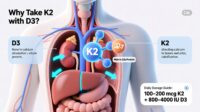
Vitamin D3 is best known for supporting calcium absorption and bone mineralization. It nudges the body toward improved mineral handling, which can be especially relevant in those with low sun exposure, malabsorption syndromes, or age-associated declines.
Vitamin K2 (often discussed as menaquinone-4 or menaquinone-7) plays a distinct role: it participates in the post-translational modification of proteins involved in calcium regulation. In plain language, K2 helps ensure that calcium is directed toward skeletal tissues rather than drifting toward inappropriate calcification.
When D3 and K2 are paired, the logic is elegant: D3 improves calcium availability, while K2 helps manage calcium’s “whereabouts.” Yet elegance can fade when a medication like warfarin is part of the equation.
Warfarin warning: why K2 is the main concern
Warfarin works by interfering with vitamin K–dependent pathways. Because of that, taking extra vitamin K—especially in a concentrated or inconsistent form—can reduce warfarin’s anticoagulant effect. The result could be a subtherapeutic INR and an elevated risk of clotting.
This is not a moral panic; it’s pharmacology. Warfarin doesn’t just “coexist” with vitamin K. It competes with vitamin K’s biological work. When vitamin K levels rise abruptly, the coagulation system may regain momentum.
That is why K2 is the ingredient that triggers the strongest caution. D3 is also worth discussing with your clinician, but K2 is the more direct lever in the warfarin mechanism.
Can you take D3 + K2 with warfarin? The safest answer is “only with clinician guidance”
Some patients can take vitamin K in a controlled manner while on warfarin, but the key word is controlled. Clinicians may recommend either avoiding vitamin K supplements or keeping intake stable so the INR can be adjusted accurately.
“Stability” matters because warfarin dosing relies on a moving target. Your INR is not a fixed label; it is a measured response. If vitamin K intake changes day to day, the INR can swing, and those fluctuations can be dangerous.
Therefore, the safest practical pathway is this: do not start D3 + K2 on your own while on warfarin. Have a conversation first, then adjust based on INR trends and individualized risk factors. If your clinician approves K2, they may align your dosing schedule and monitor more frequently at the start.
INR monitoring: what changes to expect
If you and your clinician decide to use K2, expect closer INR surveillance during the transition period. Even “small” supplement changes can tug at the warfarin-vs-vitamin-K balance. Your body’s response may vary based on diet, liver function, concurrent antibiotics, alcohol intake, and illness.
A common pattern is this: you begin supplementation, then INR is checked, then warfarin is adjusted. That cycle can repeat. It may feel inconvenient, but it is precisely how safety is built—through measurement rather than assumption.
If INR rises (meaning clotting risk increases), your clinician may reduce warfarin. If INR falls too much (increasing bleeding risk), they may fine-tune upward. Either way, the point is that supplementation should be treated like an adjustable variable, not a “set-and-forget” wellness flourish.
Diet matters just as much as supplements
Vitamin K comes not only from capsules; it comes from food. Leafy greens (such as spinach and kale), certain cruciferous vegetables, and some vegetable oils can all influence vitamin K intake. For warfarin users, inconsistency is the enemy.
If your current diet already includes moderate or high vitamin K foods, a supplement may push you beyond your stable range. If your diet is low, introducing K2 suddenly may raise vitamin K exposure quickly.
This is why many clinicians prefer consistent dietary patterns. You don’t need to “avoid” vitamin K foods entirely; you often need steadiness. Discuss your typical weekly pattern—portion sizes, frequency, and seasonal changes—with a healthcare professional so your plan is not built on guesswork.
D3 alone: still discuss it, even if K2 is the culprit
Vitamin D3 doesn’t interfere with warfarin in the same direct way K2 does, but it can still affect clinical outcomes indirectly. For instance, correcting vitamin D deficiency can change calcium dynamics, and those shifts may influence certain health conditions.
Additionally, supplement products sometimes bundle D3 and K2 together. If your goal is bone support, you might be able to use D3 with a different K strategy, depending on your medical history and INR stability.
Before adding or changing D3, consider checking baseline 25(OH)D levels. That gives the supplementation conversation a rational backbone, instead of relying on generic dosing.
Bleeding risk vs clot risk: outcomes are not symmetrical
When anticoagulation is destabilized, the consequences can be unpleasant and sometimes urgent. Too little anticoagulation can increase clot risk—think stroke, deep vein thrombosis, or pulmonary embolism, depending on your indication. Too much anticoagulation increases bleeding risk—ranging from easy bruising to more serious hemorrhages.
These risks do not “balance out” in a neat, mathematical way. That asymmetry is why warfarin patients are usually encouraged to keep vitamin K intake consistent and to monitor INR when changes occur.
Even mild symptoms—unusual bruising, nosebleeds, blood in urine or stool, or sudden severe headaches—should prompt medical attention. Likewise, signs of clotting (new one-sided swelling, chest pain, or neuro symptoms) are emergencies.
Different anticoagulants: the rules may change
If your blood thinner is not warfarin, the K2 warning may be less direct. For many direct oral anticoagulants, vitamin K does not carry the same controlling influence because they target different mechanisms. That said, safety still requires individualized evaluation. Drug–nutrient interactions are rarely limited to a single variable, and clinicians often consider bleeding risk comprehensively.
Always identify the exact medication name and dose. “Blood thinner” is too vague for clinical decision-making. The safest supplement plan depends on the specific anticoagulant you take and your medical indication.
Choosing products thoughtfully: concentration, form, and consistency
Supplements vary widely in vitamin K2 form and dosage. Some products use menaquinone-7, others include menaquinone-4, and the amounts can be substantial. Inconsistent use—skipping days, doubling doses, or switching brands—can introduce irregular vitamin K exposure.
If supplementation is approved, consider sticking with one product from a consistent manufacturer, and take it at the same time each day. Consistency is not merely convenience; it is a clinical strategy.
Also pay attention to “starter” dosages. A lower dose that maintains stable INR may be preferable to a higher dose that creates volatility.
Practical next steps: a checklist for safer decisions
Before taking D3 + K2 while on warfarin, gather key information: your anticoagulant name, your target INR range, your most recent INR value, and how stable it has been. Ask your clinician specifically whether K2 is allowed, whether you should avoid it, or whether a consistent dietary plan is sufficient.
Discuss timing too. Some people want to take supplements in the morning with meals; others prefer night dosing. While timing alone rarely solves the interaction, it can support consistency.
Finally, schedule follow-up INR testing if you make any change to supplements or diet. A short window of extra monitoring can prevent months of uncertainty.
Bottom line: D3 + K2 can be complicated with warfarin
Vitamin D3 and vitamin K2 are popular for bone-related wellness, but warfarin adds a crucial warning. K2 is the primary concern because of vitamin K’s direct relationship to warfarin’s anticoagulant effect. The safest approach is clinician-guided decision-making, stable intake patterns, and INR monitoring when changes occur.
If you’re on warfarin, don’t treat this like a generic supplement choice. Treat it like a medication adjustment—because, for warfarin users, that’s exactly what it can be.