For many people, Vitamin D is less a supplement than a quiet companion—felt most in winter mornings when sunlight seems distant, and noticed most when blood tests reveal an unusually low number. Then comes a familiar question, asked with equal parts hope and caution: Is 5000 IU Vitamin D safe? The answer isn’t a simple yes-or-no. It’s a map—one drawn with context, biology, and time. And once you start looking at it that way, the conversation shifts from “Is it safe?” to “What does safety mean over the long haul?”
5000 IU: What the Number Really Means
IU—International Units—can sound like a tidy, universal measure, but your body experiences Vitamin D in a highly personal manner. Vitamin D is fat-soluble, which means it behaves less like a short-lived vitamin and more like a stored resource. In practical terms: the dose you take today can influence your blood levels weeks later, and sometimes months later. That delayed footprint is part of why 5000 IU raises both curiosity and vigilance.
At 5000 IU per day, many adults end up targeting the mid-to-upper range of blood 25(OH)D—often discussed as the main circulating marker. Yet “target” depends on your baseline level, absorption efficiency, body composition, kidney function, and even seasonal sun exposure. The same dose can be a restorative nudge for one person and an accumulating excess for another.
Benefits: The Upside of Getting Vitamin D Right
The promise of Vitamin D is rarely flashy. It’s more like a scaffolding nutrient—subtle, structural, and essential for multiple physiological systems. The most immediate benefit most people hope for is improved Vitamin D status, especially when sunlight is minimal or dietary intake is limited.
When Vitamin D levels rise into an adequate range, calcium absorption in the gut often improves. That supports bone mineralization—the process by which bones become sturdy rather than merely intact. Over time, adequate Vitamin D may contribute to healthier bone density and help reduce risk factors associated with falls and fractures, particularly in older adults.
There is also a broader immunometabolic narrative. Vitamin D participates in immune signaling pathways, and research links low Vitamin D status with certain inflammatory and autoimmune conditions. Still, it’s important to hold the nuance: association does not equal destiny. Vitamin D can be supportive, but it isn’t a solo performer.
And then there’s the mental-weather angle. Some people report improved mood or energy after correcting deficiency—though results vary widely. The key is that safety and benefit are intertwined: the best outcome usually comes from dosing that aligns with your measured needs.
The Long-Term Safety Question: Where Risk Can Creep In
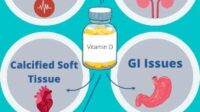
Vitamin D becomes risky mainly when it overshoots what the body can comfortably metabolize and store. Because it is fat-soluble, excessive intake can lead to accumulation. The long-term concern isn’t just “too much Vitamin D,” but what too much does downstream. The most clinically important risk pathway involves hypercalcemia—elevated calcium levels in the blood.
Hypercalcemia can lead to symptoms that are easy to dismiss at first: nausea, constipation, excessive thirst, frequent urination, fatigue, confusion, and in more serious cases, kidney stress. Kidneys are not passive filters; they actively manage calcium balance. Sustained calcium elevation can contribute to kidney stones and, rarely, more severe renal complications.
Another angle is that overly high Vitamin D can suppress parathyroid hormone (PTH) too much. PTH is a conductor that helps coordinate calcium and phosphorus equilibrium. Disruption of that equilibrium can make the body feel “off,” even when vitamin pills look harmless.
What Counts as “Safe”? The Role of Blood Testing and Individual Targets
Safety isn’t a universal constant; it’s a personalized boundary. A practical approach relies on monitoring—especially if you plan to take 5000 IU daily for months. Most clinicians focus on 25-hydroxyvitamin D as the primary marker. It reflects Vitamin D stores and correlates more consistently with overall status than short-lived fluctuations.
A second layer of safety is checking related markers, particularly if dosing is high or prolonged: serum calcium, sometimes phosphorus, and often kidney function. This isn’t about fear—it’s about precision. One person may remain safely within the desired range, while another may drift upward steadily without obvious symptoms.
Consider the phrase: measured moderation. It’s a perspective shift. Rather than guessing with pills, you verify with data. Over time, that reduces uncertainty and prevents the slow-motion surprises that can occur with fat-soluble compounds.
How Long Should 5000 IU Be Used?
Another shift in perspective: timing matters as much as dosage. Some regimens use higher doses temporarily to correct deficiency, then transition to a maintenance dose. That strategy can be safer than staying at 5000 IU indefinitely, regardless of whether the body has already reached equilibrium.
If your baseline is low, 5000 IU may function like a targeted “repletion phase.” If your baseline is already sufficient, the same dose could become a chronic excess. Long-term use should ideally follow a pattern: reassess after a reasonable interval, then adjust.
Think of it like refilling a tank. Safety comes from knowing when the tank is full—not from continuing to pour “just in case.”
Who Should Be Extra Cautious?
Certain conditions amplify risk, turning the dose question into a more careful conversation. People with a history of kidney stones, chronic kidney disease, hyperparathyroidism, sarcoidosis or other granulomatous diseases, and certain rare disorders of calcium metabolism may need stricter oversight. In such cases, Vitamin D can behave differently because calcium regulation is already altered.
Medication interactions also matter. If you take thiazide diuretics, for example, your calcium handling can be affected. If you’re on corticosteroids, absorption and metabolism can change. Even if a supplement is “natural,” its timing and co-administered drugs can alter outcomes.
Pregnancy, multiple sclerosis therapies, and malabsorption syndromes add more variables. The underlying theme is simple: your physiology writes the final story, and it doesn’t always respond like an average case.
Common Signs of Too Much Vitamin D
Early excess may be subtle. Many symptoms of hypercalcemia overlap with everyday issues—sleepiness masquerading as burnout, constipation mistaken for diet changes, dehydration attributed to summer weather. But patterns can reveal the truth.
If someone taking high-dose Vitamin D experiences persistent thirst, increased urination, ongoing nausea, unusual fatigue, or mental cloudiness, the rational move is to pause and check labs rather than “wait it out.” In health, silence can be misleading. Biomarkers speak more clearly than guesswork.
Most importantly: don’t rely on how you feel alone. Elevated blood levels can exist without dramatic symptoms, especially early on.

Benefits vs. Risks: A Balanced Conclusion
Is 5000 IU Vitamin D safe? For some adults—especially those with documented deficiency and appropriate monitoring—it can be. For others—particularly those with sufficient baseline levels or underlying conditions—it can overshoot. Safety depends on calibration: blood levels, symptoms, calcium metabolism, and the duration of use.
The healthiest mindset is neither alarmist nor complacent. It’s curious and disciplined. Take the supplement if it’s genuinely needed, check progress, and adjust. When Vitamin D dosing is personalized, the benefits—bone support, metabolic harmony, immune modulation—become more likely, and the risks—hypercalcemia, kidney stress—become less probable.
Your next step can be simple: if you’re considering 5000 IU long-term, make measurement part of the plan. Let your body’s data—not assumptions—set the pace. That’s how the question transforms from “Can I?” into “Is this right for me?”