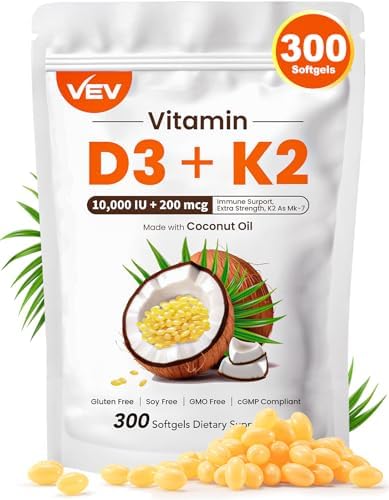
There’s a particular kind of chemistry in wellness—an almost cinematic choreography between ingredients that cooperate instead of merely coexist. Vitamin D, often dubbed the “sunshine vitamin,” has a talent for performing important biological work. Yet, like a careful conductor, it needs the right conditions to ensure the melody reaches its audience. Coconut oil, with its silky lipid profile, can be that supporting cast member—quiet, dependable, and surprisingly influential. When Vitamin D meets coconut oil, absorption doesn’t just improve; it feels like the difference between reading a script and stepping onto the stage.
Vitamin D: The Sunshine Signal That Still Needs a Passport
Vitamin D is not merely a nutrient; it’s a messenger. In the body, it functions like a coded directive, steering calcium regulation and supporting immune modulation. But vitamin D is unusual in a crucial way: its performance depends heavily on delivery. Many people assume that “having vitamin D” automatically means “using vitamin D.” In practice, bioavailability can be the bottleneck.
Think of vitamin D as a traveler carrying essential documents. Without the right transport route, the traveler may arrive late—or not at all. For supplementation, that “route” is largely determined by how the vitamin is dissolved, transported through the digestive system, and ultimately absorbed into circulation. If vitamin D is packaged for optimal uptake, the body can recognize it more efficiently, like a lock that aligns with the proper key.
This is where formulations matter. Softgels and oil-based preparations can provide a more cooperative environment than dry or poorly absorbed formats. The goal isn’t hype—it’s physics, chemistry, and physiology working in concert.
Coconut Oil: A Lipid Liaison with a Comforting Texture
Coconut oil is often described in friendly culinary terms, but inside the body it plays a more technical role. Its fatty acid composition includes medium-chain triglycerides (MCTs), which tend to be processed differently than long-chain fats. That distinctive handling can make coconut oil an effective “carrier” environment for fat-soluble compounds.
Imagine coconut oil as a well-organized backstage crew. It doesn’t try to steal the spotlight. Instead, it ensures the show runs smoothly—supporting transport, interacting with digestion processes, and offering a vehicle for solubilizing nutrients.
There’s also an aesthetic appeal in its ingredient logic. Coconut oil’s presence is not a random add-on; it’s an edible oil foundation that aligns with the vitamin’s fat-soluble nature. In other words, it’s less like forcing a fish to climb a tree, and more like placing the fish back in water.
Why Absorption Matters: Bioavailability Is the Real Plot Twist
Even if vitamin D is present, the story isn’t fully written until absorption happens. Bioavailability determines whether the supplement becomes an actionable signal. The digestive environment is not a uniform stage; it varies in pH, enzyme activity, and fat processing. A formulation that anticipates these variables can feel like a custom-tailored suit for your metabolism.
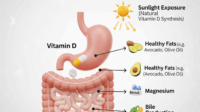
Coconut oil can act as an absorption facilitator by supporting the solubilization of fat-soluble vitamins. When the vitamin is dispersed in an oil matrix, it may navigate the gastrointestinal landscape more effectively. The result can be smoother uptake and a more reliable “reach” into systemic circulation.
Short version: better delivery can mean better utilization. Longer version: the body experiences the nutrient as more accessible, and that accessibility can translate into more consistent outcomes over time.
Softgels and Oil-Based Delivery: The Engineering Behind Ease
Softgels deserve respect for their structural simplicity. They encapsulate nutrients in a way that can reduce the friction between supplement and digestion. When vitamin D is combined with an oil base like coconut oil, the capsule becomes an elegant delivery system—protecting the ingredient until it’s ready to be released where absorption occurs.
Picture a time capsule sealed for the right moment. When it opens at the appropriate stage of digestion, the contents disperse in a manner that supports efficient absorption. This is particularly important for fat-soluble nutrients, which prefer an environment that feels familiar.
It’s not only about convenience. It’s also about consistency. Consistency helps adherence, and adherence is often the difference between “taking something” and “getting results.”
Higher Potency: The Appeal of Strength, Not Just Quantity
Some vitamin D products emphasize higher potency—often expressed in tens of thousands of IU per serving. For certain individuals, higher potency can be appealing for practical reasons: fewer pills, a more assertive dosing strategy, or a plan designed around seasonal changes.
However, potency is a lever that should be used thoughtfully. Vitamin D works best when aligned with individual needs, which can vary based on baseline levels, sun exposure, dietary patterns, body weight, and certain medical considerations.
Think of potency like a volume knob. More sound doesn’t automatically improve the music if the room acoustics aren’t right. The goal is the right level of intensity—enough to produce a clear signal without overpowering the system.
Vitamin D Plus K2: A Coordinated Duo for Calcium Pathways
Coconut oil often appears in vitamin D formulations, but many people are also drawn to synergistic pairings—especially vitamin K2 alongside vitamin D. The rationale is compelling: vitamin D supports calcium absorption, while vitamin K2 is associated with directing calcium’s role in the body.
When these nutrients are placed together, the narrative becomes one of orchestration. If vitamin D is the “unlocking” phase, vitamin K2 can be the “routing” phase—helping calcium follow the intended itinerary. This is why K2 (commonly MK-7) shows up frequently in thoughtfully designed supplements.
It’s a unique appeal: not a single ingredient trying to do everything, but two nutrients coordinating like teammates. Even the language of supplementation feels different when the formula suggests a plan, not a gamble.
The Soft, Steady Routine: Why People Stick With Oil-Based Vitamin D
There’s a behavioral dimension to supplements that’s easy to overlook. People continue a regimen when it feels easy to integrate. Oil-based softgels can be gentle and convenient, and their format is often associated with regular use.
When your supplement becomes a small, reliable ritual, it starts to resemble brushing your teeth—something you do without drama. That kind of routine supports long-term consistency, which is where nutrient work tends to reveal its cumulative benefits.
Short sentence, important thought: consistency compounds.
Choosing the Right Product: What to Look For
Not all vitamin D + coconut oil formulas are the same. Consider these selection principles: the vitamin D dose (and whether it aligns with your goals), whether coconut oil is part of the carrier, and whether the supplement includes vitamin K2 if that synergy fits your plan. Also pay attention to the softgel design, serving size, and the simplicity of the ingredient list.
The ideal product feels coherent. It doesn’t look like a random collection of nutrients. Instead, it resembles a purposeful system—one that treats absorption as an engineering problem, not an afterthought.
If you’re comparing options, approach it like evaluating a map. You want the route that makes sense for your destination.
Safety, Individualization, and Common-Sense Caution
Because vitamin D is potent and fat-soluble, it’s wise to be intentional. Many users focus on dose, but it’s also important to consider overall nutrient intake, baseline vitamin D status, and personal health context. If you’re taking higher-potency vitamin D, discussing dosing with a healthcare professional can be a prudent step.
Coconut oil is generally dietary, but formulas still vary. The body is a complex interpreter; what works smoothly for one person may need adjustment for another. Think of supplementation like tailoring: the “best” choice depends on the fit.
Long sentence, grounded message: a smart approach respects both ambition and measurement.
A Metaphor to Remember: A Sunbeam with a Luggage Handler
Vitamin D is the sunbeam. Coconut oil is the luggage handler that carries that sunbeam through the busy airport of digestion. The result can be a smoother transition from intake to action—an improvement in the chance that what you take becomes what you use.
So when you picture vitamin D absorption, don’t only imagine a chemical process. Imagine logistics, timing, and compatibility. That’s the intriguing appeal: the formula doesn’t ask your body to do extra work. It helps your body receive the signal with fewer obstacles.
In the end, vitamin D and coconut oil can feel like a match not because they sound good together, but because they behave well together—like a well-matched pair of hands guiding an important message home.