People rarely agree on anything about supplements—until vitamin D enters the room. Suddenly, everyone has a number, a hunch, and a personal story about feeling better “after starting.” Yet the real fascination isn’t only the pill. It’s the way vitamin D behaves like a quiet conductor in the body, influencing mood, immunity, muscle performance, and bone architecture. The question that keeps returning is surprisingly simple: what is the best vitamin D dosage for your goals? In 2025, the most useful approach is not guesswork, but a dosage framework that respects your baseline, your target outcome, and the practical realities of absorption.
The 2025 Chart Mindset: Why Dosage Isn’t One-Size-Fits-All
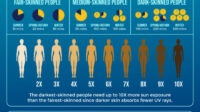
A common observation is that vitamin D recommendations online look like they were written for a single universal human. But that uniformity is an illusion. Vitamin D status is shaped by sun exposure, skin melanin, seasonality, latitude, body fat distribution, dietary pattern, and even genetics that influence vitamin D metabolism. A dose that feels perfect for one person can be underwhelming—or excessive—for another.
Think of vitamin D as a substrate your body uses to manufacture downstream signals. If your “inputs” are low, your “output” will be low too. Therefore, the best dosage for your goals is really a calibrated response: enough to move your blood levels into a beneficial range, while avoiding the brink of oversupply.

Start With a Baseline: The Deeper Reason People Get Confused
Many people begin supplementing without testing, then interpret results using feelings—energy, sleep quality, aches, or occasional mood shifts. Those experiences can be real, but they are not specific. Vitamin D may help, but it may not be the missing variable. If your levels are already sufficient, additional vitamin D may do little except add complexity.
This is where fascination turns into obsession: vitamin D is both tangible and enigmatic. It’s fat-soluble, stored, and released gradually. So the timeline of “noticeable changes” can be delayed, making it tempting to assume that higher doses must be better. In reality, higher isn’t automatically more effective; it’s simply more. And more can drift into the territory of unwanted side effects, particularly if you persist.
If possible, measure 25-hydroxyvitamin D (25(OH)D). This is the most informative indicator for dosing decisions. When testing isn’t feasible, you still can personalize using risk factors and a conservative ramp-up strategy.
2025 Vitamin D Dosage Ranges by Goal (Practical Targets)
The “best” dosage depends on the purpose: maintaining general health, correcting deficiency, supporting musculoskeletal function, or aiming for tighter immune resilience. Below is a goal-oriented framework consistent with mainstream clinical reasoning in 2025. Always treat these as general guidance—your final number should ideally reflect bloodwork and clinician input.
1) General Maintenance (Most Adults)
For people with limited sun exposure but no known deficiency, a maintenance dose commonly lands in the range of 600–2,000 IU daily. If you rarely get direct sunlight in winter, leaning toward the higher end can be reasonable—without leaping into “megadose” habits.
2) Mild Low Levels (Light Correction)
When levels are borderline or suspected to be low, a typical correction approach uses 1,000–3,000 IU daily. The objective is not to race upward; it’s to stabilize and normalize.
3) Documented Deficiency (Structured Repletion)
If bloodwork shows a deficiency, clinicians often use 2,000–5,000 IU daily for a defined period, then taper to maintenance. Some protocols use higher short-term dosing, but that should be supervised.
4) Muscle Performance & Recovery Support
For those targeting strength, training consistency, and recovery, a common range is 2,000–4,000 IU daily, especially if baseline is low. Vitamin D doesn’t replace training; it helps the biological “rails” that muscle and nerve cells rely on.
5) Bone Health (Aging, Low Intake, Osteopenia Context)
For bone-focused goals, 800–2,000 IU daily is often sufficient when levels are adequate, while those who are deficient may require 2,000–4,000 IU daily during correction phases.
6) Immune Support (Supportive, Not Miraculous)
Immune health is more about sufficiency than excess. For many, 1,000–2,000 IU daily is a sensible starting point. If deficient, the dose should be corrected rather than continuously escalated.
7) Higher-Risk Individuals (Obesity, Darker Skin, Limited Sun)
For people with factors that reduce effective vitamin D status, the effective dose may be higher—commonly 2,000–5,000 IU daily—but this is exactly where testing and supervision become more important.
How to Read the “Chart” Without Getting Trapped by Numbers
A dosage chart is helpful, but it isn’t a verdict. Consider a chart the way you would consider a roadmap: useful for navigation, not for replacing common sense. The same number can act differently depending on absorption and baseline. For instance, fat-containing meals improve absorption of fat-soluble vitamins. Similarly, gastrointestinal issues or certain medications can alter bioavailability.
Here’s the subtle part: your goal may be “bone health,” but your bottleneck could be magnesium, calcium intake, protein adequacy, or even inadequate sunlight-derived circadian rhythms. Vitamin D can amplify a system that already has the needed nutrients, but it can’t fully operate in a vacuum.

Vitamin D Type, Timing, and Absorption: The Hidden Levers
Most modern supplements use vitamin D3 (cholecalciferol). D3 tends to be favored for raising 25(OH)D efficiently. Timing matters too. Taking vitamin D with your most substantial meal—often one that includes dietary fat—can improve absorption. Some people prefer morning because it pairs with routine. Others choose evening if it prevents missed doses. Either can work; consistency is the true optimizer.
Long sentences can be misleading here, so keep it simple: absorption improves with fat, consistency improves with habit, and outcomes improve with targeted dosing.
Safety Boundaries: Where “More” Stops Being Beneficial
Vitamin D has a ceiling because your body tightly regulates calcium balance. Excessive intake over time may increase blood calcium levels, potentially leading to symptoms like nausea, constipation, excessive thirst, confusion, or kidney stress. This is why the fascination should be guided by restraint.
Most safety frameworks suggest an upper limit for routine daily intake of 4,000 IU/day for many adults unless a clinician directs otherwise. If you’re using higher doses for deficiency correction, schedule follow-up testing. If you’re not testing, avoid drifting upward indefinitely.
Common Scenarios: Choosing Your Dosage Path Like a Pro
Scenario A: “I feel tired in winter.”
Consider low sun exposure first. Start with 1,000–2,000 IU daily with a winter plan. If you want precision, test after 8–12 weeks.
Scenario B: “My levels were low before.”
A maintenance dose might not be enough. Use 2,000–4,000 IU daily initially, then retest and adjust. The goal is a sustainable equilibrium.
Scenario C: “I’m training hard and my joints complain.”
Check for deficiency, but also assess recovery basics: sleep quality, protein intake, and overall energy availability. If your vitamin D status is low, 2,000–4,000 IU may support the groundwork.
Scenario D: “I’m older and I’m focused on bones.”
Support sufficiency first. Often 800–2,000 IU daily works if levels are adequate; deficient individuals may need more temporarily, always with monitoring.
When to Re-Test and How to Adjust
Vitamin D changes don’t always announce themselves immediately. A reasonable window to re-test is typically 8–12 weeks after starting or changing the dose. Then adjust: if levels are still low, increase modestly; if they’re within a favorable range, maintain. This iterative method is far more intelligent than dramatic dose swings.
Adjustment isn’t a moral issue. It’s engineering. Your body is a system, and dosing is calibration.
Final Takeaway: Your Best Vitamin D Dosage in 2025
The best vitamin D dosage for your goals in 2025 is the one that moves you from uncertainty to sufficiency—without overshooting. For most people, that means 600–2,000 IU daily for maintenance, 1,000–3,000 IU for mild low levels, and 2,000–5,000 IU for documented deficiency or higher-risk situations, followed by tapering to maintenance. Above all, treat vitamin D as a plan, not a guess: test when possible, take with food, and adjust thoughtfully over time.
That’s the real reason people keep returning to vitamin D. It offers a rare combination of simplicity and sophistication—one small decision that can quietly influence many parts of your physiology, provided the dosage matches the story your body is already living.