In the quiet architecture of the human body, vitamin D is often framed as a well-dressed supporting actor—useful, dependable, quietly essential. But in the darker corridors of oncology, researchers are beginning to question whether vitamin D might be more than a bystander. What if it could act like a dimly glowing compass in a storm—subtle, imperfect, yet directionally meaningful? The idea of high-dose vitamin D for cancer sits at an unsettling crossroads: part experimental hypothesis, part tantalizing hope. It demands both imagination and rigor, because the stakes are not metaphorical. This is a conversation about molecules, bone marrow, immune crosstalk, and the fragile balance between benefit and risk.
Vitamin D Beyond Calcium: The Cellular Story
Vitamin D is commonly associated with calcium metabolism and skeletal health. Yet, on the cellular level, it behaves more like an information courier. It can influence gene expression, dampen chronic inflammation, and shape immune responses. Consider the body as a bustling newsroom: immune cells, cancer cells, and surrounding tissues are all characters trying to rewrite the plot. Vitamin D may not be the author, but it can alter the lighting, set the tone, and influence which storylines gain traction.
Its active form—calcitriol—binds to the vitamin D receptor found in many tissues. That receptor then interacts with regulatory pathways that can affect cell differentiation and growth. These are not simple “on/off” effects. They resemble a softly tuned orchestra, where tempo changes can ripple across the entire symphony. This is part of why vitamin D attracts attention in cancer research: it appears capable of modulating the environment in which tumors develop.
Why High-Dose Enters the Conversation
Low or recommended doses of vitamin D are often about correcting deficiency. High-dose vitamin D raises a different question: can supraphysiologic—higher-than-normal—levels produce stronger biological effects against cancer? The logic sounds neat, but biology rarely cooperates with neatly stacked arguments.
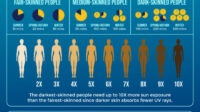
Deficiency is common, especially in individuals with limited sun exposure, darker skin pigmentation, certain geographic locations, older age, obesity, and some malabsorption disorders. In such settings, bringing levels into an adequate range may restore immune competence and reduce inflammation-related promotion of malignant behaviors. However, “restoring adequacy” is not the same as “flooding the system.” High-dose regimens aim to push beyond baseline, seeking effects that may not emerge at ordinary concentrations.
The intrigue is that vitamin D is both a nutrient and a signaling molecule. But signaling molecules can behave differently depending on concentration, timing, and the biological context of the cancer subtype.
Experimental Terrain: What Studies Suggest (and What They Don’t)
The phrase “high-dose vitamin D for cancer” is not a single, standardized protocol. Trials vary in dosage, frequency, duration, patient selection, baseline vitamin D status, and endpoints measured. Some studies explore whether supplementation can slow progression or improve survival. Others focus on biomarkers—changes in inflammation markers, immune cell profiles, or vitamin D receptor activity.
Several themes recur in the literature. First, vitamin D deficiency correlates with worse outcomes in many cancers, though correlation is not causation. Second, higher intake or supplementation sometimes associates with modest improvements, but results are inconsistent. Third, dose-response relationships are unclear: more is not automatically better, and sometimes “more” simply means more side effects.
This is where the metaphor becomes useful: high-dose vitamin D is like turning up the volume on a radio. If the station is already clear, the extra volume adds little. If the station is weak, it might help. But if you blast the volume too high, you risk distortion. Similarly, too much vitamin D can shift physiology in ways that undermine patient safety.
Hopeful Mechanisms: Immune Modulation and Anti-Inflammatory Effects
One of the most compelling aspects of vitamin D is its potential to reshape immune behavior. Cancer thrives partly by exploiting inflammation and immune evasion. Vitamin D may support more balanced immune signaling, influencing T cells and macrophages. In some contexts, it could encourage a more vigilant immune response—less complacent, more “pattern-aware.”
Inflammation is a kind of background noise that can mask danger signals. By dampening certain inflammatory pathways, vitamin D might reduce signals that help tumors survive and spread. It may also influence the tumor microenvironment: the cellular neighborhood where cancer cells coexist with blood vessels, stromal cells, and immune infiltrates. The microenvironment is not scenery—it is an accomplice or an adversary.
In addition, vitamin D may affect cellular growth and differentiation. Cancer is often a problem of misregulated growth. If vitamin D nudges cells toward more controlled differentiation, it could theoretically make malignant behavior less aggressive.
The Bone-Marble Problem: Safety, Toxicity, and the Price of “More”
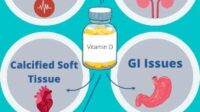
Hope must be balanced with physiology’s hard limits. High-dose vitamin D can cause hypercalcemia—an elevated calcium level in the blood. Hypercalcemia can lead to symptoms such as nausea, constipation, confusion, excessive thirst, and in severe cases, kidney complications. Vitamin D’s relationship to calcium is not optional; it is structural.
Kidneys play a crucial role in calcium regulation. In people with pre-existing kidney disease, the margin for error narrows. Even without kidney disease, aggressive dosing can overload homeostatic systems. This makes safety monitoring essential in any experimental context.
Another consideration is timing. Cancer care often includes chemotherapy, targeted therapies, immunotherapy, and supportive medications. Vitamin D high-dose strategies could interact indirectly with these treatments by altering calcium balance, inflammation status, or overall metabolic strain. The body is not a single dial—it is a complex panel of dials that move together.
Who Might Benefit? Personalization, Not One-Size-Fits-All
Perhaps the most intriguing appeal of vitamin D is that it might be most effective when it addresses a specific “missing ingredient.” If deficiency is a key part of the cancer-related environment, correcting it could produce benefit even without extreme dosing. In other words, the relevant question may be less “How high can we go?” and more “How low were we to begin with?”
Baseline vitamin D status can influence response. Genetics may also matter: polymorphisms in the vitamin D receptor or vitamin D binding protein could shift how vitamin D is processed and what biological signals ultimately occur. Lifestyle and comorbidities—body weight, sun exposure patterns, diet, physical activity—also shape the baseline state.
Some individuals may simply be better candidates for modest correction rather than high-dose escalation. Personalized dosing—guided by laboratory testing—could be a more rational path than a universal prescription.
Metaphor in Medicine: A Lantern in a Labyrinth
Imagine a labyrinth where cancer is the moving shadow at the center. Treatment regimens are the walls and keys—sometimes blunt, sometimes precise. Vitamin D high-dose supplementation, in this metaphor, is a lantern. A lantern can’t defeat every shadow by itself. But it can improve navigation: illuminate pathways, reveal patterns of immune dysfunction, and reduce inflammatory haze that lets shadows linger.
Yet lanterns have rules. If the lantern is lit too brightly, it may blind the traveler—or scorch the hands. That is why high-dose vitamin D requires careful study: not because the idea is fanciful, but because the body’s tolerance sets the boundaries of safe exploration.
In this labyrinth, “hopeful” does not mean “certain.” It means the lantern is promising enough that researchers keep walking, measuring, and adjusting the flame.
Biomarkers, Endpoints, and the Difficulty of Measuring “Effect”
Cancer is not a single outcome. Researchers may evaluate overall survival, progression-free survival, tumor response rates, recurrence, and quality of life. But vitamin D’s biological effects may occur through intermediate biomarkers long before clinical outcomes shift. Inflammation markers might change; immune cell profiles might shift; those changes may or may not translate into meaningful survival advantages.
This measurement challenge can create the illusion of contradiction. A trial may show improved biomarkers but no clear clinical endpoint. Another may show clinical benefit without matching biomarker changes. The puzzle becomes a mosaic, not a straight line.
It also raises an important point: vitamin D might help certain cancer subtypes more than others. A signal that is strong in one subgroup can become diluted when everyone is grouped together.
Current Practical Reality: Supplementation vs. “High-Dose Therapy”
In mainstream practice, vitamin D supplementation is commonly used to correct deficiency and support general health. The leap to “high-dose therapy” for cancer is a separate claim that requires evidence robust enough to justify risk. At present, the most responsible approach is not self-directed megadosing. Instead, dosing should be individualized, ideally informed by measured serum 25-hydroxyvitamin D levels and calcium status.
Clinicians often aim for sufficiency rather than extremes. For patients undergoing active cancer treatment, this caution is especially important. Vitamin D can be a supportive ally, but oncology is already a high-stakes environment filled with variables.
Where Research Could Go Next: Better Trial Design and Smarter Targets
Future studies may focus on stratification—selecting participants based on baseline vitamin D status, cancer subtype, stage, and immune phenotype. Trials might incorporate combination strategies: vitamin D plus immunotherapy, or vitamin D plus therapies that reshape tumor microenvironments. The goal is to determine whether vitamin D can act as a synergistic “tone adjuster” rather than a standalone intervention.
Researchers may also explore dosing schedules—whether intermittent high dosing is different from daily moderate dosing, and whether timing relative to diagnosis or treatment matters. Precision oncology asks for precision nutrition.
The hope is not merely that vitamin D can help. The hope is that vitamin D can help in the right person, at the right dose, for the right biological reason.
Conclusion: Experimental Questions with Real-World Weight
High-dose vitamin D for cancer remains a field where intriguing biology meets the discipline of evidence. The mechanisms—immune modulation, anti-inflammatory effects, and influence on cellular regulation—make the concept feel less like fantasy and more like a testable hypothesis. The risks—particularly hypercalcemia and possible kidney complications—are a reminder that hope must always travel with safety.
In the end, the most hopeful interpretation may be the most grounded: vitamin D can be a lantern when deficiency and immune imbalance are part of the story. But turning the dial too far, too quickly, without careful study, risks turning the lantern into a hazard.
Cancer research is not a single doorway. It is a corridor with many forks. High-dose vitamin D is one fork worth investigating—measured, monitored, and guided by patient-specific data—so that hope is earned, not assumed.