Some ideas arrive like contraband charm—small, clever, and oddly specific. “Take Vitamin D with a spoonful of peanut butter,” for instance, sounds less like a medical prescription and more like a kitchen spell. Yet the question underneath it is serious: can that pairing meaningfully improve absorption, and is it actually a reliable strategy? To answer, we have to move beyond the folklore and look closely at how vitamin D behaves in the body, how fat functions as its courier, and why everyday textures—like peanut butter’s creamy viscosity—may feel more persuasive than plain pills.
Vitamin D: A Fat-Loving Nutrient with a Waiting Room
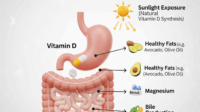
Vitamin D is not a simple visitor—it’s a kind of social climber that prefers company with lipids. In the diet, vitamin D travels in a fat-soluble manner. That means if it’s taken alongside fat, it has a better chance of being packaged into micelles and escorted through the digestive system. Without dietary fat, vitamin D can still be absorbed, but the process may be less efficient.
Think of vitamin D as a key that fits only certain locks. The lock is the body’s ability to carry the key through intestinal absorption pathways. Fat is the locksmith’s cart: it doesn’t “create” the key, but it helps bring everything to the right place at the right time. This is why food pairing is not merely a convenience—it can be a functional lever.
Why Peanut Butter Might Work: Fat, Timing, and the “Vehicle” Effect
Peanut butter contains a meaningful amount of fat, plus some protein and texture that slows down digestion for many people. That matters because vitamin D absorption tends to be better when consumed with a meal containing fat. Peanut butter, with its dense, emulsified character, can behave like a mini vehicle—carrying vitamin D along as digestion unfolds.
Imagine your stomach as a transit hub. Vitamin D, like a passenger with a fragile suitcase, needs the right kind of handling. A spoonful of peanut butter can increase the odds that the passenger reaches the correct platform—rather than lingering too long in the wrong terminal. This does not guarantee perfect absorption, but it provides a plausible mechanism.
Still, mechanism is not destiny. Different people have different baseline vitamin D status, dietary patterns, and gastrointestinal comfort. The same strategy can yield different results across households, especially between those who are already sufficient and those who are deficient.
The Peanut Butter Advantage: More Than Just “Some Fat”
Peanut butter is often treated like a simple add-on, but it has layered properties. Its fat content is accompanied by flavor-laden satiety, which can encourage consistent meal structure. When vitamin D is taken consistently—at similar times and with similar foods—the body receives repeated opportunities to absorb it.
Longer consistency beats dramatic theatrics. If the peanut butter approach makes compliance easier, that’s not a trivial benefit. Nutrient strategies live or die by daily reality. A spoonful can feel less burdensome than restructuring your entire meal around a supplement.
But Is It the Best Pairing? Comparing Food Pairings and Absorption
Peanut butter isn’t the only option. In many cases, any source of fat can improve absorption: eggs, dairy, olive oil, avocado, fatty fish, or a full meal that naturally includes lipids. The key variable is not peanut butter’s mythology; it’s whether the supplement lands near dietary fat.
In practice, peanut butter can be a standout because it’s portable, familiar, and reliably fat-containing. However, for people with nut allergies, sensitivities, or dietary restrictions, another fat-containing food may be safer and equally effective.
If peanut butter feels too intense—too calorie-dense or too heavy—consider alternatives like yogurt with fat, a small portion of cheese, or a spoon of olive oil incorporated into a meal. The principle stays the same: vitamin D wants company.
Dose Matters: Small Differences in Vitamin D Can Lead to Big Outcomes
Vitamin D supplements vary widely in potency: from modest daily doses to high-dose regimens used under clinical guidance. The absorption question may be secondary if the dose is too low to raise blood levels meaningfully, or if it’s too high for someone with unique metabolism or medical circumstances.
For many, the strategy of taking vitamin D with fat improves absorption efficiency. Yet the most important outcome is serum 25-hydroxyvitamin D, not the perceived “delivery system.” That lab marker acts like a scoreboard—less romantic, more honest.
If vitamin D status is unknown, a periodic test can clarify whether the peanut butter pairing is simply a pleasant habit or an effective corrective measure.
Timing and Routine: Morning, Dinner, or the Rhythm That Sticks
When you take vitamin D can matter insofar as it relates to meals and routines. Many people choose mornings, but the real advantage is alignment with a meal containing fat. If you take vitamin D at breakfast with peanut butter, that could be a practical sweet spot. If you take it late at night on an empty stomach, the pairing may be less relevant.
Think of your schedule as a metronome. Consistency creates tempo. The body’s digestive and hormonal rhythms respond to routine, and nutrient uptake often benefits when intake patterns are stable.
Short sentence, long result: take it with food, and make it repeatable.
Potential Downsides: Allergies, Calorie Load, and Gastrointestinal Trade-Offs
Peanut butter is not universally benign. Nut allergies can turn “one spoonful” into a hazard. Even without true allergy, some individuals experience reflux, bloating, or discomfort from high-fat foods. For those people, peanut butter may be a clever idea that backfires.
There’s also the calorie accounting: a spoonful adds energy. For someone using vitamin D as part of a broader health strategy, extra calories might be fine. For someone tracking intake tightly, it could be an unintended adjustment.
The most careful approach is to treat peanut butter as a tool, not a rule. If it helps absorption and adherence without negative effects, it can be a charming method. If it creates problems, switch to another fat-containing pairing.
How to Make the Strategy Practical: A Thoughtful “Kitchen Protocol”
If the goal is better absorption, a sensible method is to take vitamin D with a meal that includes dietary fat. Peanut butter can be one component of that meal—spread on toast, swirled into oatmeal, or eaten alongside the supplement. The texture may even improve regularity by making supplementation feel like part of breakfast rather than a separate ritual.
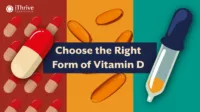
Consider also the form of vitamin D. Some supplements are oil-based already, while others are in tablets. If your capsule is oil-based, pairing with another fat source might be less critical, though still potentially helpful. If the supplement is taken as a dry tablet, food pairing becomes more relevant.
Let your routine do the heavy lifting. Long-term habits outperform short-term experiments.
A Visual Interlude: The “Delivery Package” Metaphor
Picture a small courier handing off a sealed envelope at the right checkpoint. Without the vehicle, the envelope may reach the wrong platform. With the vehicle—fat—it gets routed correctly. That’s the essence of taking vitamin D with peanut butter: not magic, but logistics.

Final Verdict: Does It Work, and When Should You Use It?
Taking vitamin D with a spoonful of peanut butter can be a sensible strategy because vitamin D is fat-soluble. The peanut butter supplies dietary fat, which may enhance absorption—especially when the supplement would otherwise be taken without food or with minimal fat. The unique appeal isn’t only nutrition; it’s the psychological ease. It turns a supplement into a familiar act, and that familiarity can improve adherence.
However, it’s not a universal necessity. Any fat-containing meal may accomplish the same core goal, and peanut butter may be unsuitable for those with allergies or intolerance. The best approach is individualized: match the pairing to your body, your diet, and your routine.
If your vitamin D status is uncertain, the most reliable compass is testing and follow-up. Let the lab results—not the kitchen rumor—confirm whether the method is doing its job. Yet as a practical habit, peanut butter can be a surprisingly elegant partner for vitamin D, offering both a biochemical rationale and a daily ritual that feels almost like comfort.