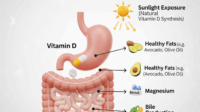
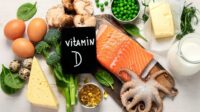
Vitamin D doesn’t simply “arrive” and become useful. It has to be carried, coaxed into absorption, and processed by the digestive system’s chemistry. That’s where bile—and the way dietary fat travels through your gut—becomes unexpectedly central. Think of bile as a molecular chaperone and fat as the delivery scaffolding: together, they choreograph how vitamin D moves from food to bloodstream.
Vitamin D Is Fat-Soluble, So It Plays by Lipid Rules
Vitamin D belongs to the fat-soluble family. That means it prefers an oily environment rather than watery digestive fluids. When vitamin D is ingested, it’s not floating freely like a sugar crystal in water. Instead, it must hitch a ride alongside lipids. This lipid affinity is why the presence and behavior of dietary fat matters.
In simplified terms, fat provides the physical context for vitamin D to join the right transport pathway. Without sufficient lipid digestion and transport, vitamin D can be less efficiently absorbed—even if total intake appears adequate.
Bile: The Emulsifier That Makes Absorption Possible
Bile is produced by the liver and stored in the gallbladder. During digestion, it enters the small intestine, where it performs an emulsification performance. Emulsification is the process of converting larger fat globules into tiny droplets. These droplets increase surface area, which gives digestive enzymes and absorption machinery more “work space.”
Bile salts act like molecular detergents. They have a dual personality: one side interacts with fat, the other interacts with water. This amphipathic design helps transform thick, oily masses into manageable micro-structures.
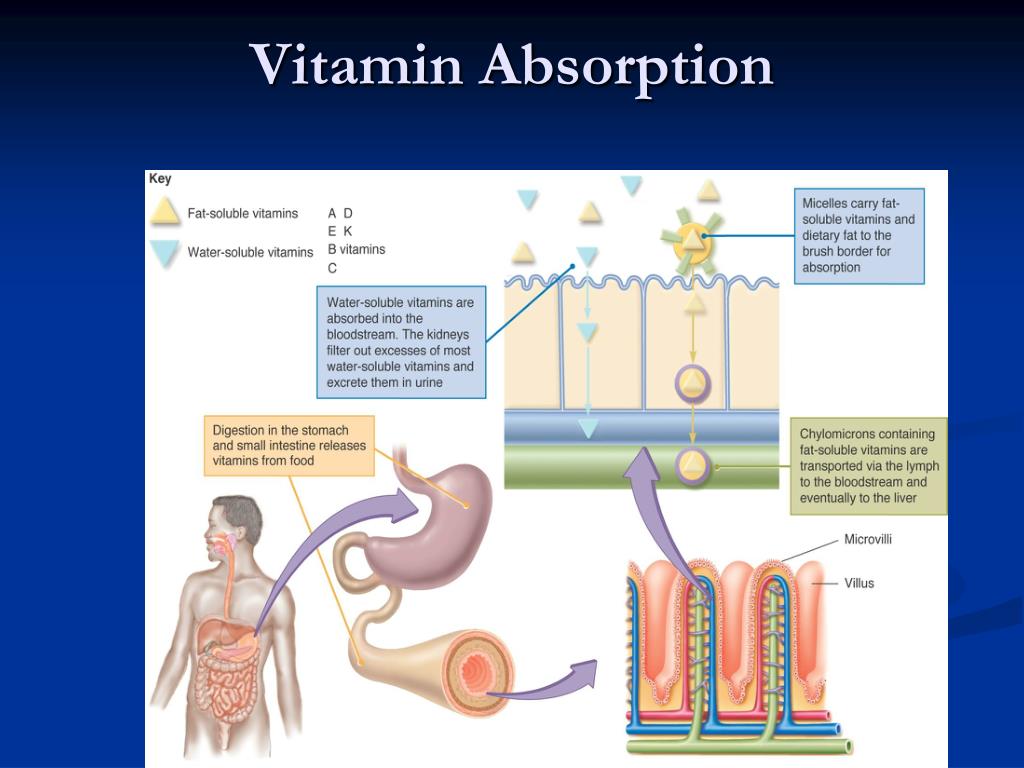
Once fat is emulsified, bile salts further enable the formation of mixed micelles—nano-scale carriers that can ferry fat-soluble vitamins, including vitamin D, toward the intestinal lining.
How Dietary Fat “Teaches” the Gut to Deliver Vitamin D
Dietary fat is not only a nutrient; it’s also a signal flare for digestion. When you eat fat, your body orchestrates a cascade: bile secretion increases, pancreatic secretions follow, and intestinal motility coordinates the mixing of contents. Vitamin D then has a higher probability of encountering bile salts and forming the appropriate transport assemblies.
But the relationship isn’t merely “more fat equals better absorption.” There’s a balance. Adequate fat supports micelle formation, yet excessive fat without proper digestion may create other complications. The goal is efficient lipid handling rather than maximal lipid intake.
In practice, fat’s role is best understood as a facilitator of biochemical logistics—helping the system produce the correct transport vehicles at the right moment.
Micelles: Tiny Carriers With Big Consequences
To absorb fat-soluble vitamins, your small intestine uses micelles as delivery vehicles. Micelles are tiny spheres formed when bile salts surround digestion products of dietary fat. Vitamin D, being lipophilic, partitions into these micelles.
Once vitamin D is packed inside micelles, it can move through the watery boundary layer at the surface of intestinal cells. This is a crucial detail: the intestinal lining is bathed in fluid, not oil. Micelles bridge that mismatch.
After reaching the intestinal cells, vitamin D can cross into the cell and then be packaged for onward transport. Without micelles, vitamin D can remain stranded in larger, less accessible fat droplets.
From Intestinal Cells to the Bloodstream: Packaging and Transport
Absorption is not the final chapter. After vitamin D enters intestinal cells, it must be loaded into transport systems that can travel through the body. The liver and other tissues then use these vitamins for numerous functions, including roles in immune modulation and calcium homeostasis.
This stage depends on smooth lipid processing. Vitamin D’s journey is interwoven with how fats themselves are assembled into lipoproteins. When digestion is impaired—whether from bile issues, enzyme insufficiency, or altered fat handling—vitamin D transport can become inefficient.
Short and direct takeaway: bile doesn’t only help vitamin D “reach” the intestine; it helps vitamin D move onward through the lipid-based distribution network.
What Happens When Bile Flow Is Reduced?
When bile delivery is compromised, the emulsification step becomes weak. Larger fat globules persist. Micelle formation declines. Vitamin D has fewer appropriate carriers to ride in, so absorption drops.
Reduced bile flow can occur in several contexts, including gallbladder problems, bile duct obstruction, or certain digestive conditions that alter bile circulation. In these scenarios, fat malabsorption may also be present, which can further compound the problem.
Symptoms can vary, but many people notice changes that hint at fat digestion difficulty—such as gastrointestinal discomfort or changes in stool consistency. If vitamin D deficiency develops, it may take time to become clinically obvious.
This is where understanding the bile-fat mechanism becomes more than trivia. It can explain why vitamin D supplementation alone doesn’t always resolve the issue when digestion logistics remain disrupted.
Different Fats, Different Digestion Dynamics
Not all dietary fats behave identically. Medium-chain triglycerides, for instance, are processed differently than long-chain fats. That difference can influence how efficiently micelles and absorption pathways form, which indirectly affects fat-soluble vitamin uptake.
Yet bile remains broadly relevant because bile salts influence the handling of many long-chain lipid processes. Even so, the exact impact depends on the pattern of dietary fat, the individual’s digestive capacity, and the presence of any malabsorption conditions.
In other words: fat quality and digestion physiology intersect. The digestive system is not one-size-fits-all; it’s more like an adaptable machine that responds to the specific input it receives.
Practical Dietary Patterns That Support Efficient Vitamin D Uptake
For most people, ensuring a meal includes some dietary fat can improve vitamin D absorption compared with eating vitamin D in a strictly low-fat context. The mechanism is consistent: bile secretion and micelle formation are more likely to occur effectively when fat is present.
There’s also a timing dimension. Vitamin D taken with a meal often aligns better with the body’s digestive rhythm. Pairing vitamin D with a balanced meal—rather than with an empty stomach—can better coordinate absorption.
However, the “right” approach depends on medical context. In conditions involving bile obstruction or specific intestinal disorders, individualized guidance is essential.
Supplement Forms and Absorption Considerations
Vitamin D supplements come in different forms and formulations. Many preparations are designed to be absorbed alongside dietary fat. Some are formulated as oil-based drops or encapsulated in fat-containing carriers, which can enhance dissolution and uptake.
In contrast, certain individuals may benefit from tailored strategies if they have chronic digestive limitations. If bile flow or fat absorption is impaired, the best supplement approach may involve more than choosing a brand—it may require selecting a formulation that can still achieve absorption under altered conditions.
As a guiding principle: absorption is a systems problem, not just a nutrient problem.
When to Consider Evaluation for Deficiency
Vitamin D deficiency can develop from limited intake, reduced sun exposure, and impaired absorption. Because bile and fat influence absorption efficiency, deficiency may be more likely in people with known malabsorption or bile-related disorders.
Signs can be subtle. Over time, low vitamin D levels may contribute to bone health concerns, muscle weakness, or increased susceptibility to certain health issues. Lab testing clarifies the situation and prevents guesswork.
If deficiency is suspected, healthcare professionals often evaluate vitamin D status and consider the digestive context, including whether bile-fat digestion is functioning optimally.
Bottom Line: Bile and Fat Are Co-Conspirators in Vitamin D Absorption
Vitamin D absorption is a coordinated event. Bile salts emulsify dietary fats, enabling micelle formation. Micelles deliver vitamin D to intestinal cells, where absorption can proceed and transport can follow. Dietary fat supports the digestive choreography by encouraging bile release and lipid processing.
So the simplified model is this: vitamin D is fat-soluble, bile makes fat usable for absorption, and together they determine how effectively vitamin D enters the body’s circulation. Understanding that mechanism turns “vitamin D” from a standalone nutrient into a narrative of digestion, transport, and delivery.

When digestion is smooth, vitamin D can be absorbed efficiently. When digestion is disrupted, vitamin D may lag behind—sometimes even when intake seems reasonable. That’s the quiet power of bile and fat: they don’t merely accompany vitamin D; they govern its success.