Have you ever wondered why two people can eat the same meal—yet one “soaks up” nutrients like a sponge, while the other seems to let half of the benefit slip through? It sounds mischievous, but it points toward a real puzzle in absorption science: D3 vs D2. And today the plot thickens—newer studies keep nudging the discussion away from old assumptions. But here’s the playful twist: what if your vitamin D isn’t merely a number on a lab report, but a delivery system with different “porosity” depending on whether it’s cholecalciferol (D3) or ergocalciferol (D2)?
First, Define the Players: D3 (Cholecalciferol) vs D2 (Ergocalciferol)
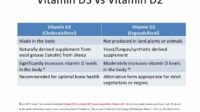
Vitamin D arrives in multiple molecular costumes, but D3 and D2 dominate most conversations. D3 is typically sourced from sunlight-driven synthesis in the skin and from animal-based food or supplements. D2 is often derived from plant or fungal sources and is common in certain fortified foods and supplements.
Although both forms can raise vitamin D status in the body, their chemical architecture influences how they behave during digestion, transport, and metabolism. Think of them as two subtly different keys that can open the same lock—yet the fit, friction, and speed may vary.

What “Absorption Rate” Really Means (And Why It’s Not One Simple Number)
“Absorption rate” can sound like a single stopwatch measurement, but it’s more like a symphony of steps. Nutrient uptake depends on gastric emptying, bile availability, dietary fat content, formulation type (softgel, tablet, oil), and even individual physiology. Then there’s the downstream journey: circulating levels rise, metabolites form, and tissues decide what to keep and what to discard.
So, when research talks about D3 vs D2 absorption, it often refers to a blend of outcomes: how quickly vitamin D status increases, how reliably it’s maintained, and how efficiently the body converts and retains it. In other words, it’s not just entry—it’s also onboarding, distribution, and persistence.
The Central Claim in the Latest Research: D3 Tends to Outperform D2
Across many modern analyses, D3 often shows a stronger effect on raising and sustaining serum 25-hydroxyvitamin D compared with D2. This has made D3 the default champion in many clinical settings, not because D2 is “ineffective,” but because D3 frequently achieves a better signal for the same labeled dose.
Why might that be? One hypothesis centers on bioavailability and metabolic fate. D3 may form metabolites that persist longer in circulation, offering a steadier elevation rather than a short-lived spike. The difference can feel like this: D2 may be a fast messenger who delivers the news quickly, while D3 may be the more reliable courier who ensures the message arrives fully processed and remains visible on the ledger.
However, results are not identical across every study. Formulation quality, baseline vitamin D status, dosing schedules, and study design can all tilt the scales.
The Study Challenge: Dosing Schedules and Baseline Status Can Distort Comparisons
Here’s the potential challenge—the trapdoor hidden beneath casual comparisons. Researchers don’t always test D3 and D2 in identical conditions. Someone starting with severe deficiency may respond differently to a loading strategy than someone who is mildly low. Additionally, daily dosing can behave differently than weekly or bolus dosing.
Baseline status matters because the body’s “absorption appetite” and storage capacity may shift with deficiency. If one group begins at a lower starting point, the visible rise can be larger—creating the illusion of a higher absorption rate when part of it is simply a more dramatic correction.
Then comes formulation. A D3 softgel suspended in oil may be digested and absorbed more efficiently than a D2 tablet with different excipient chemistry. If two products are not bioequivalent, the comparison becomes less about molecular superiority and more about packaging logistics.
How the Body Handles Them: Conversion, Transport, and Storage
Both D2 and D3 aim to increase 25(OH)D, the main circulating marker used to estimate vitamin D status. Yet after that, their trajectories can differ. The body must transport vitamin D via binding proteins, distribute it to tissues, and perform enzymatic modifications.
Some researchers propose that D3’s metabolic profile yields a more favorable persistence in the bloodstream. Others suggest D2 may produce metabolites that clear somewhat faster. The practical takeaway is simple: even if initial absorption appears similar under ideal circumstances, the longer tail—the “afterglow”—may be better with D3.

Real-World Factors That Modify Absorption: Fat, Bile, and the Individual Twist
Absorption is rarely a solitary event. Vitamin D is fat-soluble, so dietary fat can meaningfully influence uptake. If vitamin D is taken with a meal that includes lipids, the absorption process is often smoother. Conversely, taking it on an empty stomach—or with very low fat intake—can dampen the uptake.
Bile function is another quiet determinant. If bile secretion is impaired, fat-soluble absorption can suffer. Gut conditions such as malabsorption syndromes or inflammatory disorders can further complicate the picture.
Then there’s the individual twist: age, body composition, liver function, kidney health, and medication patterns (for example, those affecting bile acids or vitamin D metabolism) can all influence outcomes. In other words, the “absorption rate” you experience may be a negotiation between vitamin chemistry and human physiology.
So Which One Should You Choose? A Nuanced Answer, Not a Victory Lap
If your goal is to raise vitamin D status efficiently, many findings lean toward D3 as the more effective option in terms of achieving and maintaining serum levels. That doesn’t mean D2 is useless; it may still work, especially when dosed appropriately and when products are high quality.
But the choice should also reflect context. If a clinician prescribes a specific regimen, follow it closely. If a supplement contains D2 but uses a dosing strategy designed to account for differences, it can still be a valid tool. The key is alignment: dose, schedule, and formulation should match your situation.
And yes, here’s the mischievous question that keeps resurfacing in clinics: could “not responding” to vitamin D be less about willpower and more about the molecular entourage your supplement carries?
Practical Takeaways to Reduce Uncertainty
To make the comparison fairer in daily life, consider these strategies. Take vitamin D with a meal containing fat. Choose reputable brands with consistent dosing. Test levels when a regimen is underway, because the most important “absorption metric” is how your body’s serum 25(OH)D changes over time.
If you’re switching between D2 and D3, do it intentionally rather than casually. Also remember that winter months, latitude, and sun exposure can influence baseline levels, changing how your results look.
Finally, don’t treat vitamin D as a standalone planet. Calcium intake, magnesium status, and overall nutritional adequacy interact with how vitamin D functions in the body.
Bottom Line: The Latest Direction of Evidence
Current research trends generally suggest that D3 has superior performance compared with D2 for increasing and sustaining vitamin D status, though individual responses and study conditions can vary. The “absorption rate” question, once treated like a single figure, now resembles a multi-variable landscape—where timing, formulation, baseline status, and physiology decide the final outcome.
So if you’re choosing between D3 and D2, the safest conclusion is not that one is magical and the other is broken. It’s that D3 more consistently earns better results in the body’s long game. And that playful challenge? It may be your cue to treat vitamin D selection as a precision decision—rather than a guess.