Alternating dose regimens can feel like a loophole—an elegant way to balance benefit with burden. Yet when it comes to D3 and D2, “mixing and matching” is not just a scheduling trick. It’s a question of pharmacology, absorption, and real-world safety. Can you alternate D3 and D2? In many cases, the answer is yes, but only within a framework that respects how vitamin D is metabolized, how each form behaves, and what risks you’re trying to avoid. Let’s walk through the rationale, the practical mechanics, and the types of content readers should expect when making this decision.
Understanding D2 vs. D3: Why the Difference Matters
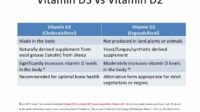
Vitamin D comes in multiple forms, and the body treats them with distinct kinetics. D2 (ergocalciferol) is typically derived from plant sources and fortified foods. D3 (cholecalciferol) is often sourced from animal-derived materials or produced via lichen/other industrial processes. Both can raise circulating 25-hydroxyvitamin D, but they don’t always do it with the same efficiency or longevity.
D3 is frequently described as having a longer-lasting effect in the bloodstream. D2 can still work well, especially when total dosing is appropriate. However, the biological “tempo” differs: some preparations lead to different rates of rise and fall. This isn’t just academic. If you alternate forms, you may be smoothing a variable response—sometimes improving tolerability, sometimes introducing unpredictability.
Readers who are educated on this topic often expect comparisons that explain not only what changes in lab values, but why those changes happen. A thorough article should address half-life concepts, conversion pathways, and the difference between serum levels and tissue-level action.
What “Alternate D3 and D2” Actually Means in Practice
Alternation can be structured in many ways. Some people alternate daily (D3 one day, D2 the next). Others alternate weekly (D3 on weekdays, D2 on weekends). Still others rotate dosing schedules based on seasonal needs, sun exposure, or medication routines.
The safety question depends heavily on dosing granularity. Daily alternation may create a steadier oscillation in serum concentration, but it can also increase the complexity of tracking. Weekly alternation can be simpler to adhere to, but it may produce a more noticeable “swing” if one form is stronger at raising levels than the other.
A professional discussion should include clear examples of how a rotation might look—without turning it into a DIY prescription. Expect content that distinguishes between “rotation for convenience” and “rotation for clinical strategy.” The former is usually manageable; the latter requires tighter monitoring.

Safety Considerations: The Risks You’re Trying to Prevent
When considering alternation, safety isn’t limited to side effects like nausea or constipation. It also involves the biochemical consequence of vitamin D overaccumulation: hypercalcemia. Too much vitamin D can push calcium levels upward, potentially leading to kidney strain, cardiovascular effects in vulnerable individuals, and a cascade of symptoms that can be subtle at first.
Alternating D3 and D2 does not inherently “cancel out” risk. If the total weekly—or monthly—dose is high, the body can still reach excessive levels. Therefore, the safety hinge is cumulative dosing and baseline status, not merely the label on the bottle.
Content aimed at safety-minded readers should also address interactions. Thiazide diuretics can increase calcium retention. Certain anticonvulsants can alter vitamin D metabolism. Glucocorticoids may reduce calcium absorption, reshaping how vitamin D needs are interpreted. Even high-calcium diets can shift the balance.
Expect “warning content” to include red flags such as excessive thirst, frequent urination, unexplained fatigue, confusion, or persistent GI distress. A thoughtful article should emphasize that these symptoms deserve prompt lab evaluation rather than speculation.
Effectiveness: Will Alternation Maintain Results?
Effectiveness is usually evaluated by changes in 25-hydroxyvitamin D, the circulating marker used to estimate vitamin D status. Alternation can be effective if the total dose is aligned with your deficiency risk and if the schedule allows stable absorption and conversion.
The main concern isn’t whether D2 and D3 can both increase vitamin D levels—they can. The concern is whether alternating forms affects the predictability of your rise and your plateau. For many people, the difference is negligible when overall dosing is rational. For others—particularly those with malabsorption syndromes, obesity, or conditions affecting hepatic or renal conversion—the response curve can be more variable.
High-quality reader content typically includes sections on target ranges, lab timing (how long after starting to recheck), and interpretation pitfalls. A professional narrative will remind readers that “normal” varies by guideline, season, and clinical context.
Who Might Benefit From Alternating?
Alternation may appeal to readers managing practical constraints: supply variability, cost considerations, or formulation preferences. Some people tolerate one form better than the other. Others may already be on one type and want to incorporate the other without changing the entire regimen.
Alternation might also be discussed for broader adherence strategy. If a person struggles with consistency, simplifying the routine—using alternating forms as a “calendar anchor”—can help. Yet effectiveness hinges on consistent total dosing, not on the novelty of mixing.
Readers should also expect content that calls out contraindications or higher-risk categories. Malabsorption conditions, granulomatous diseases, hyperparathyroidism, and history of kidney stones can shift the safety equation. In those groups, alternation should be treated as a monitored decision, not a casual tweak.
Designing a Safer Schedule: Total Dose and Monitoring
If alternation is considered, safety is best managed through dosing arithmetic. The question becomes: what is the total vitamin D exposure over time? Daily alternation, for example, should be equivalent to a single-type regimen when summed correctly. Many safety failures occur when people unintentionally double-count dosing—supplements plus fortified foods plus multivitamins.
Monitoring reduces uncertainty. A typical approach involves checking baseline levels, then rechecking after an appropriate interval. The interval depends on whether the person is correcting a deficiency versus maintaining a stable status. A professional article should explain that labs are not just for “numbers,” but for confirming that your body is responding as expected.
Expect guidance content to include “how to prepare for labs,” such as whether to keep dosing the same up to the blood draw and how to interpret results relative to symptoms. It should also address that persistent elevation of calcium is a different issue than vitamin D alone.
Different Content Readers Can Expect: From Practical to Clinical
Different readers come looking for different things. Some want a pragmatic answer: “Can I alternate without risking harm?” Others want a scientific explanation: how each form behaves in metabolism, why response varies, and what lab markers mean. Good content should satisfy both without being superficial.
Here are common content types you can expect when the topic is handled professionally:
1) Implementation guides: clear examples of schedules, dose accounting, and reminders to avoid double-dosing.
2) Safety checklists: interaction notes, symptom red flags, and guidance for high-risk populations.
3) Lab interpretation narratives: what to measure, when to re-test, and how to connect results to clinical goals.
4) Case-style storytelling: scenarios involving deficiency correction, seasonal maintenance, or supplement adherence challenges.
5) Clinical nuance: explanations of conversion efficiency, malabsorption effects, and why one person’s “effective” may be another’s “insufficient.”
A cohesive article doesn’t just list facts. It gives the reader a map—so they can decide, ask better questions, and recognize when a simple plan needs clinical oversight.
Bottom Line: Alternation Can Be Acceptable—But Intention and Oversight Matter
Yes, you can alternate D3 and D2 in many scenarios, and it can remain effective when total dosing is appropriate and absorption is not compromised. The safety issue is not the alternation itself—it’s the overall vitamin D burden, individual risk factors, and whether monitoring is used to confirm the plan is landing where it should.
If you’re considering alternation, approach it with deliberate structure: track total intake, check baseline status, and confirm results with follow-up labs. Short sentences help when the stakes are high. Vitamin D is powerful, and power deserves precision.