Finger-prick vitamin D testing has a certain modern allure. It promises answers in minutes, delivered from a tiny sample that feels almost too small to matter. Yet the very convenience that makes these “US options” so attractive also invites a question that many people quietly carry: How accurate are finger-prick vitamin D tests, really? The observation is common—results can feel different from lab-based blood draws—and the fascination deepens because the test seems both effortless and consequential. In reality, accuracy is not a single property. It’s a moving target, shaped by biology, technique, and the quiet physics of measurement.
Why “Accuracy” Feels Harder Than It Sounds
When people hear “vitamin D,” they often assume there is one straightforward truth. But 25-hydroxyvitamin D—the marker most tests aim to measure—behaves like a highly conserved traveler moving through the bloodstream with a passport of proteins and binding relationships. That means the measurement is not just about your vitamin D level; it’s also about how the test interprets a biochemical snapshot.
Finger-prick tests, especially those used in consumer and clinical “US options,” frequently produce results quickly. Speed is not inherently a villain. Still, rapid workflows can introduce variance if pre-analytical steps aren’t perfectly controlled. A long sentence can be forgiven here because the story is complex; accuracy isn’t merely a number—it’s a chain of small decisions.
What Finger-Prick Tests Measure (and What They Don’t)
Most finger-prick vitamin D testing focuses on 25(OH)D, typically including both D2 and D3 fractions depending on the platform. This matters, because vitamin D sources are not identical. Dietary or supplemental cholecalciferol (D3) behaves differently than ergocalciferol (D2) in some analytical contexts.
Another nuance: finger-prick testing usually targets the concentration of the metabolite in blood. It rarely addresses deeper concerns—like vitamin D binding protein status, inflammatory context, or the interpretive scaffolding around “deficiency” cutoffs. You may receive a result that is accurate in analytic terms, yet still incomplete as a clinical narrative.
Comparing Finger-Prick Convenience to Traditional Lab Draws
Venipuncture draws from a larger, carefully processed sample. It’s accompanied by standardized handling—timing, tubes, centrifugation, and lab instrument protocols. In contrast, finger-prick testing compresses that process into a short ritual. A small shift in technique can change what the strip or device “sees.”
That is the common observation: results from finger-prick options may not perfectly match those from a conventional laboratory test. The difference isn’t always a failure. Sometimes it’s a lens—showing how variable vitamin D can be over time, and how sampling differences can nudge the final estimate.
Consider this: vitamin D levels are not static. They can fluctuate with sun exposure, seasonal behavior, supplement adherence, and even recent dietary intake. A “discrepancy” may be the timeline catching up rather than the measurement betraying you.
Pre-Analytical Variables: The Hidden Theater of Accuracy
Accuracy in finger-prick testing can hinge on pre-analytical variables that rarely make it into marketing copy. The size of the drop, the completeness of sample collection, and the timing of applying blood to the device all matter. Even skin conditions—callus, dryness, or imperfect capillary flow—can influence sample volume and composition.
Then there’s the question of dilution. Some platforms rely on capillary blood, which may mix with interstitial fluid. That admixture can slightly alter readings, particularly near clinical decision thresholds. The effect may be subtle, but vitamin D categories are often defined by cutoffs where small changes feel like big meaning.
One short sentence, then another: accuracy lives before the instrument. And when the “before” varies, the outcome can drift.
Analytical Performance: Sensitivity, Specificity, and Instrument Behavior
Modern test systems use chemistry and optics to quantify 25(OH)D. The best systems perform reliably across a range of concentrations, but performance characteristics vary by device design. Sensitivity affects whether low levels are detected confidently; specificity affects whether the method distinguishes between vitamin D metabolites without interference.
Finger-prick systems can be particularly sensitive to matrix effects—meaning how the blood sample’s components interact with the testing chemistry. Hematocrit levels, lipids, and other biological factors may influence signal intensity or reaction kinetics. The effect is rarely dramatic, but it can become noticeable when results are compared across platforms.
This is one deeper reason people remain fascinated: the test is not merely “measuring vitamin D.” It’s negotiating with your biology.
Biological Variability: Vitamin D Levels Shift in Real Life
People sometimes interpret vitamin D results as if they were a single stable trait. Yet vitamin D metabolism is dynamic. Recent sun exposure, supplement timing, changes in body weight, and absorption differences can all tilt the value. Some individuals convert and transport vitamin D with distinctive efficiency, adding another layer of variation.
Moreover, inflammation and chronic illness can alter binding and availability, complicating the relationship between intake, measured blood concentrations, and symptoms. A finger-prick test may be analytically correct while still leaving you wondering why you feel different from the lab number.
When this happens, the “accuracy question” becomes a story question: accuracy in measurement versus accuracy in interpretation.
Timing, Handling, and Environmental Conditions
Finger-prick tests frequently require specific timing windows and controlled temperature conditions. A delayed application of blood, an incorrectly stored kit, or exposure to extreme heat or cold can affect reagent performance. Even humidity may matter for some consumables.
Traditional labs protect these variables with controlled workflows. Finger-prick options ask the user (or clinician) to be part of the system. That’s not a criticism. It’s a reminder that measurement is a choreography, not a static snapshot.
Reading the Result: What “Normal” Means and Why It’s Not Universal
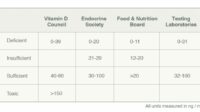
Reference ranges vary across clinical guidelines and patient contexts. Some cutoffs label deficiency at certain thresholds, while others emphasize sufficiency ranges that differ by risk profile. A finger-prick result might place you just above or just below a boundary. In such cases, modest analytic variation can shift a person’s category.
Interpreting vitamin D without context can be like judging a symphony by one note. Symptoms, lifestyle, medication use, kidney function, and calcium metabolism all color the meaning of the number. The test might be accurate, but the conclusion could still be incomplete.
How to Improve Confidence in Finger-Prick Testing
Confidence grows when sampling discipline becomes routine. Use the kit exactly as described: allow proper skin preparation, collect sufficient blood volume, and apply the sample within the specified time. If you’re testing at home, choose a stable environment and check expiration dates.
If results are unexpected, consider a confirmatory venous lab test—especially when decisions hinge on the reading (for example, beginning high-dose supplementation). Re-testing can also help distinguish true biological change from day-to-day variability.
In practice, repeating the test under consistent conditions can be a quiet form of triangulation. It turns a single number into a pattern, and patterns are harder to deceive.
The Fascination That Goes Beyond the Number
Finger-prick vitamin D testing is captivating because it compresses time. It converts a waiting room into a moment of knowledge. It feels empowering. But empowerment invites deeper curiosity: why does a tiny sample carry such weight? The answer is partly technological—sensors, chemistry, and signal interpretation. It’s also human—the desire to reduce uncertainty, to act on data, and to feel in control of health narratives.
Accuracy, then, is not merely about whether a device “matches” a lab. It’s about reliability under real-world conditions, clarity of interpretation, and the readiness to verify when stakes are high. A thoughtful approach turns convenience into a careful instrument rather than a tempting shortcut.
Bottom Line: Accuracy Is Usually Meaningful, but Context Matters
Finger-prick vitamin D tests in US options can be clinically useful, particularly for screening trends or monitoring changes over time. However, accuracy is influenced by sample collection, biological variability, and the analytical design of each platform. Discrepancies with traditional lab tests can stem from more than one source—measurement variability, timing differences, and interpretation thresholds.
When a result surprises you, treat it as an invitation to refine the story. Confirm with conventional testing if needed, revisit sampling conditions, and interpret the value through the lens of your broader health context. In that way, the small drop of blood becomes less a riddle and more a beginning.