There’s a quiet drama happening in your bloodstream—an invisible tug-of-war over how vitamin D is processed, stored, and ultimately used by bone tissue. People often frame the debate as simple: D3 is “better,” D2 is “older,” and the story ends there. But bone density isn’t built on slogans. It’s built on precision chemistry, cellular timing, and the body’s willingness to convert nutrients into usable signals. If you’ve ever wondered why two forms of the same vitamin can feel like different currencies, this head-to-head comparison is meant to shift your perspective. It begins with promise—then follows the trail to the bone.
Vitamin D’s Bone Mission: Why Form Matters More Than You Think
Vitamin D isn’t just a vitamin. It’s a prohormone, a biochemical messenger that helps orchestrate calcium absorption and bone mineralization. Your bones are dynamic structures: they’re constantly remodeling through osteoblast activity (building) and osteoclast activity (resorbing). When vitamin D signaling is off-balance, calcium handling becomes clumsy, and the remodeling process loses its fine-tuned rhythm.
The key twist is that D2 and D3 don’t behave identically once they enter the body. They may share a goal—supporting mineral density—but they can diverge in potency, conversion pathways, and duration of effect. That’s where the real “bone density” question begins: not which vitamin looks better on a label, but how the body turns it into the active endocrine instructions bone cells can actually understand.
The Structural Difference: Same Destination, Different Road
Vitamin D2 (ergocalciferol) and vitamin D3 (cholecalciferol) are related molecules, yet their structures differ subtly. Those subtleties matter because they influence how each form binds to transport proteins in circulation and how long they remain effective. Think of it like two keys that can open the same door, but one key wears slightly differently in the lock.
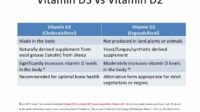
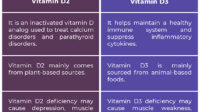
D3 is commonly associated with sunlight exposure and certain animal-derived sources. D2 is often found in plant-based and fortified foods. Both can raise vitamin D levels in the bloodstream, but the “shape” of their biochemical journey may alter how reliably bone receives the calcium-regulating signals it needs.
Absorption and Conversion: The Body’s Molecular Translator
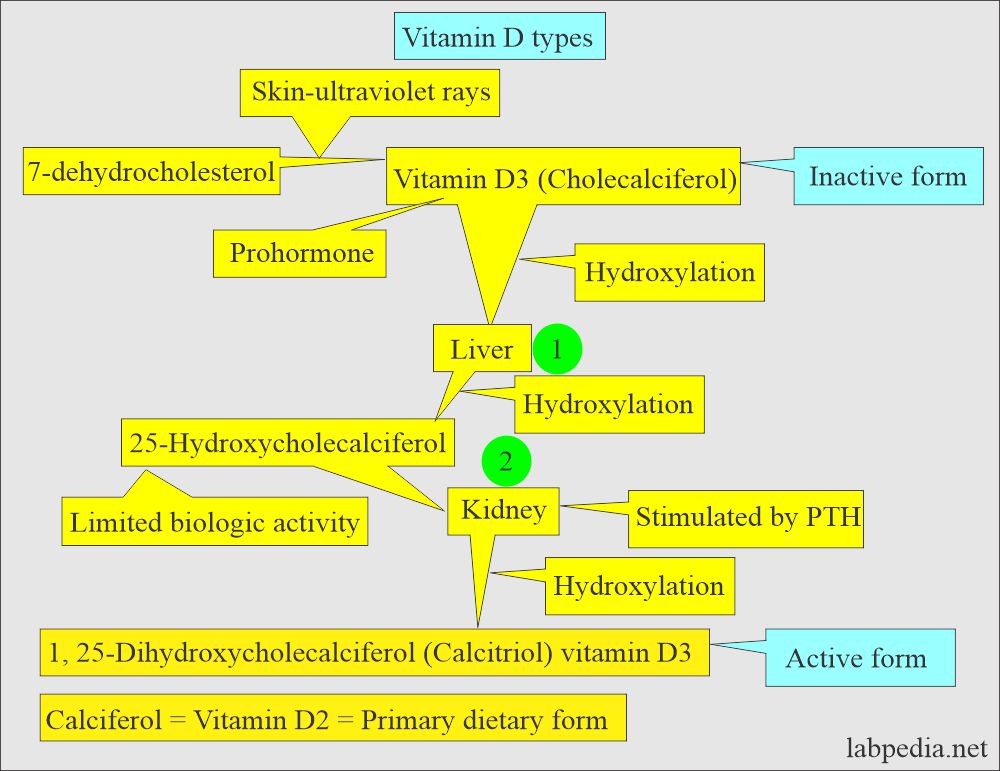
Once ingested, vitamin D must undergo enzymatic conversion before it can influence bone health. The body first transforms it into intermediate forms, then into the active metabolite that interfaces with vitamin D receptors. Those receptors act like regulatory switches—turning on genes involved in calcium absorption and bone maintenance.
Here’s the curiosity-stoking idea: even when both forms increase measurable vitamin D levels, the downstream functional impact can vary. The body isn’t merely collecting vitamin; it’s interpreting it. D3 may offer a more sustained or efficient translation into usable signaling, but the exact “edge” can depend on baseline status, dosage, and individual metabolism.
Serum 25(OH)D vs Bone Reality: Measuring vs Living
Most clinical monitoring focuses on serum 25-hydroxyvitamin D, often written as 25(OH)D. It’s a practical marker, but it’s not the final story. Bone density responds to a living sequence of events—calcium absorption efficiency, mineral deposition, and remodeling dynamics—over weeks and months.
This is where perspective shifts. A rise in lab values doesn’t automatically guarantee an equivalent change in bone microarchitecture. Still, the form that more effectively supports sustained vitamin D signaling has a better chance of improving the conditions that favor bone density preservation.
Duration of Effect: Which One Stays in the System Longer?
Bone is stubborn. It doesn’t remodel overnight. Because of that, “how long vitamin D remains bioavailable” can become a decisive factor. If one form declines faster after supplementation, it may deliver intermittent signaling, while the other could provide a steadier background of receptor activation.
Some evidence suggests D3 can maintain circulating 25(OH)D more effectively over time. Others note that both forms can work, especially when dosing is adjusted appropriately. The key nuance is that the bone doesn’t care only about peak numbers. It responds to the tempo of support—consistent reinforcement that helps the remodeling cycle stay calibrated.
Bone Mineral Density Studies: What the Head-to-Head Narrative Tends to Reveal
When researchers compare supplementation strategies, they often assess outcomes like bone mineral density (BMD) at clinically relevant sites. Interpreting such studies requires care: participants differ in age, baseline vitamin D status, dietary calcium intake, sun exposure, and medication history.
Still, the head-to-head storyline frequently leans toward D3 as the more dependable long-term supporter of vitamin D status. That doesn’t mean D2 is useless. It means D3 may more consistently provide the biochemical conditions that align with bone density maintenance—particularly for people starting with low baseline levels.
Affinities, Binding, and Bioavailability: The “Transport” Question
Vitamin D travels through the body using carrier proteins. How each form interacts with these carriers can affect bioavailability and how readily vitamin D metabolites reach target tissues. Bone tissue is especially sensitive to the presence of functional vitamin D signaling because its cells rely on calcium homeostasis to mineralize matrix.
When vitamin D availability fluctuates, calcium absorption can become less predictable. The bone may then receive weaker reinforcement, prompting the body to compensate through increased parathyroid signaling—an approach that can gradually undermine bone density over time.
Dose and Strategy: If D2 Can Work, Why Does It Often Feel Harder?
One reason the comparison can seem confusing is that D2 and D3 are sometimes used at different dosing regimens. Dose equivalence isn’t a one-size-fits-all equation. Some people take D2 in bolus patterns while others take D3 daily or with different schedules. Those differences can dramatically influence how high and how long 25(OH)D rises.
So the real question is not “D3 better than D2 in every scenario,” but “What strategy best sustains vitamin D signaling for bone?” For some individuals, D2 at an appropriate dose and schedule can be effective. For others, D3 may achieve the desired biochemical stability with less guesswork.
Practical Considerations: Choosing Between D3 and D2 in Real Life
Bone health is rarely a single-variable equation. Calcium intake, magnesium sufficiency, protein adequacy, weight-bearing movement, and overall endocrine balance all participate in the remodeling orchestra. Vitamin D is a conductor, not the entire symphony.
In practical terms, many people consider D3 due to its association with more consistent 25(OH)D maintenance. Those avoiding animal-derived ingredients may prefer D2, especially if they can adhere to a dosing regimen that reliably corrects low levels. In both cases, monitoring matters—because “feels fine” isn’t the same as “meets bone-relevant targets.”
/medriva/media/post_banners/content/uploads/2024/02/vitamin-d-benefits-and-differences-between-d2-and-d3-20240215221520.jpg)
Side Notes That Change the Outcome: Baseline Status and Timing
If your vitamin D is already adequate, the incremental benefit of switching from D2 to D3 may appear smaller. If you’re deficient, the body’s starting point can determine how dramatically supplementation changes the biochemical landscape.
Seasonality can also play a role. Sunlight-driven synthesis declines in colder months for many regions. In that seasonal dip, sustained supplementation can help prevent vitamin D status from wobbling—an effect that may indirectly stabilize the bone’s remodeling environment.
Curiosity Checklist: Questions Worth Asking Before You Commit
Before choosing D2 or D3, consider these perspective-shifting questions: What were your baseline vitamin D levels? Are you also meeting calcium needs? Are you taking the vitamin consistently, at a schedule that supports steady signaling? Do you have risk factors for osteoporosis or fracture? Are you on medications that affect bone density or vitamin D metabolism?
Answers to these questions often matter more than the marketing language. Bone density improvement is rarely a sprint. It’s a long, methodical process of reinforcing the conditions that mineralization requires.
The Bottom Line: A Head-to-Head Bias Toward Consistency
If you want a simple conclusion, it’s this: D3 frequently offers a more reliable pathway for maintaining functional vitamin D status, which aligns naturally with bone density preservation. D2 can still work, but it may require more careful dosing strategy and monitoring to achieve comparable stability.
In the end, bone health is an elegant negotiation between biology and time. Whether you choose D3 or D2, the most powerful move is to select the form and regimen that keeps vitamin D signaling steady enough for bone cells to do their job—day after day, remodeling with intention rather than improvisation.