Vitamin D is often described as a “sunshine vitamin,” yet even beneficial nutrients can become a problem when they tip into excess. When vitamin D toxicity develops, headaches can appear—sometimes suddenly, sometimes as a slow, persistent ache. If you’re trying to understand whether those headaches are simply stress, sleep disruption, or something more biochemical, the details matter. The story of vitamin D excess is rarely one-size-fits-all; it unfolds through lab changes, digestive and urinary symptoms, and a particular pattern of discomfort that deserves attention.
How Vitamin D Toxicity Happens (And Why Headaches Can Be a Clue)
Vitamin D toxicity usually doesn’t come from normal sunlight exposure. It more commonly arises from supplementation—especially high-dose regimens taken over weeks or months. Vitamin D’s job is to help regulate calcium absorption. When vitamin D levels climb too high, calcium absorption can overshoot, producing hypercalcemia (elevated calcium in the blood).
This matters because calcium isn’t just a structural mineral; it plays an instrumental role in nerve signaling and vascular tone. When calcium balance becomes distorted, the brain and blood vessels can respond with symptoms that feel like “just a headache,” even when the underlying mechanism is metabolic and not purely muscular.
Headaches may be the opening scene. Some people notice a dull pressure, others experience throbbing discomfort, and still others report a sense of heaviness that doesn’t behave like ordinary tension headaches. The variability can be unnerving, and it’s one reason vigilance is prudent.

What the Headache May Feel Like: A Spectrum of Presentations
Not every headache during vitamin D toxicity is identical. Think of it as a spectrum rather than a single diagnostic “type.”
Tension-like headaches: A tight, banded pressure can occur, sometimes worsening as the day progresses. The neck and scalp may feel tender, though the driver may not be posture alone.
Throbbing or migraine-like headaches: Some individuals describe pulsation, light sensitivity, or nausea. Hypercalcemia can influence nerve excitability and may intensify migraine susceptibility.
Persistent, atypical headaches: A headache that stubbornly refuses to fade—despite hydration, rest, or routine analgesics—can be a red flag. “Atypical” is important; headaches that behave differently than your normal pattern deserve medical attention.
While these descriptions don’t diagnose toxicity by themselves, they help readers recognize when a headache’s demeanor feels off-key. The body often speaks in style, not certainty.
The Biological Domino Effect: High Calcium and Neurologic Symptoms
The most consequential chain reaction is usually: excessive vitamin D → increased calcium absorption → hypercalcemia. When calcium rises, multiple systems can become involved—creating a collage of symptoms that can accompany headache.
Neurologically, people may experience:
- Foggy thinking or reduced mental clarity
- Irritability that feels disproportionate
- Weakness that alters daily stamina
- Sleep disruption that worsens pain perception
These aren’t merely “side effects.” They can be the physiologic background music under the headache. When the brain senses imbalance—especially within electrolyte and mineral systems—it can generate symptoms that look unrelated but actually share a common origin.
In some cases, severe hypercalcemia can lead to more urgent neurologic issues. That’s why headaches paired with systemic symptoms should never be dismissed as coincidence.
Other Warning Signs to Watch For Alongside Headaches
Headaches are important, but they rarely travel alone in vitamin D toxicity. Readers should look for companion signals—small clues that, when combined, form a pattern.
Common accompanying symptoms include:
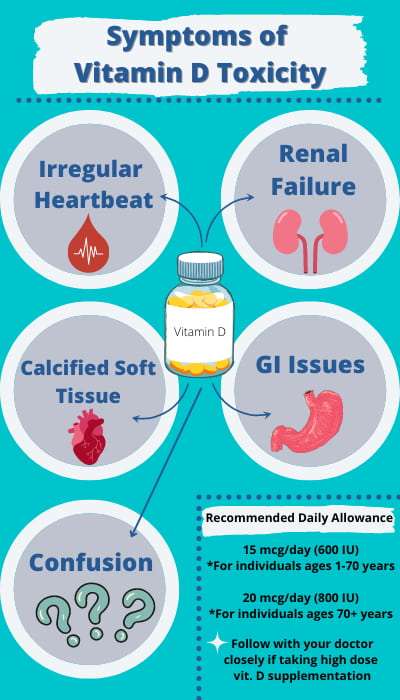
- Excess thirst and frequent urination (the body tries to correct imbalance)
- Constipation or changes in digestion
- Nausea or reduced appetite
- Fatigue and muscle weakness
- Dehydration due to urinary calcium loss
- Abdominal discomfort or a general “off” feeling
Some people also report bone or soft-tissue aches. These can be misleading; they might resemble joint issues, but the underlying problem could be mineral imbalance. The goal is not to self-diagnose, but to determine whether the symptom constellation fits a metabolic explanation.

Risk Factors: Who Is Most Likely to Develop Toxicity?
Vitamin D toxicity often clusters around a few predictable circumstances. The risk increases when dose and duration are high, or when multiple products stack without awareness.
Potential risk factors include:
- High-dose supplementation (especially without periodic bloodwork)
- Combining supplements (vitamin D plus multivitamins plus fortified drinks)
- Using “loading” protocols for deficiencies without follow-up
- Underlying conditions that heighten sensitivity to calcium (certain granulomatous diseases, for example)
- Kidney impairment that reduces calcium clearance
- Accidental dosing errors—such as taking adult doses when instructions were intended for different age groups
It’s also worth noting that symptoms can emerge even in people who believe they’re being careful. Labels, measurement units, and dosing schedules can confuse well-meaning routines. The most protective strategy is transparency: keep a list of all supplements and doses, including “occasional” add-ons.
When to Seek Urgent Care (Don’t Wait for Clarity)
Some situations require immediate evaluation. Seek urgent care if headaches come with severe neurologic or systemic symptoms, such as:
- Confusion, extreme drowsiness, or unusual behavior
- Severe dehydration or inability to keep fluids down
- Persistent vomiting
- Fainting or significant weakness
- Chest pain or palpitations
- Vision changes or sudden, the-worst headache-of-your-life
Even if vitamin D toxicity turns out not to be the cause, these symptoms are high-priority. Medical evaluation can quickly rule out dangerous alternatives and assess calcium levels, hydration status, kidney function, and other critical markers.
In a sense, urgency is less about certainty and more about safety. The body’s chemistry can shift faster than people expect.
How Clinicians Confirm Vitamin D Toxicity: Labs and Patterns
Diagnosis is not made from the headache alone. Clinicians typically rely on laboratory evaluation and symptom review. Common assessments may include:
- Serum calcium (looking for hypercalcemia)
- 25-hydroxyvitamin D levels (the primary circulating form)
- Kidney function tests, since the kidneys are central to mineral handling
- Parathyroid-related markers when needed to clarify the mechanism
- Electrolytes and hydration indicators
Headaches in this context are usually interpreted alongside the broader metabolic picture. That’s why a “normal” headache day history is helpful, but lab data is decisive. The goal is to understand whether the body is experiencing a mineral imbalance rather than a purely neurologic or musculoskeletal event.
Treatment and Recovery: What Typically Happens Next
When toxicity is suspected, the initial step is usually to stop the offending supplement—under medical guidance. Because vitamin D is fat-soluble, it can remain in the body longer than water-soluble nutrients. Treatment often focuses on reducing calcium levels and supporting safe recovery.
Depending on severity, healthcare teams may recommend:
- Hydration strategies to support kidney excretion
- Medications that help lower calcium when appropriate
- Monitoring of calcium, vitamin D status, and symptoms
- Adjusting dietary calcium temporarily, if advised
Recovery can take time. Some people feel improvement within days, while others notice gradual stabilization over weeks. Headaches may ease as biochemical balance returns, but lingering fatigue or cognitive fog can persist until the full physiology settles.
This is where patience and follow-up matter. The body didn’t just “get a headache”—it endured an imbalance, and it requires a full reset.
Prevention: Safer Ways to Use Vitamin D
Prevention is a quiet strategy that pays dividends. Rather than guessing, aim for structure: dose awareness, periodic lab checks, and clear boundaries around supplementation.
Practical prevention steps include:
- Check total daily intake across all products (multivitamins, gummies, fortified foods)
- Follow prescribed dosing plans and avoid escalating without guidance
- Schedule bloodwork when taking higher doses or after a repletion phase
- Keep records of brand, dose, and timing to reduce dosing confusion
- Discuss risk factors with a clinician, especially if kidney issues exist
A measured approach can preserve vitamin D’s benefits while reducing the odds of toxicity. In other words, supplementation should feel like engineering—not like experimentation.
:max_bytes(150000):strip_icc()/VWH-JulieBang-VitaminDDeficiency-txt-4000x2700-25d3aac6e3914cf98d08db2ba4d87be2.png)
Sorting Out Vitamin D Toxicity vs. Other Common Headache Causes
Not every headache in a supplement user is toxicity, and not every headache with thirst is calcium-related. Migraines, dehydration, caffeine changes, sleep deprivation, sinus issues, and medication effects can all produce headache patterns that mimic each other.
The differentiator is usually the companion symptom cluster plus the supplementation story. If you have been taking vitamin D at higher-than-standard doses, noticed unusual thirst/urination, constipation, fatigue, or cognitive changes, and your headache feels unusually persistent or atypical—those are meaningful convergences.
When doubt exists, evaluation is the bridge between assumptions and accuracy. The body’s chemistry is complex, but it is also measurable.
A Clear Takeaway: Listen to Patterns, Not Just Pain
Vitamin D toxicity can manifest with headaches, but the headline symptom is rarely the whole plot. The most useful mental model is to treat headaches as a potential signal within a larger physiologic narrative—one involving calcium balance, hydration dynamics, and neurologic sensitivity.
If your headache is new, persistent, atypical, or paired with systemic symptoms, take it seriously. Gather your supplement details, watch for warning signs, and seek clinical evaluation rather than self-guessing. With timely assessment, the path to relief becomes clearer—and the body can return to equilibrium.