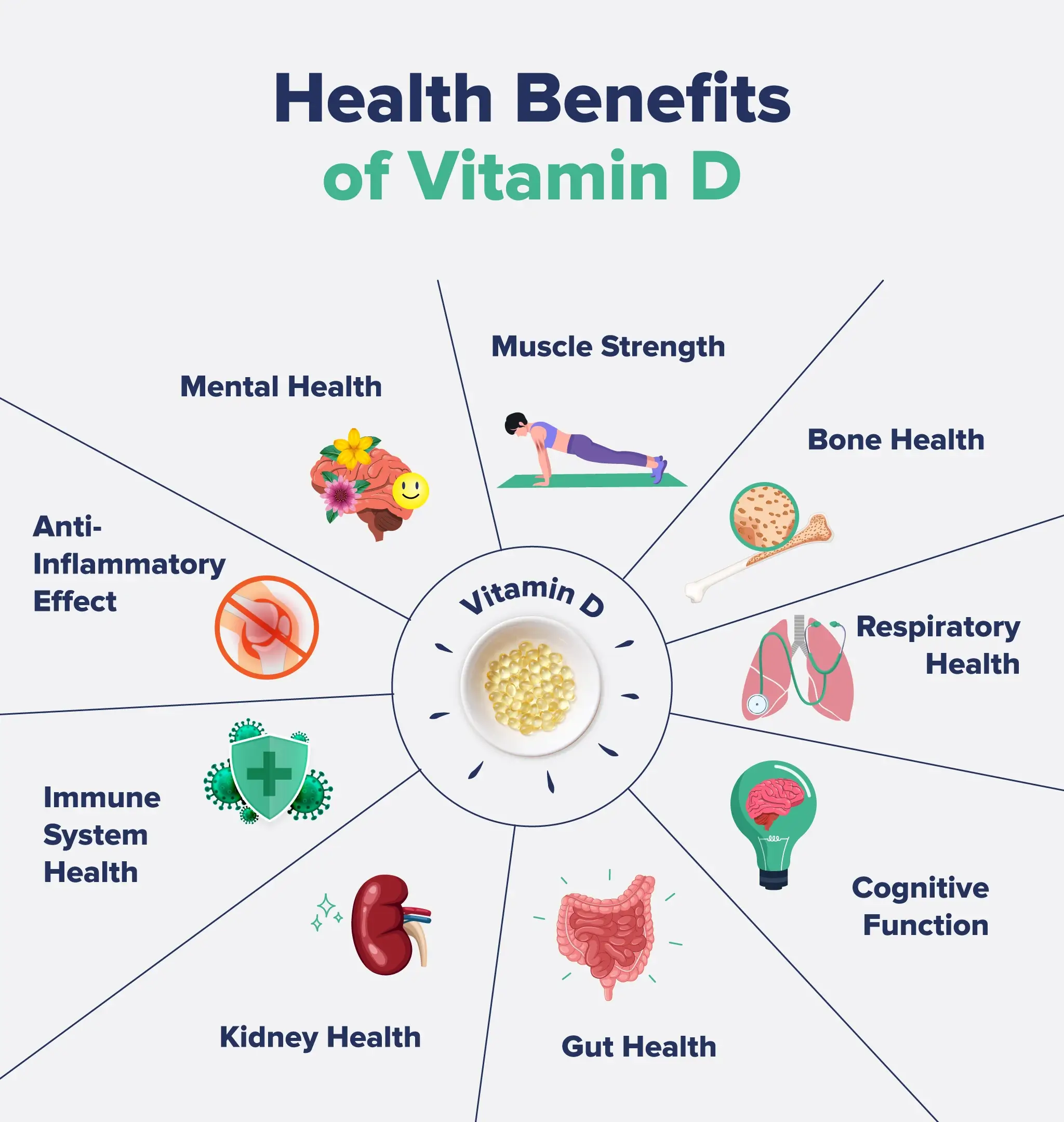
Vitamin D is often treated like a simple supplement—something you take when winter sunlight dwindles. Yet for many people, it is better understood as a biological “command signal” that helps orchestrate calcium handling, immune calibration, and even the emotional weather of daily life. The optimal dose is not one-size-fits-all; it is a moving target shaped by sun exposure, skin pigmentation, body mass, diet, latitude, seasonality, and individual physiology. When the balance is right, bones feel sturdier, immunity becomes more responsive, and mood can feel steadier—less like a pendulum and more like a dial with dependable settings.
Why Vitamin D Matters for Bone Strength
Bone health depends on more than just calcium and protein. Vitamin D acts like an interpreter between the gut and the skeleton, promoting intestinal absorption of calcium and phosphorus. Without adequate vitamin D, the body can compensate in the short term, but over time it struggles to mineralize bone effectively. That can translate into softer bones, higher fracture risk, and in more severe deficiency states, osteomalacia.
The relationship is bidirectional: bones store calcium, but vitamin D determines how efficiently calcium gets absorbed and mobilized. Optimal vitamin D status helps maintain a proper mineralization “architecture”—collagen scaffolding laid down with the right mineral deposits at the right pace. Think of it as scaffolding with better mortar, rather than just adding more bricks.
The Immunity Angle: More Than “Stronger” Defenses
Vitamin D is deeply involved in immune regulation. It doesn’t simply crank the immune system into overdrive; it helps tune immune responses. This matters because both under-response and over-response can cause problems—susceptibility to infections on one side, and dysregulated inflammation on the other. Vitamin D receptors are present in many immune cells, including macrophages and T cells, influencing how they behave.
In practical terms, adequate vitamin D status is associated with improved immune resilience. People who are deficient may experience a more reactive immune system, with inflammatory signaling that can become “noisy.” Adequate vitamin D helps restore a calmer rhythm—an immunologic homeostasis that supports effective pathogen defense while discouraging excessive collateral inflammation.
Because immunity is complex, the “dose” conversation should avoid simplistic promises. Vitamin D is not a shield, but it is part of the biological toolkit that affects how the immune system rehearses and responds.
Mood, the Brain, and the Quiet Chemistry of Serotonin
Mood is influenced by many variables—sleep, stress hormones, nutrition, social context. Still, vitamin D appears to play a role in brain function and neurotransmitter pathways. It influences gene expression in the nervous system and may modulate signaling related to serotonin, a neurotransmitter closely associated with emotional equilibrium.
When vitamin D is low, some people notice seasonal changes in energy and affect, aligning with reduced sunlight exposure. While not everyone experiences this clearly, it’s a known pattern: deficiency can correlate with depressive symptoms and fatigue. The emotional experience can feel like sluggishness rather than sadness, a subtle dimming that accumulates over weeks.
It’s worth holding nuance here. Mood changes can result from many factors, and supplementing vitamin D is not a substitute for mental health care. But for those with deficiency, restoring adequate levels can be a meaningful component of a broader wellness plan.
What “Optimal Dose” Really Means: Blood Levels and Individual Variation
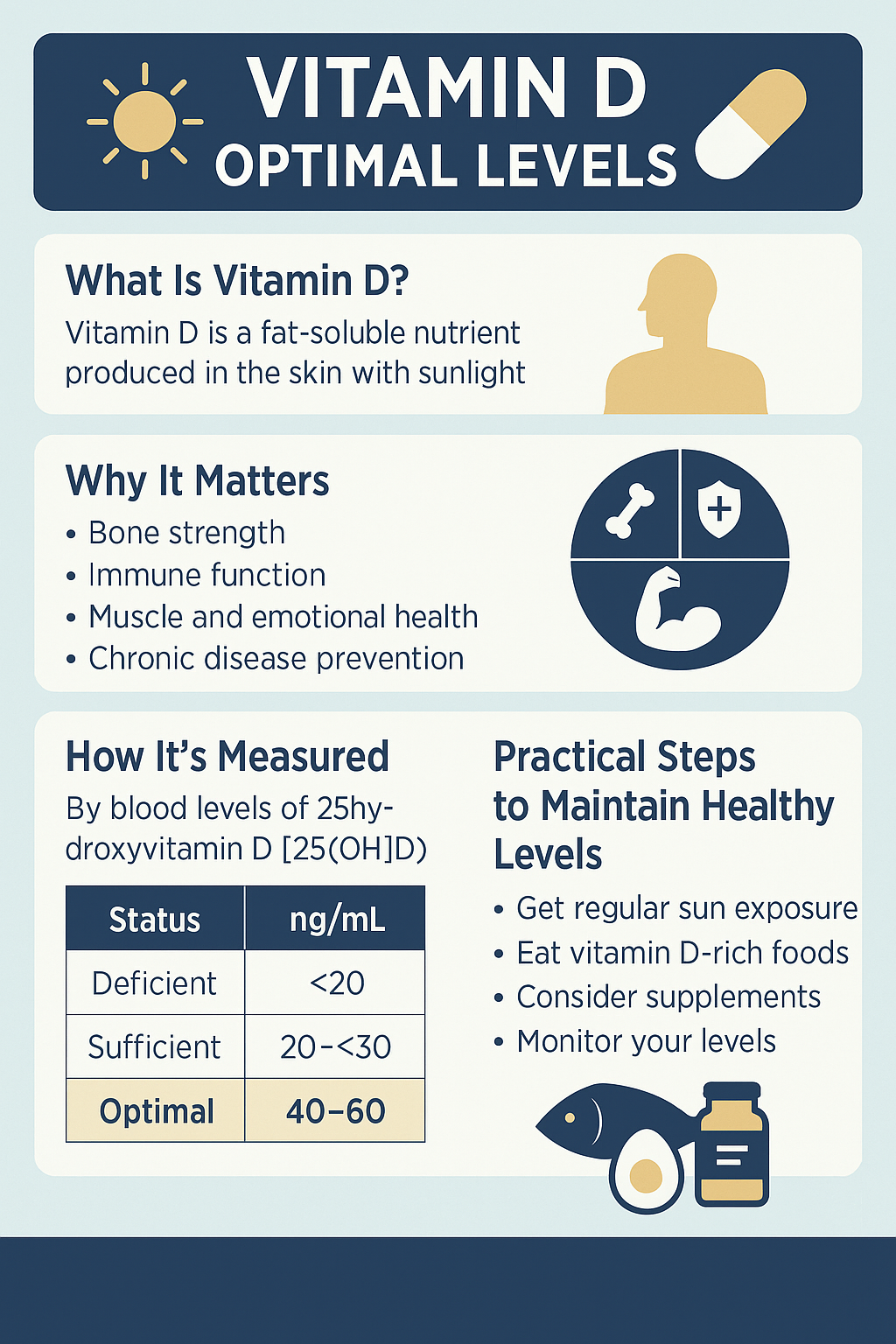
Optimal vitamin D dose is best considered as a route to an appropriate 25-hydroxyvitamin D (25(OH)D) blood level. That level reflects vitamin D stores from sunlight and diet, and it provides a more accurate snapshot than relying on supplement intake alone.
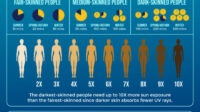
However, different bodies respond differently. Body fat can sequester vitamin D, making it less available. Older adults may have reduced conversion efficiency. People with darker skin typically have less cutaneous production of vitamin D for the same UV exposure. During winter, geographical latitude and cloud cover can drastically reduce synthesis.
A thoughtful dose strategy aims to correct deficiency, maintain sufficiency, and avoid overshooting into excessive levels. Oversupply is not harmless; very high vitamin D can contribute to hypercalcemia, with symptoms that may include nausea, constipation, excessive thirst, confusion, and kidney stress. In other words: the goal is calibration, not maximal stacking.
How Much Vitamin D Should You Take? Practical Dosing Ranges
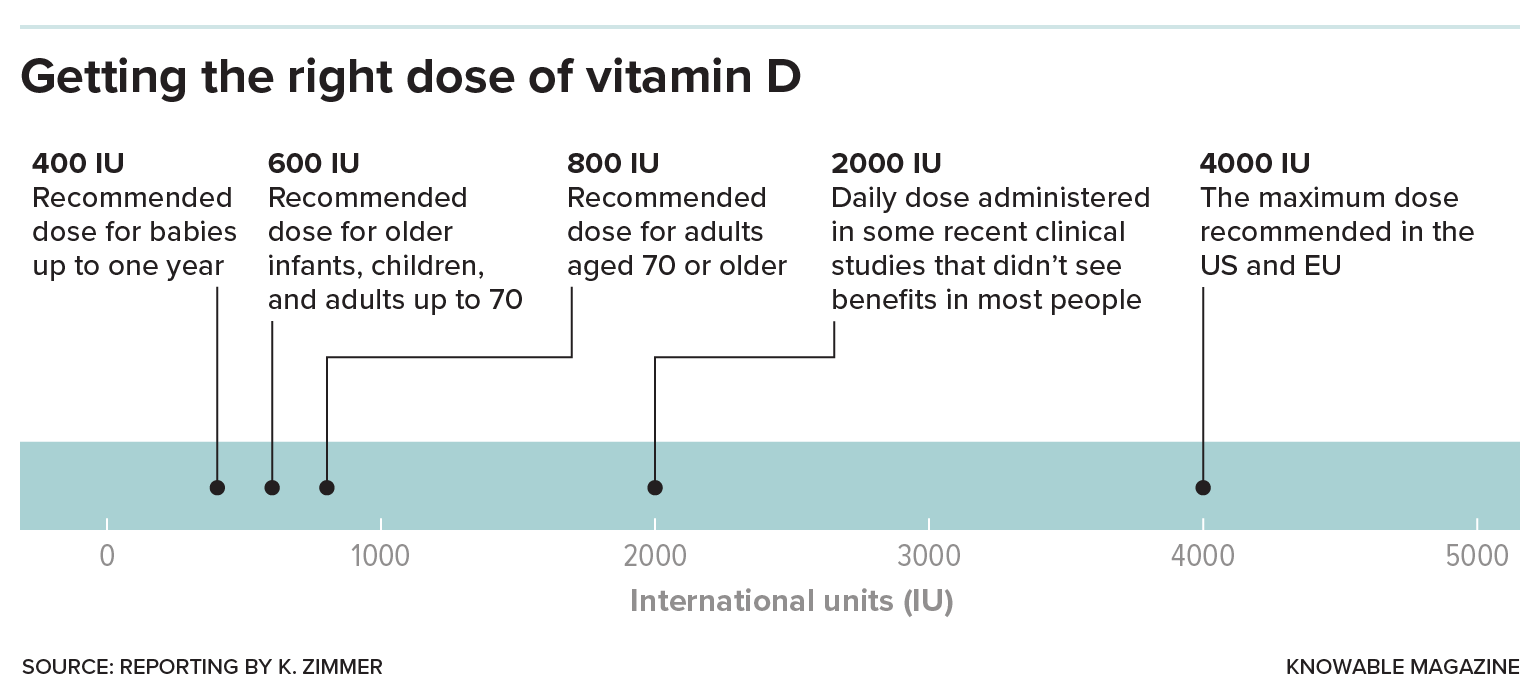
For many adults, the most common approach is to supplement daily, titrating based on baseline status and response. A baseline intake may be modest for maintenance, while higher doses may be used temporarily to correct deficiency—always with appropriate clinical guidance.
Many people begin with a daily dose in the range of 1,000–2,000 IU (25–50 mcg) for maintenance, especially when they get minimal sun. Some individuals may require more to achieve adequacy, particularly if blood levels are low, sun exposure is scarce, or body composition affects vitamin D bioavailability. In correction phases, clinicians may use higher short-term regimens, then step down to maintenance.
Still, the most reliable method is measurement. A blood test can reduce guesswork and prevent both underdosing (prolonged deficiency) and overdosing (unwanted excess). If you’re tailoring a plan, consider starting with a conservative maintenance dose and reassessing after several weeks, especially if you were previously deficient.
Different Forms: D2 vs D3, and Why Formulation Matters
Vitamin D comes in two main dietary forms: D2 (ergocalciferol) and D3 (cholecalciferol). In many real-world supplementation strategies, D3 is commonly favored because it tends to be more effective at raising and maintaining blood levels for many people. The difference is subtle, but in the pursuit of “optimal,” subtlety matters.
Formulation can also influence tolerability. Some supplements pair vitamin D with vitamin K2, often MK-7. The rationale is that vitamin K supports proper calcium handling within the body’s pathways. This pairing is not mandatory for everyone, but it can be conceptually coherent: vitamin D increases calcium availability; vitamin K helps guide where calcium should go.
When choosing a product, look for clear labeling, consistent dosing, and reputable manufacturing standards. Nutrition is chemistry; chemistry deserves precision.

Daily vs Weekly vs High-Dose Schedules
Supplement timing can matter. Daily dosing mimics a steady trickle, which may be convenient for mood and consistency-minded routines. Weekly dosing can be practical for busy schedules. Higher-dose intermittent strategies are sometimes used for convenience, but they should be approached carefully—because spikes and troughs may not be ideal for everyone.
The body converts and stores vitamin D; your baseline level and the chosen regimen determine the overall trajectory. Some people feel better with daily consistency; others tolerate less frequent dosing equally well. What matters most is the achieved blood level and your absence of adverse effects.
Regardless of schedule, the same principles apply: start thoughtfully, monitor when possible, and adjust gradually rather than impulsively.
Food Sources and Sun Exposure: The Foundational Layer
Supplements can fill gaps, but food and sunlight are the original blueprint. Fatty fish (salmon, sardines), egg yolks, and fortified dairy or plant milks can contribute to intake. Cod liver oil is a potent source, though it can also deliver variable amounts of other nutrients.
Sun exposure drives vitamin D synthesis through UVB radiation. Yet sun isn’t free medicine. Skin safety matters; sunburn is damage, not a beneficial transaction. In many regions, the safest sunlight exposure still may not provide adequate vitamin D during winter months, especially for people who work indoors or avoid direct sun.
Consider supplementation as an adjustment to your environment. When seasons shift, vitamin needs often follow.
Risk Factors for Low Vitamin D and Signs to Consider
Several patterns predict low vitamin D: limited sun exposure, darker skin, older age, obesity, malabsorption conditions (such as celiac disease or inflammatory bowel disease), certain medications, and bariatric surgery. People who live far from the equator may also face lower seasonal UVB.
Symptoms of deficiency can be subtle: fatigue, muscle aches, generalized weakness, or bone discomfort. However, these signs overlap with many other conditions, so they should not be used as a stand-alone diagnostic compass. The most reliable approach is laboratory evaluation.
If you suspect deficiency—especially if you have risk factors—pair lifestyle assessment with a blood test rather than relying on intuition alone.
Safety, Monitoring, and When to Seek Guidance
Vitamin D can be beneficial, but a responsible dose strategy respects boundaries. Excess vitamin D may lead to hypercalcemia and kidney complications. That risk is generally associated with persistently high intakes, especially without monitoring.
Practical safety includes: choosing appropriate doses based on baseline status, avoiding stacking multiple high-dose products unknowingly, and checking blood levels periodically if taking higher amounts. If you have kidney disease, a history of kidney stones, hyperparathyroidism, or sarcoidosis, consult a healthcare professional before adjusting doses.
For many people, a well-calibrated plan reduces deficiency risk and supports long-term bone, immune, and mood resilience. For others—particularly those at higher risk—monitoring is essential.
A Cohesive Plan: Choosing Your Dose and Sticking With It
The “optimal” vitamin D dose is the dose that gets you to an adequate vitamin D level and keeps you there—without crossing into excess. That typically means selecting a reasonable starting intake, aligning it with your lifestyle and risk factors, and verifying progress with blood testing when possible.
Then give it time. Vitamin D is slow-moving; bones and immune pathways don’t synchronize instantly. Consistency beats impulsive changes. Pair your dosing with sensible sun habits, nutrient-rich foods, and lifestyle scaffolding that supports sleep and stress management.
When vitamin D sits in its appropriate range, the benefits can feel quietly cumulative: stronger bones, a steadier immune backdrop, and a mood that holds its center more reliably—like an inner metronome finally tuned to the right frequency.