What if a simple vitamin—one you might already be taking in the morning—could quietly influence how a medication behaves in your day-to-day routine? It sounds like a plot twist, doesn’t it? Let’s talk about the interaction between Vitamin D and oral semaglutide (Rybelsus). On paper, they live in different neighborhoods: one is a nutrient with skeletal and immune-minded ambitions, while the other is a glucagon-like peptide-1 (GLP-1) receptor agonist designed to help regulate appetite and blood sugar. Yet biology has a habit of weaving cross-links—sometimes subtle, sometimes consequential.
First, set the stage: what Vitamin D is doing in your body
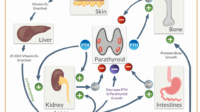
Vitamin D isn’t just “for bones.” It behaves more like a molecular diplomat, influencing gene expression and signaling pathways across multiple tissues. Its active form, calcitriol, helps with calcium absorption, supports neuromuscular function, and participates in immune modulation. People often associate low vitamin D with fatigue, muscle aches, or risk factors for bone health, but the bigger picture is that vitamin D participates in a broader endocrine conversation.
And when vitamin D levels are low, the body may shift priorities. That shift can affect metabolic processes indirectly—through inflammation pathways, insulin sensitivity modulation, and changes in how tissues respond to hormones. In other words, vitamin D status could set the “baseline” before any medication enters the scene.
Now introduce the protagonist: how oral semaglutide (Rybelsus) actually works
Oral semaglutide is a GLP-1 receptor agonist that supports weight management and glycemic control. But it doesn’t travel through the gut like an ordinary pill. Its absorption is unusually sensitive to stomach acidity and timing. Rybelsus is formulated with an absorption-enhancing technology that allows it to be taken by mouth, yet it still relies on a carefully managed gastric environment.
That means Rybelsus lives on a schedule. You typically take it on an empty stomach, with a glass of water, and then wait before eating. This “ritual” isn’t just tradition; it helps maximize absorption consistency. When anything alters stomach conditions—acid levels, digestion speed, or adherence to the timing rules—the medication’s effectiveness can potentially wobble.
The potential challenge: vitamin D supplements and the absorption “ecosystem”
Here’s the playful question again, sharpened: could vitamin D—especially if it’s taken at the same time as Rybelsus—become the annoying side character that disrupts the main plot? The concern isn’t that vitamin D directly blocks semaglutide. Instead, the challenge may come from how supplements are swallowed, whether they include additional ingredients, and whether they interfere with the strict empty-stomach requirements.
Vitamin D supplements are available in different forms, such as cholecalciferol (D3). Many are fat-soluble and may be formulated in ways that include oils or emulsifiers. While that’s generally not a problem when taken with food, taking supplements too close to Rybelsus—especially without adhering to the empty-stomach protocol—might influence gastric conditions. Additionally, the physical presence of other capsules or tablets in the stomach at the wrong time could affect absorption kinetics.
Short version: vitamin D likely isn’t a biochemical enemy of semaglutide, but timing and co-administration can be the real “gotcha.”
Timing strategies: keeping both agents in their optimal lanes
A pragmatic approach is to separate dosing schedules. Since Rybelsus absorption is tied to a fasting window, vitamin D can often be taken later—after you’ve waited before eating. This reduces the chance of competition for the same absorption opportunity.
Many people choose to take vitamin D with breakfast or lunch, unless their clinician advises otherwise. Others prefer evening dosing. What matters most is consistency and adherence to the Rybelsus instructions: take it empty, wait, and avoid food or other medications during the critical window.
Longer thought: the goal isn’t merely “avoid interactions.” The goal is to protect the predictability of Rybelsus absorption so its appetite and glycemic effects remain steady over time.
Could Vitamin D status influence metabolic outcomes relevant to semaglutide?
Even if vitamin D doesn’t directly alter Rybelsus pharmacokinetics, vitamin D status may still influence metabolic terrain. Low vitamin D has been associated in some populations with insulin resistance and inflammatory signaling. If someone improves their vitamin D sufficiency, their baseline insulin dynamics might shift—sometimes modestly, sometimes meaningfully.
In that scenario, semaglutide’s overall effect could feel smoother or more noticeable, not because vitamin D supercharges GLP-1 activity, but because the starting conditions have improved. Think of it as adjusting the weather before a journey: the road doesn’t change, yet travel feels different.
What about calcium and related supplements—an indirect “domino effect”?
Vitamin D often pairs with calcium in supplement routines. Calcium itself can influence gastrointestinal function for some individuals, occasionally causing constipation or changes in how the gut feels. Oral semaglutide can also affect the gastrointestinal tract—commonly through nausea, constipation, or fullness in some people.
When both are used, the combined effect on comfort matters. Even if calcium/vitamin D doesn’t alter semaglutide absorption directly, gastrointestinal side effects can influence adherence. And adherence is the silent gatekeeper of therapeutic success.
So while the interaction isn’t necessarily “one plus one equals chemical conflict,” it might still be “one plus one equals discomfort,” which then becomes “one plus one equals missed doses,” which becomes the real risk.
Absorption sensitivity vs. vitamin D’s usual profile
It helps to contrast absorption challenges. Rybelsus is sensitive to gastric conditions. Vitamin D, being fat-soluble, generally depends on dietary context and formulation. That difference suggests a simple guiding principle: don’t treat them as if they require the same timing rules.
If vitamin D is taken with food, it typically behaves more predictably. Rybelsus, in contrast, wants an empty starting point. These preferences don’t “cancel each other out,” but they do demand scheduling finesse.
In the end, the interaction is less about direct chemistry and more about how daily routines shape physiology.
Special populations: why advice may need personalization
Some people take medications that alter stomach acidity—such as proton pump inhibitors or certain antacids. Those agents can affect Rybelsus absorption, which means the broader regimen is already delicate. In such cases, adding vitamin D at a convenient but poorly timed moment could further complicate the day.
Additionally, people with malabsorption syndromes, inflammatory bowel disease, or significant GI sensitivity may process nutrients and drugs differently. Their risk isn’t necessarily higher for a “true interaction,” but their absorption variability can be greater—making careful timing even more important.
Clinician-guided coordination is especially valuable if there are other concurrent supplements or medications, particularly those that influence the stomach or bowel pattern.
Practical signs to watch: when to suspect a problem
Consider monitoring how you feel after changes in dosing. If you consistently experience worsened nausea, persistent constipation, or unusual reflux soon after adjusting vitamin D timing, that may signal a routine mismatch. It doesn’t automatically mean a harmful interaction—often it means timing or gastrointestinal tolerance needs adjustment.
On the therapeutic side, if blood glucose control or weight trends become unexpectedly sluggish after altering supplement schedules, absorption variability might be involved. In that situation, reviewing the Rybelsus intake ritual is often more fruitful than assuming vitamin D is the culprit.
When to involve a healthcare professional
If you’re starting both vitamin D supplementation and Rybelsus—or if you’re changing doses—ask for a dosing schedule that respects Rybelsus’s empty-stomach requirement. This is especially important if you have kidney disease, a history of high calcium, recurrent kidney stones, or if you’re on multiple medications affecting the GI tract.
Vitamin D isn’t always harmless in unlimited amounts. Dose appropriateness depends on baseline levels and individual risk. Semaglutide, similarly, requires adherence to dosing mechanics to maintain efficacy.
Visual memory: keep the “separation rule” in mind
Here’s a mental picture: Rybelsus is like a ticket that must be stamped under specific conditions. Vitamin D is like a passenger who can travel comfortably—just not in the same boarding line at the wrong time.

Separating schedules, following empty-stomach instructions, and coordinating with your clinician can turn a potentially fussy interaction into a smoothly managed routine.
Bottom line: friendly neighbors, but careful choreography
Vitamin D and oral semaglutide don’t have to be adversaries. The most plausible “interaction” is indirect—rooted in timing, formulation habits, and gastrointestinal comfort. Yet those seemingly small factors can influence how consistently Rybelsus absorbs and how steadily you’re able to stay on plan.
So the final playful takeaway is this: yes, vitamin D can matter. Not necessarily because it interferes with semaglutide like a villain, but because your body is a system—responsive, rhythmic, and surprisingly sensitive to choreography.