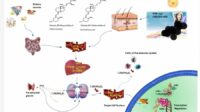
Most people first notice vitamin D because of sunlight—bright afternoons, winter blues, and the subtle question of whether their skin is “getting enough.” Yet the story is more intriguing than a simple sunshine rule. Vitamin D is often described as a nutrient, but biochemically it behaves more like a molecular instructions label, influencing immune cells with a precision that feels almost conspiratorial. And while it’s common to hear that vitamin D “boosts immunity,” the science reveals a deeper choreography: recognition, regulation, and repair happening behind the scenes.
Vitamin D’s Unlikely Identity: From Sunlight to Immune Signaling
Vitamin D begins its life as a skin-derived precursor, then travels through a two-step metabolic pathway—first to become calcidiol and later to calcitriol, the hormonally active form. What makes this relevant to immunity is the presence of vitamin D receptors (VDRs) in immune tissues. In other words, the immune system doesn’t merely respond to vitamin D; it can “listen” for it.
Calcitriol functions like a transcriptional moderator. It can influence gene expression in macrophages and other immune cells, shaping how they respond to threats. This helps explain why vitamin D is frequently associated with improved immune regulation, not just heightened immune aggression.

The “Boost” That Matters: Immune Regulation, Not Just Immune Power
A common observation is that people hear “boost your immune system” and assume the goal is maximal defense. But immune systems are less like bouncers at a club and more like diplomats at a summit—too little response and pathogens gain leverage, too much response and inflammation becomes the enemy.
Vitamin D is often fascinating because it nudges immunity toward balance. It supports pathogen-fighting mechanisms while also helping to dampen excessive inflammatory signaling. That balance is particularly important for conditions where inflammation can spiral—where the immune response is strong but misdirected.
Rather than operating as a simple switch, vitamin D behaves like a dimmer controlling cytokine production—chemical messengers that coordinate immune activity. This is one reason you may observe improved wellbeing in some individuals after correcting deficiency: the immune system becomes more capable of acting appropriately across different scenarios.
Innate Immunity: How Vitamin D Helps Your First Line of Defense
Innate immunity is the body’s immediate, pattern-recognition defense. Vitamin D contributes here by enhancing the antimicrobial functions of cells like macrophages. One mechanism involves the induction of antimicrobial peptides—molecules that can directly neutralize microbes.
Think of innate immunity as a rapid-response team. Vitamin D helps equip that team with tools that are ready at the cellular level. This may be part of the reason vitamin D is linked with reduced susceptibility to some infections, especially when deficiency exists.
It’s worth noting that “helping” doesn’t mean guaranteeing immunity. Biology rarely works in absolutes. Instead, vitamin D seems to improve preparedness, which can translate into fewer or shorter bouts of illness in certain populations.
Adaptive Immunity: Fine-Tuning T Cells and Antibody Dynamics
Adaptive immunity is slower to start but highly specific. It involves T cells, B cells, and memory responses. Vitamin D influences these pathways through its interactions with immune cell subsets, including effects on T cell differentiation.
In simple terms, vitamin D may support an environment where immune responses are better calibrated—less likely to overreact, more likely to target effectively. It may also modulate the formation and activity of cells involved in antibody production.
Here, the fascination deepens. Vitamin D doesn’t merely “increase immune cells.” It helps govern how they behave: whether they lean toward inflammatory profiles or toward more regulatory behaviors. This immunological nuance explains why some research findings appear mixed across studies—because the benefit may depend on baseline status, timing, and the immune context.
Why Deficiency Changes Everything: The Hidden Starting Line
One of the most compelling angles is that vitamin D’s impact is often most evident when levels are low. If your immune system is operating in a vitamin D–impoverished state, correcting that deficit can restore cellular signaling that would otherwise remain sluggish.
This helps explain a common observation: two people can take the same supplement, yet experience different outcomes. The person starting with deficiency may see clearer benefits, while someone already adequate may experience little noticeable change.
Deeper reasons also lurk beneath measurement. Vitamin D status reflects more than nutrient intake; it correlates with lifestyle, outdoor exposure, skin pigmentation, body composition, and seasonal patterns. Those variables influence immune health too, creating a web of cause-and-effect complexities.
Respiratory Infections and Seasonal Patterns: The Winter Logic
Respiratory illnesses often peak in cooler months, and sunlight-driven vitamin D synthesis typically decreases in that season. This alignment fuels interest in vitamin D’s immune role. While many factors contribute to winter infections—humidity, crowding, and viral seasonality—vitamin D offers a biologically plausible pathway.
Vitamin D may affect susceptibility and recovery by shaping innate readiness and moderating inflammatory responses in the airway environment. Yet it’s crucial to interpret the evidence carefully: supplementation studies vary in dose, duration, baseline vitamin D status, and study design.
Still, the pattern remains intriguing: when vitamin D deficiency is common, immune-related outcomes often show clearer signals. That’s not magic; it’s biology responding to a missing ingredient.
How Much Vitamin D Helps: Dosing, Safety, and Sensible Targets
Because vitamin D is fat-soluble, it can accumulate. This is where prudence becomes part of science. Many approaches focus on raising blood 25(OH)D levels into a reasonable range, but the “right” level is individualized.
Supplements may be appropriate for some people—particularly those with limited sun exposure, darker skin, older age, or higher body fat percentages. But supplementation should ideally be guided by testing and clinical context, especially for individuals with conditions affecting absorption or metabolism.

Beyond Immunity: Muscles, Inflammation, and Overall Resilience
Vitamin D’s relevance extends past infection prevention. It may influence muscle function, which affects mobility, balance, and functional independence—factors that can indirectly shape health outcomes. Stronger musculature can reduce fall risk in older adults, and fewer injuries can mean fewer downstream complications.
Vitamin D also interacts with inflammatory processes that affect how the body tolerates stress. That connection to inflammation is one reason vitamin D frequently appears in broader discussions about metabolic health, recovery, and chronic wellbeing. Immune function is not a silo; it’s entangled with the endocrine system and cellular repair pathways.
When people feel “better” after improving vitamin D status, it may be less about immediate immune fireworks and more about systemic resilience—an organism-level readiness that includes nerves, muscles, and immune signaling.
Practical Steps: Supporting Vitamin D Without Overcomplication
Sunlight is a primary source, but it’s not always feasible or safe to rely on it heavily. Latitude, season, skin sensitivity, clothing, and lifestyle patterns all matter. Therefore, a combined strategy often makes the most sense: sensible sun exposure when appropriate, dietary sources of vitamin D, and supplementation when deficiency risk is high.
Dietary vitamin D can be limited depending on food choices. Some foods—such as fatty fish, fortified products, and certain egg yolks—contribute, but supplementation may still be necessary for many individuals.
Most importantly, individualized assessment helps. Testing 25(OH)D and discussing results with a clinician can prevent under- or over-correction. The goal is not to chase novelty; it’s to restore immunological competence.
The Deeper Fascination: Vitamin D as an Immunological Translator
Vitamin D’s special appeal lies in its role as an immunological translator—converting environmental availability (sunlight, diet, season) into cellular instructions. That translation helps the immune system decide when to fight, when to calm down, and how to prevent collateral damage.
So when the phrase “boost your immune system” comes up, it’s worth thinking beyond the slogan. Vitamin D doesn’t simply inflate immunity; it calibrates it. The science-backed fascination is that the immune system is sensitive to vitamin D status in a way that can meaningfully alter response quality—especially when deficiency has been silently undermining preparedness.
In short: vitamin D supports immune regulation through gene-level signaling, strengthens innate defenses, influences adaptive immunity, and appears most beneficial when you start low. The real magic is less theatrical and more biochemical—an elegant conversation between nutrient and immunity.