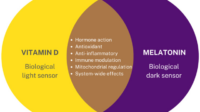
Low vitamin D status and proton pump inhibitors (PPIs) now sit together in the same clinical conversation more often than many people expect. PPIs—commonly prescribed for reflux, gastritis, and ulcer disease—reduce stomach acid to promote healing. Vitamin D, meanwhile, is a hormone-like micronutrient that participates in calcium homeostasis, bone mineralization, immune modulation, and even cellular signaling. When these two topics overlap, the implications can feel oddly indirect: you don’t swallow vitamin D less because a PPI blocks absorption overnight, yet chronically lowered physiology can still nudge vitamin D levels downward over time.
Vitamin D Essentials: More Than Sunlight and Bone
Vitamin D is not merely a “bone nutrient.” It functions like a prohormone whose metabolites communicate with receptors found throughout the body. In its classic pathway, vitamin D is hydroxylated in the liver and then activated in the kidney. The resulting active form helps the intestine absorb calcium and phosphate. But vitamin D also influences immune equilibrium, inflammatory signaling, muscle function, and perhaps even susceptibility to certain chronic conditions.
That’s why deficiency rarely presents as a single dramatic symptom. Instead, it can manifest as subtle, cumulative vulnerability: weaker skeletal resilience, impaired neuromuscular performance, and a tendency toward dysregulated immune responses. Long before fractures occur, a deficiency can alter the “background radiation” of biology—small biochemical shifts that add up.
Because vitamin D is fat-soluble, its relationship with digestion and bile flow matters. Anything that changes the environment where nutrients dissolve and traverse the gut can theoretically influence vitamin D bioavailability. This is where acid suppression enters the narrative.
How PPIs Work: Acid Suppression as a Physiologic Ripple
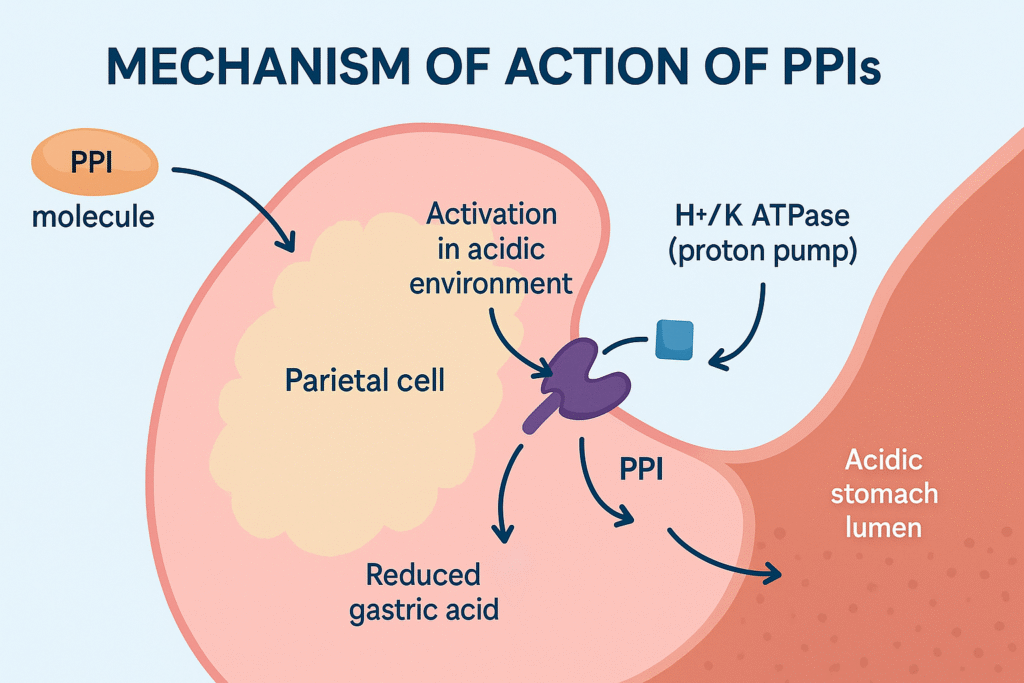
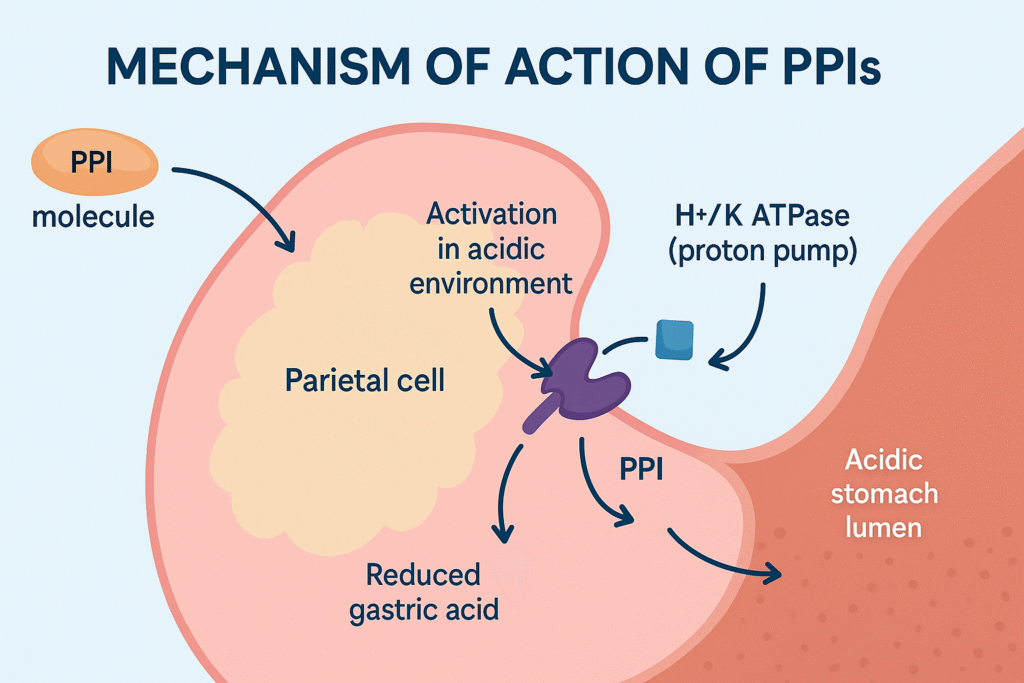
PPIs are designed to silence the gastric proton pumps. By doing so, they raise stomach pH substantially and sustain that change for long periods. This pharmacologic maneuver is powerful—so powerful that it can reshape digestion beyond the targeted problem of heartburn.
Stomach acid plays a quiet role in nutrient processing. It can help release certain bound compounds from food matrices, and it influences the solubility of minerals and some fat-soluble constituents indirectly through effects on gastric contents, gastric emptying, and intestinal luminal chemistry.
Even if vitamin D itself is not “activated” by stomach acid in a simple on/off way, the downstream process of absorption depends on a chain of events. When the chain is altered—especially over months or years—the end result may be a reduced vitamin D status in some individuals.
The Bridge Between Low Vitamin D and PPIs: Plausible Mechanisms
The link between low vitamin D and PPIs is best understood as a set of plausible pathways rather than a single certainty. One mechanism involves impaired absorption efficiency. Vitamin D must be absorbed in the small intestine, and its bioavailability depends on solubilization and micelle formation in the presence of bile. Changes in digestion can shift how effectively dietary fats and fat-soluble molecules are handled.
Another plausible mechanism involves nutrient transport and intestinal milieu. When gastric acidity is chronically reduced, the gut’s overall biochemical landscape changes. Bile composition and the way nutrients travel through the stomach and into the duodenum may be affected. Over time, this can translate into lower vitamin D absorption for some people—particularly those who already have borderline intake, limited sun exposure, darker skin phototypes, or higher body-fat sequestration.
There is also a “clinical selection” angle. Individuals who start PPIs long-term often share risk factors for deficiency: older age, reduced dietary diversity, malabsorption-prone gastrointestinal conditions, and concurrent medications. This doesn’t mean PPIs are innocent; it means deficiency sometimes clusters around the same vulnerability profile. Still, the pharmacology provides a coherent reason why the association can persist.
Which PPIs and Which Users: Risk Is Not Evenly Distributed
Not all PPI exposure looks the same. Dose intensity and duration matter. A short course for a flare-up is different from years of maintenance therapy. Higher doses can suppress acid more profoundly and sustain the altered digestive environment longer.
Patient physiology also changes the probability of a vitamin D dip. Consider these common amplifiers:
• Older adults with reduced cutaneous synthesis of vitamin D and more fragile bone architecture.
• People with obesity, where vitamin D can become sequestered in adipose tissue.
• Individuals with limited sunlight exposure, such as indoor lifestyles or geographic constraints.
• Those with dietary patterns low in vitamin D-rich foods.
• Patients with underlying gastrointestinal disease that already compromises absorption.
In many cases, the PPI is one thread in a tapestry of factors. The practical takeaway is that vitamin D status deserves attention especially when PPI use becomes prolonged and risk factors overlap.
What Studies Commonly Observe: Association, Not Destiny
In clinical research, a recurring pattern appears: PPI users show a higher prevalence of low vitamin D levels compared with non-users or those not on long-term therapy. But the nuance matters. Observational findings can reflect confounding—people placed on PPIs may have different baseline nutrition, different comorbidities, or different health-seeking behaviors.
Interpreting this link requires a careful stance. “Associated with” is not the same as “proven to cause.” Yet the association is compelling enough to motivate pragmatic evaluation and targeted supplementation when appropriate.
In other words, even if the causal chain is not fully mapped, clinicians still have an obligation to reduce preventable harm. Vitamin D deficiency is correctable, and the potential downstream consequences—osteopenia, falls risk, and impaired musculoskeletal function—are not abstract.
Symptoms and Signs: When Deficiency Shows Itself
Vitamin D deficiency can be stealthy. Some people experience bone pain, muscle weakness, or fatigue. Others present with fractures after minimal trauma—an ominous marker of low mineralization. Yet not everyone develops obvious symptoms, especially early on.
There is also a functional angle. Reduced vitamin D can weaken muscle performance and coordination. That can increase fall risk, which can then cascade into further morbidity, particularly in older adults.
Importantly, PPIs themselves can influence bone health through several routes, and vitamin D deficiency can amplify the vulnerability. When both are present, the skeletal outcome can become more severe than either factor alone would suggest.
Testing and Monitoring: What to Measure, When to Recheck
If someone is on long-term PPI therapy—especially with additional deficiency risk—testing can be a rational next step. The typical lab target is 25-hydroxyvitamin D, a marker that reflects overall vitamin D stores. Clinicians may also consider calcium, phosphorus, parathyroid hormone (PTH), and sometimes magnesium, because mineral balance is interconnected.
Monitoring schedules depend on the severity of deficiency, the presence of symptoms, and supplementation plans. After starting vitamin D repletion, rechecking after a reasonable interval helps confirm that levels are responding. This prevents both under-treatment and unnecessary overcorrection.
Improving Vitamin D Status: Supplements, Diet, and Smart Sun Exposure
Correcting low vitamin D generally involves supplementation, dietary reinforcement, and—when feasible—sunlight exposure. Food sources include fatty fish, fortified dairy or plant milks, and fortified cereals. Diet alone can be insufficient in true deficiency, but it can support the repletion process.
Sunlight contributes to cutaneous vitamin D production, though dermatologic factors and skin pigmentation significantly affect yield. For many people, sunlight is inconsistent—cloud cover, work schedules, clothing habits, and latitude all play a role.
With supplements, dosing is individualized. Some patients require higher initial doses to replete stores, followed by maintenance. The clinician’s goal is steady normalization rather than dramatic swings.
PPI Optimization: Reassessing Need Without Reflux Chaos
A parallel strategy is optimizing PPI exposure itself. If a PPI is being used longer than necessary, the risk-benefit equation changes. For some individuals, step-down therapy—such as dose reduction, intermittent use, or switching approaches—may be possible. For others, the PPI remains essential.
Because acid suppression can prevent complications in certain conditions, “stop the PPI” is not a blanket recommendation. Instead, reassessment is key. The most protective plan often looks like this: confirm the diagnosis, evaluate whether lifestyle interventions could reduce symptoms, and consider whether the lowest effective dose is being used.
This is particularly relevant because minimizing unnecessary medication exposure is one of the most elegant tools in preventive care.
Special Populations: Higher Stakes, Different Considerations
People with malabsorption syndromes, chronic kidney disease, liver disease, osteoporosis, or a history of fractures require extra caution. Vitamin D metabolism can be altered in these settings, and absorption may already be impaired. In such cases, deficiencies can occur more readily, and PPI-induced absorption changes may become more consequential.
For older adults, the stakes include not only bone density but also the risk of falls. For patients with osteoporosis risk, ensuring adequate vitamin D and calcium balance may be as important as treating reflux symptoms.
Practical Takeaways: A Cohesive Plan for Real Life
The link between low vitamin D and PPIs is best treated as a clinically actionable concern rather than a fear-inducing diagnosis. If you or a loved one is on long-term PPI therapy, consider a proactive approach: review risk factors, discuss vitamin D testing, and ensure a repletion plan that is tailored to the measured level and individual context.
At the same time, avoid unnecessary PPI escalation. Reflux management can often be optimized with behavioral strategies and careful medication adjustments. When vitamin D status and PPI necessity are addressed together, the outcome is more than lab improvement—it can translate into stronger bones, steadier muscles, and a body that holds its balance more confidently.
-200x112.jpg "天気による1日の気温の変化(問題)")