Ever stared at a supplement label and wondered, “What if I accidentally go too far?” It’s a playful question—until it becomes a real one. K2 often appears in the same breath as D3, yet the safety story isn’t quite as “one-size-fits-all” as marketing would like. So let’s tackle the challenge head-on: Can you overdose on K2? And if D3 is in the picture, how does the combined routine change the risk landscape?
First, what “overdose” really means for K2
Before we talk numbers, it helps to clarify the concept of an overdose. An overdose is not only about exceeding a recommended dose; it’s about pushing the body past its ability to maintain balance without undesirable effects. For K2, that balance can be influenced by metabolism, timing, individual sensitivity, and—importantly—medications that interfere with the vitamin’s normal activity.
K2 is a fat-soluble vitamin. That means it can accumulate, because the body stores it in fat and releases it gradually. Accumulation does not automatically translate into harm, but it does make “more” less automatically “better.” In plain language: if you keep adding K2 indefinitely, you’re not just taking today’s dose—you may be building a reserve.
Still, the real-world picture is more nuanced. Many people tolerate standard supplement doses without issues. The question is whether unusually high intakes, long-term excess, or specific health conditions could tilt toward safety concerns.
K2’s safety profile: why the risk looks different from some nutrients
Unlike some compounds that have clear, well-established toxicity thresholds, K2’s safety profile is shaped by biology rather than a single dramatic red flag. K2 (menaquinones) plays a supporting role in activating proteins involved in calcium regulation, particularly carboxylation-dependent pathways. It doesn’t typically behave like a stimulant. Most reported adverse experiences—when they occur—tend to cluster around interactions (especially with anticoagulant drugs) rather than straightforward “too much K2 causes instant poisoning.”
That said, “less dramatic” does not mean “risk-free.” High intakes can theoretically disrupt normal regulation of calcium handling. The body relies on precise signaling and protein activation, and repeatedly nudging that system in the same direction may produce unintended downstream effects in vulnerable individuals.
So the safest approach is rarely “how high can you go?” It’s instead: “how close can you get to your target without overshooting your individual needs?”
What happens if you combine K2 with D3?
Now to the duo: D3 and K2. D3 is the vitamin that raises serum 25-hydroxyvitamin D levels, supporting calcium absorption in the gut and influencing bone metabolism. K2 helps route calcium appropriately through proteins like osteocalcin and matrix Gla protein. In theory, this teamwork resembles a supply chain—D3 increases delivery, while K2 helps ensure it goes to the right destination.
But teamwork has a catch: if D3 is taken at high levels, it can increase calcium absorption more than the body can comfortably manage. Even though K2 is often described as a “balancing” partner, it’s not a magical counterweight that guarantees safety at extreme D3 intakes.
Consider a potential challenge: someone might take a high-dose D3 product and assume K2 will neutralize risk. That assumption can be misleading. The real issue is the calcium system’s capacity and the person’s baseline vitamin D status, dietary calcium, kidney function, and overall endocrine chemistry.
Takeaway: the combined safety question is often less about “overdose of K2 alone” and more about system-wide imbalance created by excessive vitamin D and altered calcium dynamics.
Can K2 cause hypervitaminosis-like effects?
Because K2 is fat-soluble, the theoretical concern is accumulation. Hypervitaminosis is a term often used for vitamins that cause toxicity when stored excessively. For K2 specifically, clinically clear toxicity syndromes are not commonly documented in the general supplement-using population at typical intake levels.
However, theoretical risk still matters. If K2 were taken in very high amounts for extended periods, it could potentially influence coagulation-related pathways (depending on form, dose, and individual physiology), and it might affect calcium distribution. In most people, homeostasis prevents overt harm. In others—particularly those with underlying disorders—homeostasis may be more fragile.
This is where the playful question becomes serious. “Overdose” might not look like fireworks; it may look like subtle physiological drift. That’s why dose discipline is a quiet kind of safety.
Medication interactions: the most important safety spotlight
If there’s one place where caution becomes immediate, it’s medication interactions—especially anticoagulants such as warfarin. K2 can influence the vitamin K-dependent factors involved in blood clotting. In simple terms, altering vitamin K status can interfere with how these medications work.
If someone on anticoagulants supplements K2 without clinician guidance, the risk is not “vitamin K overdose in the abstract.” The risk is destabilizing anticoagulation control—something that can be dangerous.
Other medications may also interact indirectly by affecting absorption, bile function, or fat-soluble vitamin storage. If your regimen is complex, safety is less about guessing and more about coordinated monitoring.
What symptoms would raise a safety concern?
Because K2 toxicity is not a common, predictable narrative, symptom-based screening must be approached carefully. Instead of a definitive “K2 overdose symptom list,” think in terms of red flags related to calcium balance and coagulation effects.
If high vitamin D intake contributes to calcium imbalance, possible warning signs can include:
• unusual thirst or frequent urination
• constipation or abdominal discomfort
• unusual fatigue or weakness
• confusion or persistent nausea (in more severe contexts)
For coagulation-related concerns, symptoms could include easy bruising or unusual bleeding patterns in the context of medication interaction. If these occur, the correct action is prompt medical evaluation rather than adjusting supplements by guesswork.
How to use D3 and K2 more safely (without turning it into a guessing game)
Safety isn’t about refusing supplements. It’s about using them like a calibrated tool. A practical approach includes:
1) Start with your baseline. Vitamin D status varies wildly across people. Testing often provides a clearer target than relying on guesswork.
2) Avoid “stacking” products. Many people unintentionally double-dose by combining a multivitamin, a D3 product, and a separate K2 supplement.
3) Choose consistent dosing. Large swings—like taking a big dose occasionally—can be less predictable than steady intake (though medical plans can differ).
4) Respect fat-soluble storage. Because vitamins are stored, long-term high intakes matter more than a one-day error.
5) Consider your medical context. Kidney disease, calcium disorders, malabsorption, and anticoagulant therapy all change the safety calculus.
Look at the product form: K2 isn’t one thing
K2 comes in different forms, with menaquinone variants such as MK-7 and MK-4 being widely discussed. These forms differ in how they circulate and for how long they remain biologically active. The dosing implications may not be identical between forms, even if the label uses similar language.
So the playful “can you overdose?” question becomes a more precise challenge: can you overshoot your intended bioavailability without realizing it? That’s why it matters to understand what you’re taking, not merely how many milligrams are printed.
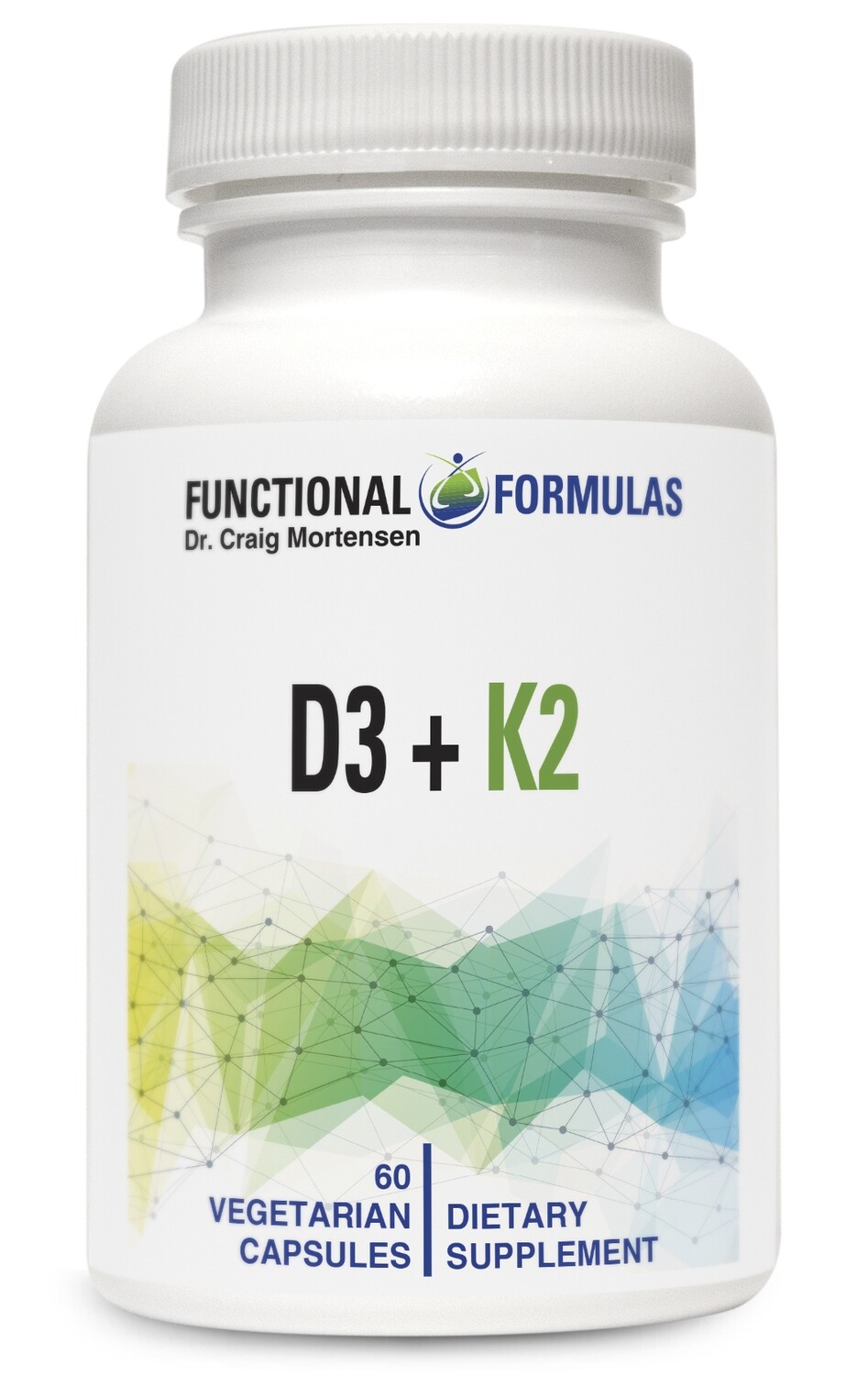
When labels blend D3 and K2 in a single product, it can feel streamlined. Still, it’s wise to check both amounts and ensure they align with your personal target and medical situation.
Visualize a safer routine: a balanced, not excessive, mindset
Imagine your body as a well-organized warehouse. D3 is the forklift raising incoming inventory (vitamin D status), while K2 is part of the labeling system that directs inventory to the right shelves (calcium regulation through vitamin K-dependent proteins). A warehouse doesn’t fail because of one mislabeled box; it fails when supply floods beyond what storage and routing systems can manage.
That’s the heart of it. A safe approach supports your system’s logistics. It doesn’t overwhelm them.

So… can you overdose on K2?
The most honest answer is: it’s unlikely to cause obvious toxicity at typical supplement doses for most healthy people, but overdosing is still possible in theory—especially with very high, long-term intakes or in sensitive situations. The bigger safety leverage often comes from medication interactions (particularly anticoagulants) and from the combined effect of high D3 on calcium balance.
Instead of aiming for the maximum, aim for the appropriate. If you’re considering K2 and D3—especially if you take other supplements, have medical conditions, or use blood thinners—the safest path is personalized guidance and, when appropriate, bloodwork to confirm what your body actually needs.
That playful question can stay fun. With smart dosing and context, it doesn’t have to turn into a safety challenge.