Ever wonder whether your next vitamin D routine should feel like a gentle daily drizzle—or a bold, weekly “loading dock” for your bloodstream? Here’s the playful challenge: what if your body is waiting for you to pick the right dosing rhythm, but you’re tossing in the same vitamin like a coin flip? Let’s untangle the question of Vitamin D loading dose: 50,000 IU once weekly versus daily 5,000 IU—and explore what each approach might mean for absorption, serum levels, safety, lifestyle fit, and real-world consistency.
Two schedules, one goal: raising vitamin D status
Vitamin D is not merely a “vitamin.” It behaves more like a hormone precursor, influencing calcium metabolism, immune signaling, muscle function, and even mood-related pathways. The practical target is usually vitamin D status, most often assessed by 25-hydroxyvitamin D—a marker that reflects what your body stores and can draw upon.
Both dosing strategies aim to improve that marker, especially when levels are low. Yet the cadence differs:
50,000 IU once weekly delivers a larger pulse that your body processes over days. Meanwhile, 5,000 IU daily provides a steadier stream, potentially smoothing the peaks and troughs. The question becomes less “Which is better?” and more “Which fits your physiology and adherence reality?”
The math that matters: weekly totals and dosing “shape”
First, a quick reality check. Daily 5,000 IU over seven days equals 35,000 IU per week. In contrast, once-weekly 50,000 IU equals 50,000 IU per week. On paper, the weekly total is higher for the loading-style approach.
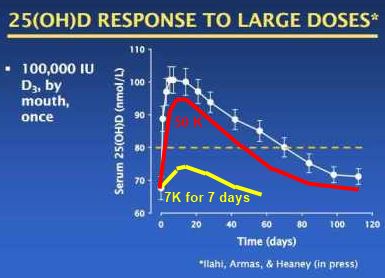
But the body doesn’t only care about the sum. It also responds to kinetics—how concentrations rise after ingestion, how they decline, and how that interacts with binding proteins and tissue uptake. A weekly dose can create a sharper crest. A daily dose can create a flatter graph.
This “shape” can matter if someone is sensitive to fluctuations or if their baseline level is particularly low or variable due to lifestyle factors.

What “loading” really implies: speed versus stability
“Loading dose” sounds dramatic for a reason. When someone is deficient or insufficient, clinicians may choose an aggressive short-term strategy to climb toward a sufficient range faster. The rationale is straightforward: if stores are depleted, waiting too long with conservative dosing may leave gaps where muscles, bones, and immune processes may not get adequate support.
Once-weekly 50,000 IU can function as a rapid repletion tool. It’s often used in structured plans where re-testing occurs after a set interval—so the dose can be adjusted downward once the desired status is reached.
Daily 5,000 IU tends to be more of a continuous replenishment approach. It can be especially attractive for people who prefer routine simplicity: take it every day, keep the signal steady, and reduce the chance of missing an entire week.
Absorption and metabolism: how vitamin D enters the storyline
Vitamin D is fat-soluble, which means meal context can influence outcomes. Taking it with dietary fat can enhance absorption. The timing itself isn’t mystical, but patterns can be. Weekly dosing may be taken with a meal on a specific day; daily dosing often becomes “with breakfast” or “with dinner,” giving the gut a consistent environment.
After absorption, vitamin D undergoes conversion in the liver and kidneys. Its circulation is mediated by binding proteins, and then tissues slowly utilize it. Because of that slow turnover, a weekly dose isn’t simply “gone” after one day—it’s gradually metabolized.
So, while daily dosing provides a more uniform inflow, weekly dosing provides a bigger initial reservoir that can carry through the week.
Peak-and-trough effects: the “roller coaster” question
Here’s a subtle challenge: if you take 50,000 IU once weekly, vitamin D levels may rise more noticeably after the dose, then drift downward until the next dose. For many people, that fluctuation is perfectly tolerable. Yet some individuals may prefer smoother gradients—particularly if they’re prone to variability in adherence, have fluctuating sun exposure, or experience symptoms that they associate with vitamin D status.
Daily dosing can reduce those oscillations. Instead of waiting for one big bump, the body receives a near-constant supply. That can be comforting in a “keep the lights dim, not flickering” kind of way.
Still, it’s not a universal rule. Baseline level, body composition, and metabolic factors can blur the theoretical pattern.
Safety considerations: staying in the useful zone
Safety hinges on avoiding excessive vitamin D accumulation, which could contribute to elevated calcium levels in susceptible individuals. Risk is influenced by dose, duration, baseline status, kidney function, and concurrent supplementation (like calcium or additional vitamin D from multivitamins).
A once-weekly 50,000 IU approach is often used as a time-limited strategy, with follow-up testing guiding whether to continue, taper, or switch to a maintenance dose. Daily 5,000 IU may also be used long-term for some people, but it’s still wise to periodically monitor levels—especially if the original deficiency was severe or if there are other contributing factors.
In practice, the safest plan is usually the one with measured follow-through: check levels, adjust, and don’t let the dosing schedule drift indefinitely without review.
Who might prefer 50,000 IU weekly?
Once-weekly dosing can be an appealing fit for people who:
• struggle to remember daily pills,
• prefer a structured “repletion phase,”
• start with clearly low vitamin D status and want a quicker correction window,
• can commit to re-testing after a predetermined period.
There’s also a pragmatic advantage: fewer administration events can reduce the “tiny missed dose” problem that accumulates over months.
Who might prefer daily 5,000 IU?
Daily dosing may suit those who:
• prefer habits that anchor to a routine (breakfast, lunch, dinner),
• want steadier dosing patterns with fewer peaks,
• are building gradually toward sufficiency or maintaining a more stable status,
• have fluctuating sun exposure and want a consistent baseline.
Daily 5,000 IU can also be easier to fine-tune if blood work indicates the level is climbing faster or slower than expected. Small adjustments become less disruptive than changing a once-weekly regimen.
Adherence: the hidden variable that changes outcomes
Vitamin D success often depends on consistency more than theory. A weekly dose missed once can represent a much larger “gap” than missing a single daily tablet. Conversely, daily dosing can fail quietly if the habit wears down over time.
Think of adherence as an invisible nutrient. If your schedule is chaotic, a weekly plan may be more reliable. If your mornings are predictable, daily dosing may become almost automatic.
Either way, the real win is a plan you can sustain without resentment.
Testing and adjustment: turning guesswork into a map
If you’re choosing between these regimens, consider building the decision around monitoring. Testing after a repletion interval helps determine whether your body is responding appropriately and whether you should maintain, reduce, or temporarily pause.
Symptoms alone can be misleading—fatigue, aches, and low mood can overlap with many other issues. A lab marker provides a clearer compass.
Once levels reach the target range, maintenance dosing often becomes a different conversation: lower doses, fewer fluctuations, and continued attention to diet, sun exposure, and overall health.
Sunlight, skin, diet: don’t forget the supporting cast
Supplements can help, but they aren’t the whole plot. Sunlight exposure affects vitamin D synthesis. Skin pigmentation, latitude, season, clothing coverage, and time outdoors can dramatically shift how much vitamin D you naturally produce.
Dietary sources—fatty fish, fortified foods, egg yolks—can add a background contribution. For many people, that contribution is modest, but it can make adherence and maintenance easier.
In other words, choose a dosing rhythm that complements your real life, not just a theoretical schedule.
So which is “better”: weekly loading or daily consistency?
There isn’t a one-size-fits-all winner. 50,000 IU once weekly often excels as a repletion tool, especially when guided by follow-up testing and used for a defined period. Daily 5,000 IU often shines as a steady replenishment method that may smooth fluctuations and match habitual routines.
The best approach is usually the one that balances your baseline needs, your tolerance for peaks and troughs, your likelihood of sticking to the plan, and your ability to monitor outcomes. And here’s the final playful question: if your routine were a rhythm, which one would you keep—an occasional drumbeat, or a steady metronome?