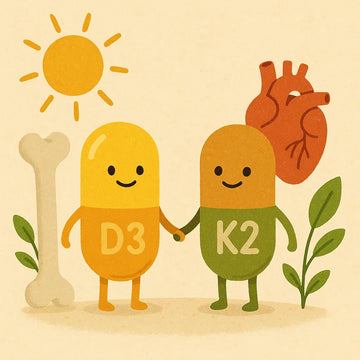
Some nutrients feel like soloists—useful, familiar, dependable. Vitamin D3 and vitamin K2 are different. They move like a duet, trading cues and tightening the harmony between bones and the cardiovascular system. When you understand how they cooperate, the phrase “dynamic duo” stops being marketing shorthand and starts feeling like biological choreography. In the body, these vitamins don’t merely coexist; they coordinate.
Why the “duo” matters: the hidden conversation between bone and blood vessels
Heart health and skeletal strength might appear to belong to different chapters of biology. Yet the body treats calcium like a shared resource that must be routed wisely. If calcium is delivered to the wrong destinations—such as soft tissues where it doesn’t belong—its presence can become problematic. Bones, however, are calcium specialists. They require a steady supply to preserve structural integrity and prevent fragility.
Vitamin D3 supports the first stage of this pathway by helping the body absorb calcium and use it effectively. Vitamin K2, meanwhile, acts like a quality-control manager, directing calcium to destinations that make sense. The result is a coordinated process that can influence how well bones mineralize and how smoothly calcium metabolism proceeds in the vascular system.
Vitamin D3: the installer that turns on calcium absorption
Vitamin D3 is often discussed in relation to deficiency, sunlight, and immune function. But its most notable role in this partnership is its effect on calcium absorption in the intestine. Think of D3 as an installer who ensures the biochemical wiring is functional. When vitamin D status is adequate, your body can extract calcium from dietary sources more efficiently and deliver it to tissues that need it.
There’s also an important nuance: vitamin D3 doesn’t simply “add calcium.” It supports a hormonal environment that allows calcium to be mobilized and utilized. Short sentences help here because the idea is simple: without D3, calcium absorption can sag.
Many people know the popular advice about sun exposure, but real life is rarely so straightforward. Skin pigmentation, latitude, seasonality, cloud cover, and lifestyle can all shape vitamin D3 levels. Supplementation can help bridge gaps when dietary intake or sunlight exposure isn’t enough.
Vitamin K2: the traffic controller that helps calcium find the right address
Vitamin K2 is frequently misunderstood as a “blood clotting” vitamin, largely due to its role in activating certain proteins. That’s true, but incomplete. K2 also supports proteins involved in calcium handling—proteins that help calcium bond where it belongs and resist inappropriate mineral deposition elsewhere.
In bones, calcium needs to be embedded into a stable matrix. K2 supports this by activating bone-related proteins that participate in proper mineralization. In the bloodstream and vascular walls, K2 helps regulate the biochemical signals that influence calcification tendencies. The wording can feel technical, but the concept is intuitive: K2 nudges calcium away from chaos and toward structure.
There’s an additional layer of subtlety—different forms of vitamin K2 exist. Most supplements emphasize menaquinones such as MK-7 or MK-4, which differ in how long they remain active in the body. Longer-lasting forms may offer steadier support, while shorter-acting forms can still be relevant depending on dosing patterns.
The synergy: how D3 and K2 complement each other
Synergy means more than “both vitamins are good.” It means one vitamin sets the stage and the other improves the outcome. Vitamin D3 increases calcium absorption, which raises the amount of calcium available in circulation. Without vitamin K2’s regulatory support, this greater calcium availability may not automatically translate into beneficial deposition patterns.
Think of it like delivering raw materials to a construction site. D3 helps bring the materials in. K2 helps ensure they’re installed properly. This coordinated framework is why many practitioners describe the pairing as “functional alignment.”
Still, harmony doesn’t mean everyone needs the same approach. Baseline nutrient status, dietary patterns, health conditions, and medication use can shift the best strategy.
What content readers can expect: practical guidance, not just claims
When exploring vitamin D3 and K2, readers usually benefit from multiple content formats. Expect explanations that move from mechanism to real-world behavior. Short checklists can clarify dosing considerations and food sources, while longer narrative sections can connect physiology to day-to-day choices.
Some readers gravitate toward evidence-based summaries: clear language about what studies suggest, what remains uncertain, and how risk profiles may differ. Others prefer “myth vs. fact” segments—quick, digestible corrections that prevent misunderstanding. Still others look for shopping clarity, where content discusses what to look for on a label, such as the specific K2 form (MK-7 versus MK-4), typical dosing ranges, and whether the product includes D3 in a compatible proportion.
A well-rounded article often includes scenarios: “What if you’re supplementing D3 already?” or “What if you avoid dairy?” These narratives help readers translate information into decisions.
Food sources: where the duo can begin before supplements
Food provides a foundation, though the nutrient density can vary. Vitamin D3 is limited in many diets, with fatty fish, egg yolks, and certain fortified foods serving as common options. Sun exposure can also contribute to D3 production, but it’s not always predictable.
Vitamin K2 is found more in fermented foods and certain animal products. Natto—fermented soy—is famously rich in K2, particularly MK-7. Other dietary contributors include hard cheeses and some animal fats, depending on farming and processing practices.
Dietary nuance matters. For example, someone who consumes ample fish may still be low in K2, while someone who eats fermented foods may still need D3 support. That mismatch is where complementary supplementation often enters the conversation.
Supplementation essentials: choosing forms, ratios, and timing
If you consider supplements, focus on formulation quality. Vitamin D3 is commonly offered as cholecalciferol. Vitamin K2 often appears as MK-7, known for a comparatively longer duration, or MK-4, which may require different dosing frequencies.
Timing can also influence tolerability and consistency. Because D3 and K2 are fat-soluble, taking them with a meal that contains dietary fat can improve absorption. Short guidance can help here: take with food, keep it consistent, and track how your routine fits your lifestyle.
Ratios vary across products. Some emphasize higher D3 doses while still including K2 to support calcium handling. Others offer more balanced pairings. The “best” ratio depends on individual needs, lab values, and overall diet. A cautious approach often includes checking vitamin D status through blood work, especially if supplementing at moderate to high doses.
Heart and bones: translating biology into everyday outcomes
The most compelling part of the D3-K2 story is how it reframes two concerns that often seem separate. Osteoporosis prevention is one side—supporting bone mineral density and reducing fracture risk over time. Cardiovascular health is the other—potentially influencing calcification processes and vascular compliance.
Uncommon terminology can sharpen the imagination: “mineral routing,” “calcium traffic,” “protein activation,” and “tissue targeting.” Long sentences can carry nuance: the body’s systems interact through signaling pathways, and nutrients can shift the probability of favorable outcomes. But the practical takeaway stays clear: when the duo works together, it supports two major structural systems.
Safety, medication interactions, and who should be extra careful
Supplements aren’t universally neutral. Vitamin K2 can interact with certain medications, particularly vitamin K antagonists used for anticoagulation. Anyone on such therapy should consult a clinician before adding or adjusting K2. This isn’t a scare tactic; it’s responsible integration.
Vitamin D3 also has a range beyond which excessive supplementation may become risky. That’s why testing and professional guidance matter—especially for individuals with conditions affecting mineral metabolism or kidney function. If you’re pregnant, nursing, have chronic illness, or take multiple medications, a tailored approach can prevent unintended consequences.
Even without medications, readers should remember that “natural” doesn’t automatically mean “risk-free.” The body’s biochemistry is precise; it appreciates calibration.
What the visuals and content structure should look like
Good articles don’t just say words. They help readers visualize pathways and decision points. A professional layout can include images of nutrient structures, icons representing bones and blood vessels, and diagrams that show how calcium absorption and protein activation connect.
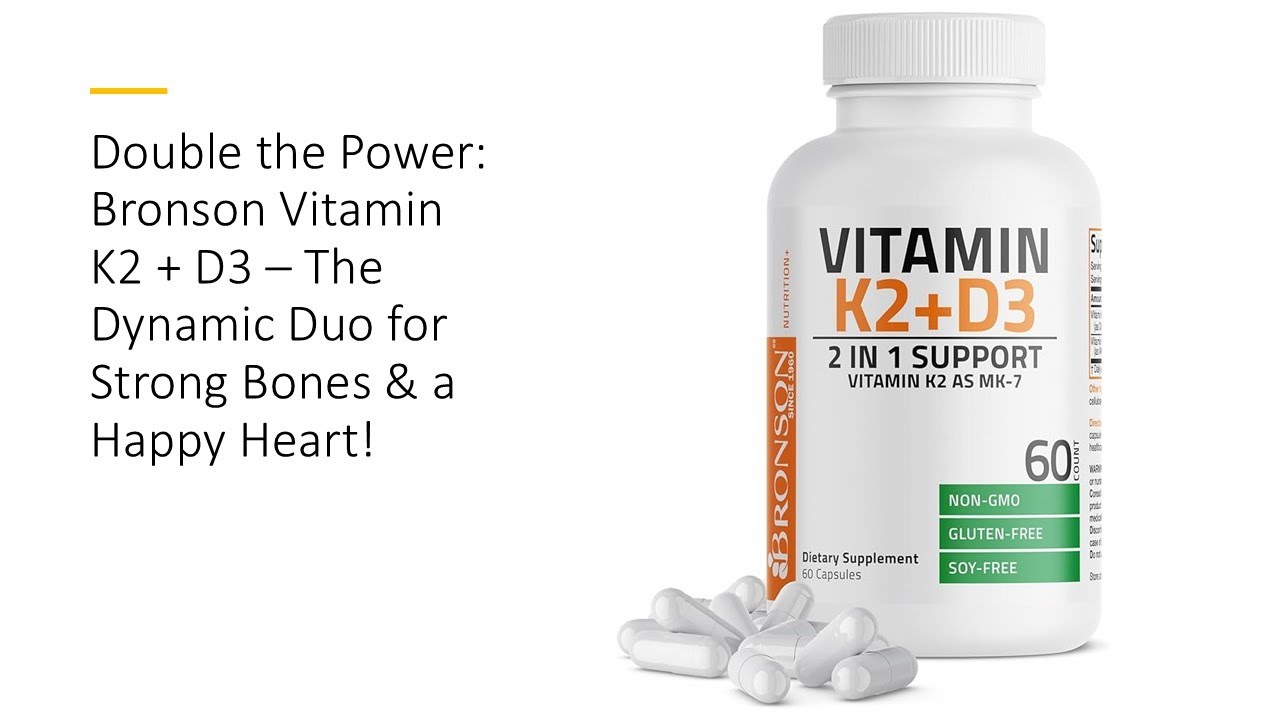
Additionally, content can include label-style callouts that explain what MK-7 and MK-4 mean, plus small “glanceable” summaries after each major section. These short recaps can make the longer narrative feel navigable. Meanwhile, extended paragraphs can deepen understanding without overwhelming the reader.
Closing perspective: building a long-term foundation
Vitamin D3 and K2 are best viewed as long-term contributors to a resilient internal environment. They support absorption, activation, and routing—three steps that influence how calcium behaves. Over time, those steps can contribute to stronger bones and help maintain healthier vascular patterns.
Whether your starting point is dietary improvements, sunlight optimization, or targeted supplementation, the duet framework remains the anchor. When you treat these vitamins as a coordinated system rather than isolated nutrients, your approach becomes more intentional—and potentially more effective.