There’s a particular kind of hair shedding that doesn’t announce itself with drama—no dramatic balding, no sudden, cinematic loss. Instead, it creeps in as a quiet redistribution of growth, a slow recalibration of the hair cycle. Telogen effluvium is often described as “stress shedding,” but the truth is more intriguing: stress is not a single lever. It’s a cascade, and vitamin D may be one of the lesser-discussed switches in that chain.
Telogen Effluvium: Not Just Hair Loss, but a Timing Problem
Telogen effluvium happens when a larger-than-normal number of hair follicles shift into the telogen phase—the resting stage. Hair in telogen eventually sheds, often weeks after the initiating event. This delay can confuse people. They remember a stressful season, an illness, or a nutritional stumble, and then notice shedding later, as if their scalp kept a secret timeline.
What makes telogen effluvium fascinating is that it’s frequently reversible. The hair isn’t necessarily “broken.” The follicle is responding. And when follicles respond, they need more than patience—they need a biochemical environment that supports regrowth.

Stress Shedding Isn’t Only Psychological
Stress is a word people use to mean emotions. But physiologic stress is broader: it includes inflammatory surges, immune disturbances, sleep disruption, hormonal volatility, and nutrient depletion. Even major life events can act like a tremor through the body’s systems.
When the body senses instability, it prioritizes survival. Hair growth is an energetically demanding process, so it may temporarily move down the hierarchy. That doesn’t mean hair growth is permanently erased. It means the growth cycle is being “rescheduled.”
Now consider vitamin D, a nutrient that behaves less like a simple vitamin and more like a signaling molecule. It participates in immune modulation, cellular differentiation, and inflammatory balance—exactly the territory where stress responses often unfold.
Vitamin D: The Underestimated Orchestrator
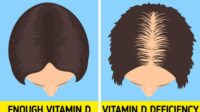
Vitamin D is often associated with bones. That’s its headline. But biologically, it plays a quieter supporting role across many tissues. Hair follicles are not isolated islands. They communicate with the body’s endocrine and immune systems. Vitamin D receptors are found in hair-related tissues, suggesting the nutrient participates in follicle biology.
Here’s the shift in perspective that matters: telogen effluvium may not only be triggered by stress—telogen effluvium may be amplified when the body’s “regulatory resources” are insufficient. Vitamin D is one of those resources.
Low vitamin D status can correlate with inflammation and immune imbalance. If stress activates inflammatory pathways, and vitamin D tends to temper them, then deficiency may tilt the scale toward a more pronounced shedding phase.
How Low Vitamin D Might Influence the Hair Cycle
Hair cycling is complex, involving growth (anagen), transition (catagen), and rest (telogen). A follicle decides its next step based on signaling inside and around it. When vitamin D is deficient, signaling may become less harmonized—like a choir missing a conductor.
Vitamin D’s influence may involve regulation of inflammatory mediators and the immune environment around follicles. It may also interact with keratinocyte behavior, cell cycle processes, and local growth factors. The end result could be a follicle that enters telogen more readily—or stays there longer than ideal.
It’s not that vitamin D acts alone. Telogen effluvium is rarely monogenic. Still, deficiency can be a contributing condition, a factor that lowers resilience when stress arrives.
Common Clues That Suggest a Nutritional Gap
Telogen effluvium often emerges after a recognizable trigger. But many people notice they’re also dealing with a broader nutritional landscape: low dietary diversity, restricted eating patterns, limited sun exposure, or recovery from illness. Vitamin D deficiency is particularly common in people who spend little time outdoors or who live in regions with limited sunlight for portions of the year.
Signs of possible deficiency aren’t always obvious. Fatigue, low mood, frequent aches, and general “out of sorts” sensations can be nonspecific. That’s why testing is so valuable. Guesswork can feel comforting, but it’s often imprecise.
If shedding is persistent or unusually intense, it’s reasonable to explore multiple contributors at once—iron status, thyroid function, and vitamin D levels. Think of it as detective work, not a single-cause narrative.
Timeline: Why Shedding Waits Before It Speaks
One of the most perplexing aspects of telogen effluvium is the delay. Triggers like infection, surgery, childbirth, or major stress can happen, and then shedding begins weeks later. This timing reflects the hair cycle’s structure. Follicles don’t immediately drop; they transition according to programmed phases.
So if vitamin D deficiency is part of the picture, it may contribute to the body’s stress-response set point before the shedding phase becomes visible. The scalp becomes the messenger later.
When you start correcting deficiency, regrowth doesn’t happen overnight. Patience is not passivity; it’s alignment with biology. Hair growth follows the rhythm of follicles, not the calendar of concern.
Testing for Vitamin D: A Practical Turning Point
Instead of relying solely on symptoms, a targeted blood test can clarify whether vitamin D is part of the equation. Clinicians typically measure serum 25-hydroxyvitamin D, which is the best indicator of vitamin D stores.
If results show deficiency or insufficiency, supplementation can be considered. But the most important nuance is personalization. Dosage depends on baseline levels, body weight, existing medical conditions, and other nutrient variables.
Shifting perspective again: supplementation is not merely “adding more.” It’s restoring an internal equilibrium—one that helps the body respond to stress more effectively and supports the hair cycle’s return to baseline.
Supplementation: Support, Not a Miracle Switch
It’s tempting to search for the single answer—take vitamin D, stop shedding, celebrate immediately. Reality is subtler. Vitamin D can help, especially if deficiency is present, but it doesn’t override every other factor: ongoing stress, hormonal shifts, nutritional gaps, and inflammatory triggers still matter.
When vitamin D is corrected alongside other needs—hydration, protein intake, micronutrients, sleep, and scalp health—the environment improves. That’s where the most encouraging outcomes typically appear.
Still, a well-chosen correction strategy can feel like unlocking a door. The shedding may slow. New growth may emerge. And that “something is changing” sensation can return.
What Helps the Body Beyond Vitamin D
Vitamin D is a thread. Telogen effluvium is the tapestry. To strengthen the weave, consider: adequate protein (keratin requires raw materials), iron sufficiency (especially if ferritin is low), thyroid balance (thyroid hormones influence hair cycling), and stress-resilient habits.
Sleep is quietly powerful. It influences cortisol rhythms and immune regulation. Gentle exercise can improve circulation and reduce inflammatory markers. Dietary variety can expand the nutrient palette, rather than relying on one supplement to do the work of many meals.
Scalp care also matters. Over-aggressive manipulation, harsh chemical treatments, and constant traction can worsen shedding behavior. The scalp is tissue, not a canvas.
Recovery Signs: When the Narrative Turns
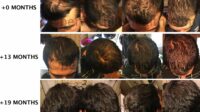
Recovery can be defined by subtle changes before dramatic transformation. Reduced shedding is often the first signal. Then you may notice finer “baby hairs,” thicker overall density returning gradually, and a calmer scalp environment.
Photographs can help track progress, because hair changes are sometimes too slow to feel day-to-day. A shift in perspective helps here too: don’t measure recovery by how you feel today. Measure by patterns across weeks.

A Curiosity Worth Keeping: Why This Matters
The link between vitamin D and telogen effluvium invites a deeper question: what else is being quietly overlooked? Telogen effluvium teaches that hair isn’t separate from the rest of the body. It’s an external transcript of internal balance.
So if shedding has appeared after stress, illness, or life upheaval, consider viewing the situation as a systems update—not a personal failure. The scalp may be reflecting biochemical negotiations happening elsewhere.
Vitamin D correction, when indicated, can become part of a broader recovery plan. Not as a grand promise, but as a reasonable, evidence-informed step toward restoring the conditions under which follicles can restart and sustain growth.