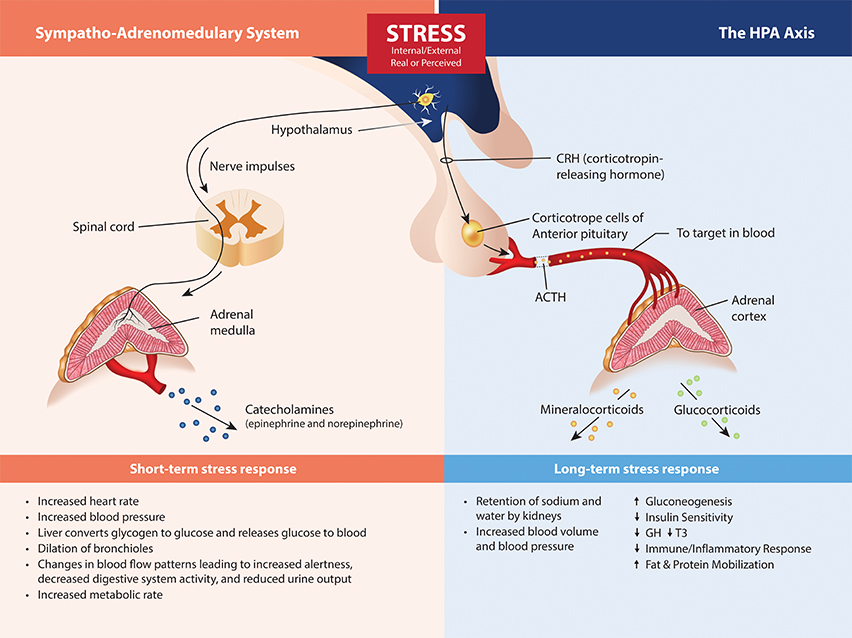
Imagine your body as a vigilant city. Above it, the HPA axis is the control tower—rapidly scanning danger signals, coordinating hormones, and issuing instructions that ripple from the brain to the adrenal glands. When stress arrives, the system doesn’t merely respond; it narrates. Yet the tone of that narrative—calm, panicked, or resilient—may depend in part on an unassuming nutrient that arrives with sunlight: vitamin D. Far from being a simple “bone vitamin,” vitamin D can act like a subtle editor, influencing how the stress response is written and how mood interprets the aftermath.
Vitamin D as a “mood conductor” behind the curtain
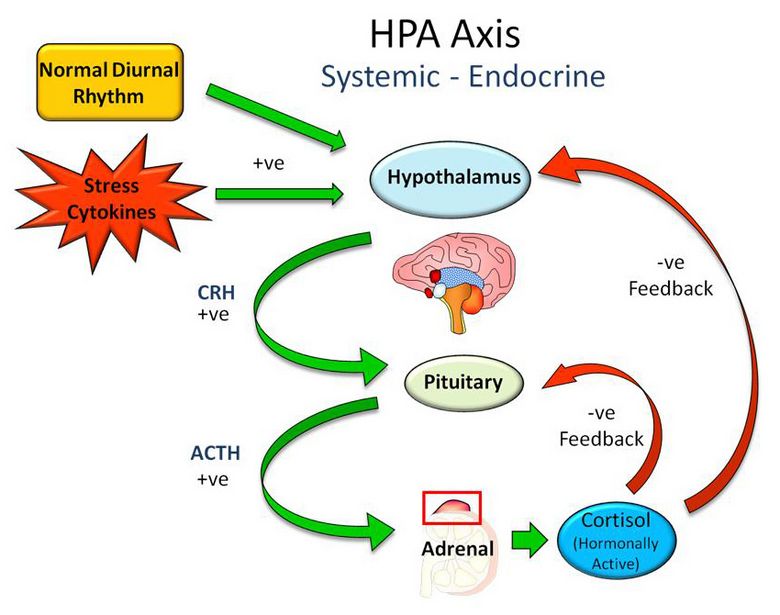
Stress doesn’t only trigger feelings; it reorganizes chemistry. The HPA axis—the hypothalamus, pituitary, and adrenal glands—responds to perceived threat by releasing corticotropin-releasing signals, then adrenocorticotropic hormone, and ultimately cortisol. Cortisol is not villain or hero; it is an essential regulator. But like any powerful tool, its timing and amplitude matter. Too little control can leave the system jittery. Too much can feel like the lights are permanently dimmed.
Vitamin D participates in this regulation in ways that resemble a mood conductor adjusting tempo. It influences gene expression and immune signaling, and it interacts with brain and endocrine pathways that relate to stress perception. Think of vitamin D as a “tuning fork” for neural circuits that handle threat appraisal. When the fork is off-frequency—through deficiency—signals can become more chaotic. When it’s well-aligned, the orchestra may play with steadier rhythm.
The HPA axis: a thermostat, not a switch
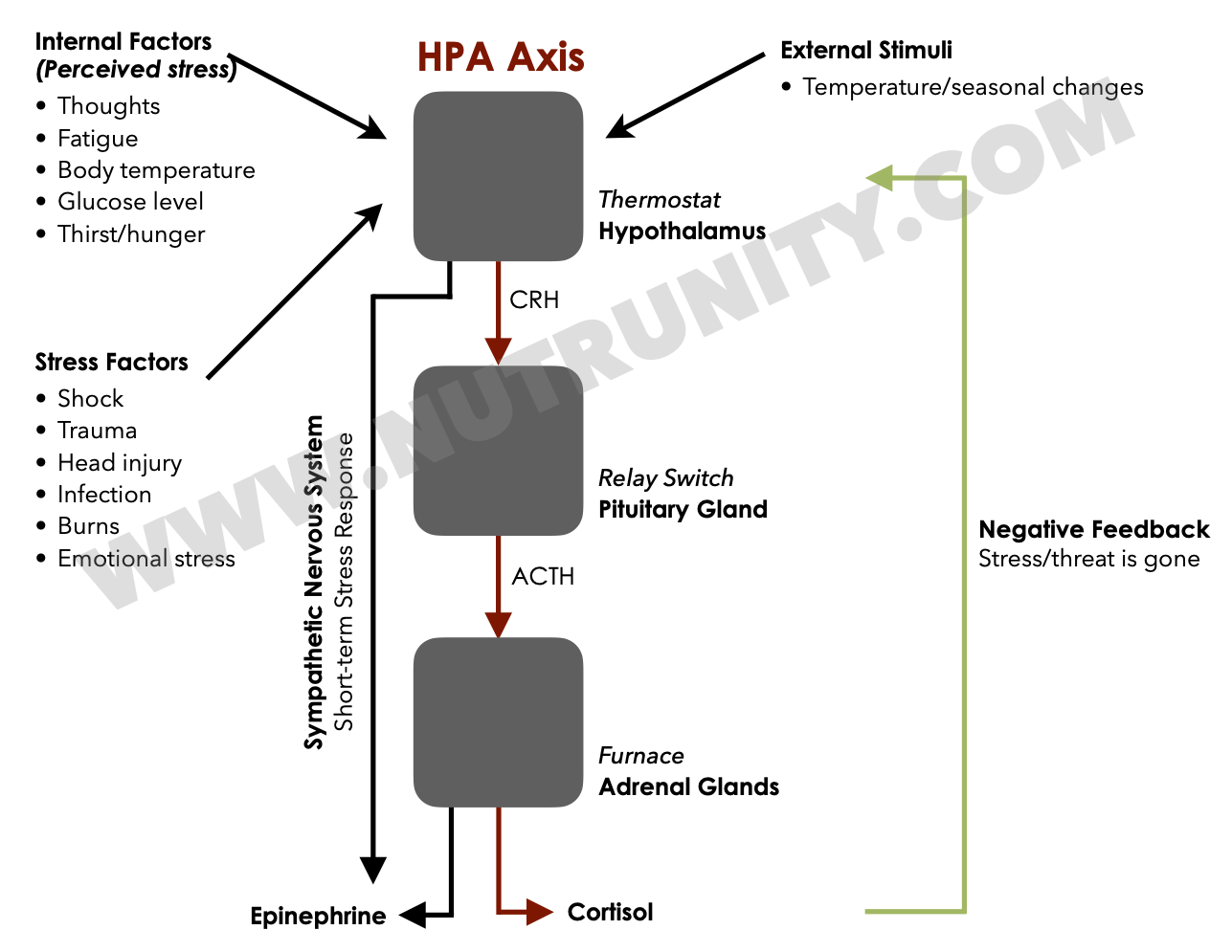
Many people imagine stress physiology as a simple on/off switch. In reality, the HPA axis behaves more like a thermostat. It rises with demand, then should fall as the threat fades. This graceful return—often called negative feedback—is crucial for preventing chronic weariness.
Vitamin D appears connected to this feedback choreography. Research has suggested that vitamin D status may correlate with cortisol dynamics and the way the body “learns” from stress exposure. Instead of repeatedly overshooting, a well-regulated axis can soften its response and recover more efficiently. The result is not necessarily fewer stressful events. It’s a different internal translation—less “alarm siren,” more “measured awareness.”
From sunlight to synapses: how vitamin D may reach the brain
Vitamin D travels through the bloodstream after production in the skin or intake through diet and supplements. But its influence doesn’t stop at skeletal maintenance. Vitamin D receptors have been identified in many tissues, including regions of the brain that relate to emotion, cognition, and stress responsivity.
Picture the brain as a library with thousands of volumes. The HPA axis is the librarian rapidly re-shelving books during an emergency. Vitamin D may help ensure the new arrangement makes sense—supporting neural plasticity and maintaining the conditions that allow recovery after stress. This is particularly intriguing because mood disorders often involve changes not only in hormones but also in inflammatory tone, synaptic signaling, and neural resilience.
Even small shifts in the inflammatory environment can alter how mood is experienced. In this sense, vitamin D may act like climate control inside the brain—reducing inflammatory “drafts” that can intensify irritability, anxiety, or low mood.
Inflammation, immunity, and the stress response’s backstage crew
Stress is not purely psychological; it is biochemical. When the HPA axis activates, it can influence immune pathways. Immune signaling, in turn, can feed back to the brain and shape mood. This is where vitamin D becomes especially compelling: it has immunomodulatory properties, meaning it can influence the balance between inflammatory and anti-inflammatory processes.
Imagine cortisol as a stage spotlight. It illuminates the stress response, but it can also cast shadows if it stays on too long. Vitamin D may help adjust how bright the spotlight appears and how harsh the shadows look on the edges. When inflammation is lower, neural systems involved in mood may function with greater stability. When inflammation is higher, stress can feel heavier—like carrying a backpack full of stones you didn’t pack.
Vitamin D and mood: why deficiency can feel like “emotional static”
Mood is often described with metaphors—heavy, dull, frayed, or buzzing. Those descriptions aren’t random. When vitamin D is low, several systems may drift into less cooperative alignment: stress hormone regulation, immune signaling, and neural neurotransmitter activity. The experience can resemble emotional static—signals that should be clear become noisy, and the mind responds more dramatically to ordinary triggers.
Depressive symptoms and anxiety traits have been studied in relation to vitamin D status. The relationship is not identical for everyone, and it’s rarely a single-cause story. Yet the pattern is intriguing: when vitamin D levels are deficient, mood can become less resilient, and stress recovery may take longer.
Notably, “recovery time” is a mood feature. Some people don’t just feel stressed—they feel stuck. If the HPA axis and surrounding systems recover less efficiently, mood can remain downstream of stress physiology, lingering like a scent on fabric.
Resilience and the “reboot window” after stress
After acute stress, the body needs a reboot window—a period where systems recalibrate. The HPA axis should dampen, immune signals should normalize, and the nervous system should return to baseline. Vitamin D may support aspects of this reset, helping the body exit the emergency mode without lingering in it.
This becomes especially relevant in chronic stress contexts—work pressures, caregiving strain, sleep disruption, or prolonged uncertainty. The city metaphor returns: if the control tower never turns down the sirens, citizens adapt, but the adaptation costs energy. Over time, mood can erode. Vitamin D, acting as a subtle regulator, may help the city restore order faster.
Think of it as giving the thermostat a correctly functioning sensor. When the sensor reads accurately, heating and cooling become more precise. When it reads poorly, the room never reaches comfort—even if the furnace and air conditioner keep cycling.
Evidence through the lens of neuroendocrine communication
Stress response systems are not solitary. They communicate. Neural networks modulate the HPA axis, and the axis modulates neural and immune activity in return. In that communication loop, vitamin D can be imagined as a signal quality enhancer—reducing “distortion” in messaging between systems.
Intriguingly, this interplay suggests vitamin D’s role may be broader than one hormone. Mood is a network phenomenon. Cortisol can influence attention and energy. Inflammation can influence motivation and cognition. Neural plasticity can influence whether stress becomes a temporary visitor or a permanent resident. Vitamin D sits at the intersection of these domains, potentially shaping how the body and mind negotiate stress.
.png?format=1000w)
When the axis is well-tuned, the stress response is more proportional; when it’s under-tuned, the body may treat lesser challenges as threats.
Practical takeaways: supporting the system without oversimplifying it
Vitamin D is not a mood “switch.” It’s more like maintenance for the wiring. If levels are low, correction may support stress regulation and overall well-being. However, mood and cortisol patterns are shaped by many variables—sleep, exercise, diet quality, social support, and mental health history.
A cautious approach is best: consider checking vitamin D status through appropriate testing, and discuss supplementation with a healthcare professional. Dose needs vary by baseline level, absorption, body composition, and medical context. Also remember that too much vitamin D can be harmful, so it’s not a “more is always better” situation.
Lifestyle choices can complement nutrient support. Sensible sunlight exposure, dietary sources (such as fatty fish and fortified foods), and consistent routines that protect sleep can all influence the stress response landscape. Vitamin D may help create the conditions for resilience, but the broader environment still determines whether the system thrives.
A final metaphor: the HPA axis as a radio station and vitamin D as signal clarity
Stress can make emotions sound distorted—like a radio drifting between frequencies. The HPA axis is the station broadcasting chemical instructions. Vitamin D, in this metaphor, is the component that improves signal clarity. It can’t eliminate static from all circumstances. But it may reduce the garble that turns manageable stress into relentless emotional noise.
When vitamin D levels are adequate, the stress response may become more accurately calibrated. When they’re deficient, mood can feel less stable, and recovery can take longer. In a world where stress is often unavoidable, supporting the body’s internal regulation systems can be a meaningful step toward steadier mood and more graceful resilience.