There’s a familiar moment many people recognize: you take a vitamin D supplement with a meal you consider “safe” and sensible—perhaps something fat-free—and later you wonder if you accidentally dulled the very benefit you were seeking. It feels paradoxical. Vitamin D is often framed as “simple” health support, yet the body’s handling of it is anything but simple. The story behind that absorption dip is where the fascination begins: not with mystery, but with biology’s meticulous choreography.
Vitamin D Is Lipid-Literate, Not Meal-Neutral
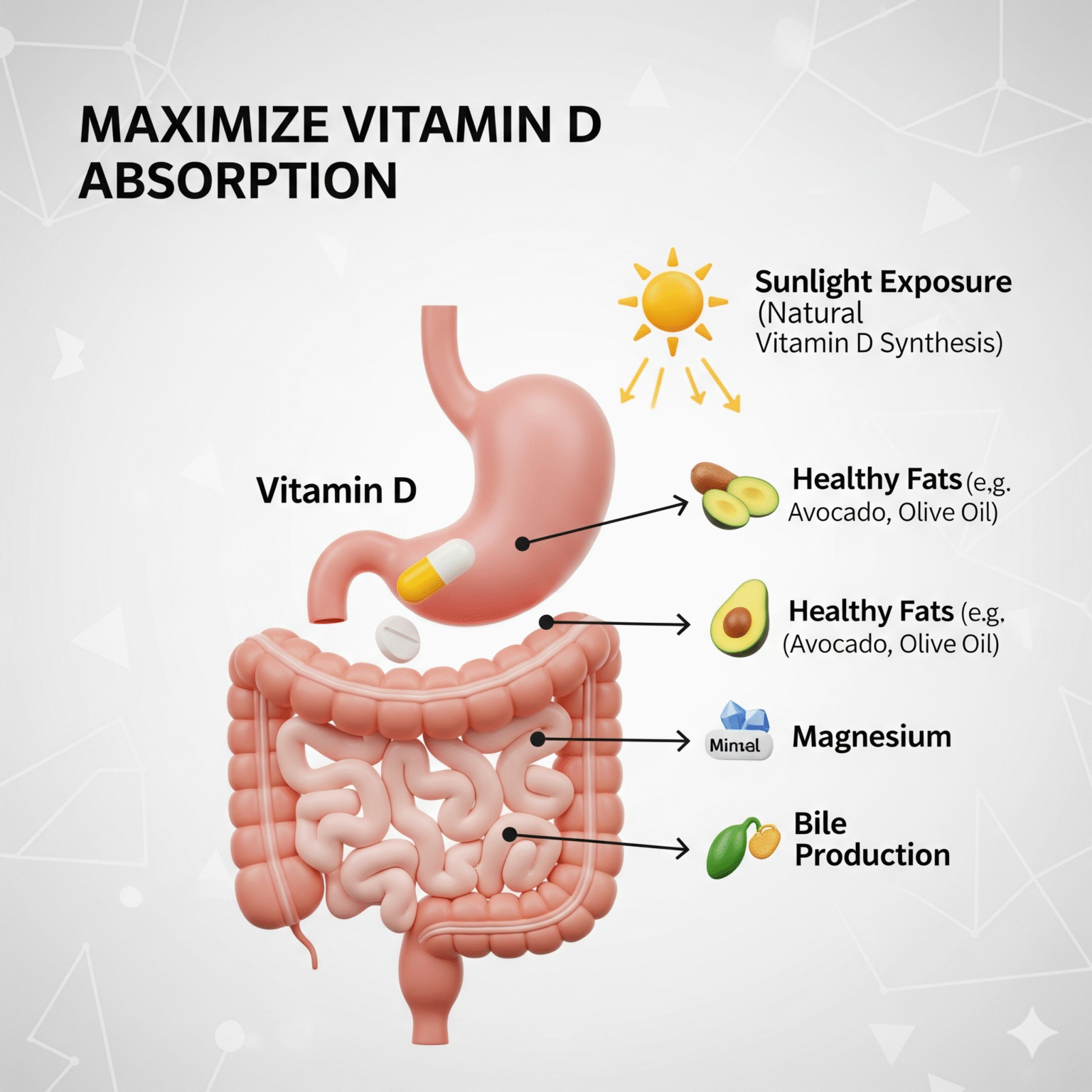
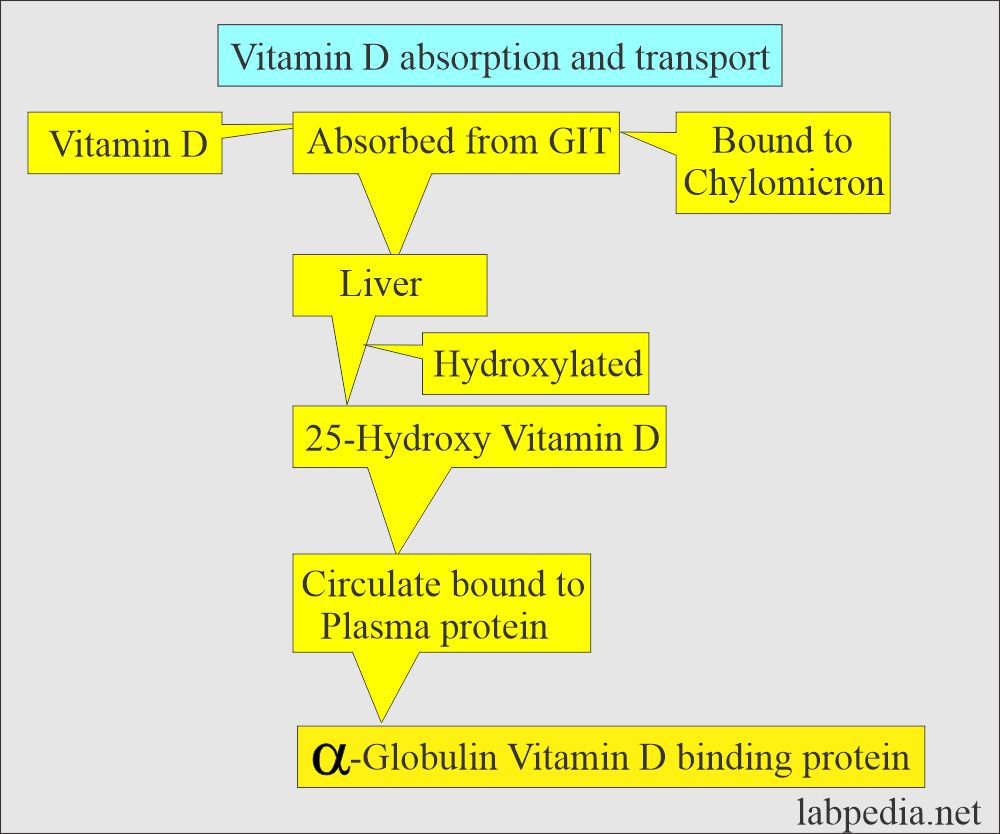
Vitamin D is fat-soluble, meaning it behaves less like a quick “drink and done” nutrient and more like a cargo that needs the right carrier. After ingestion, fat-soluble vitamins typically hitch a ride with digestive processes that involve bile and micelles—tiny transport vehicles formed in the gut. When dietary fat is absent or extremely low, the machinery that usually helps package vitamin D for absorption can become less efficient.
Think of absorption as a guided journey. Without “fuel” in the form of dietary fats, the route can still exist—but it may not be as well-lit. The result is often reduced bioavailability, sometimes described as an absorption loss or a weaker rise in blood levels over time.
The Common Observation: Fat-Free Meals and the Suspicion of Reduced Uptake
Anecdotes are powerful because they cluster around a recurring theme: take vitamin D with a fat-free meal, and the expected laboratory response can be muted. It’s the kind of observation that feels small at first—just “maybe it didn’t work as well”—until repeated experiences start to shape a belief.
What people often notice is not necessarily that vitamin D becomes useless. It’s that it may be less consistently absorbed, especially if the fat-free meal is the default and the supplement is taken regularly. Over weeks, the difference between “absorbed somewhat” and “absorbed efficiently” can become measurable.
Yet this is where the deeper reasons start to feel more intriguing. The question isn’t only whether fat helps. It’s why the body is structured to demand a particular nutritional context for a particular compound.
Bile, Micelles, and the Gut’s Logistics Problem
Dietary fat stimulates bile release. Bile is not a digestive nuisance—it’s a facilitator that helps create micelles, which are molecular “shuttles” that carry fat-soluble nutrients through the watery environment of the small intestine.
When you take vitamin D with minimal fat, you may still absorb some of it, because the intestine is not a closed system. Small amounts can be absorbed passively or through other mechanisms. However, the overall yield may drop because micelle formation and bile availability can be less robust.
Short sentence, long implication: your supplement may wait for the wrong setting. And the gut, being practical, doesn’t offer the same transport efficiency without the biochemical cues that fats provide.
Not All “Fat-Free” Means the Same Thing
“Fat-free” is a label, not a physical reality. Foods labeled fat-free can vary in how they affect digestion. Some meals contain trace amounts of fat; others contain emulsifiers or proteins that influence gastric emptying and digestive timing.
Timing can be sly. If vitamin D is taken during a meal with fluctuating fat content or if digestion is delayed, the absorption environment changes. Even if the meal is called fat-free, the digestive pathway may still produce enough bile response—or not—that determines whether vitamin D behaves like a guest who is promptly greeted or one who waits in the lobby.
In other words, the absorption “loss” isn’t a cliff. It can be a gradient.
The Form Matters: D2 vs D3, and the Absorption Drama
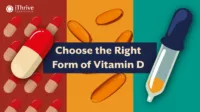
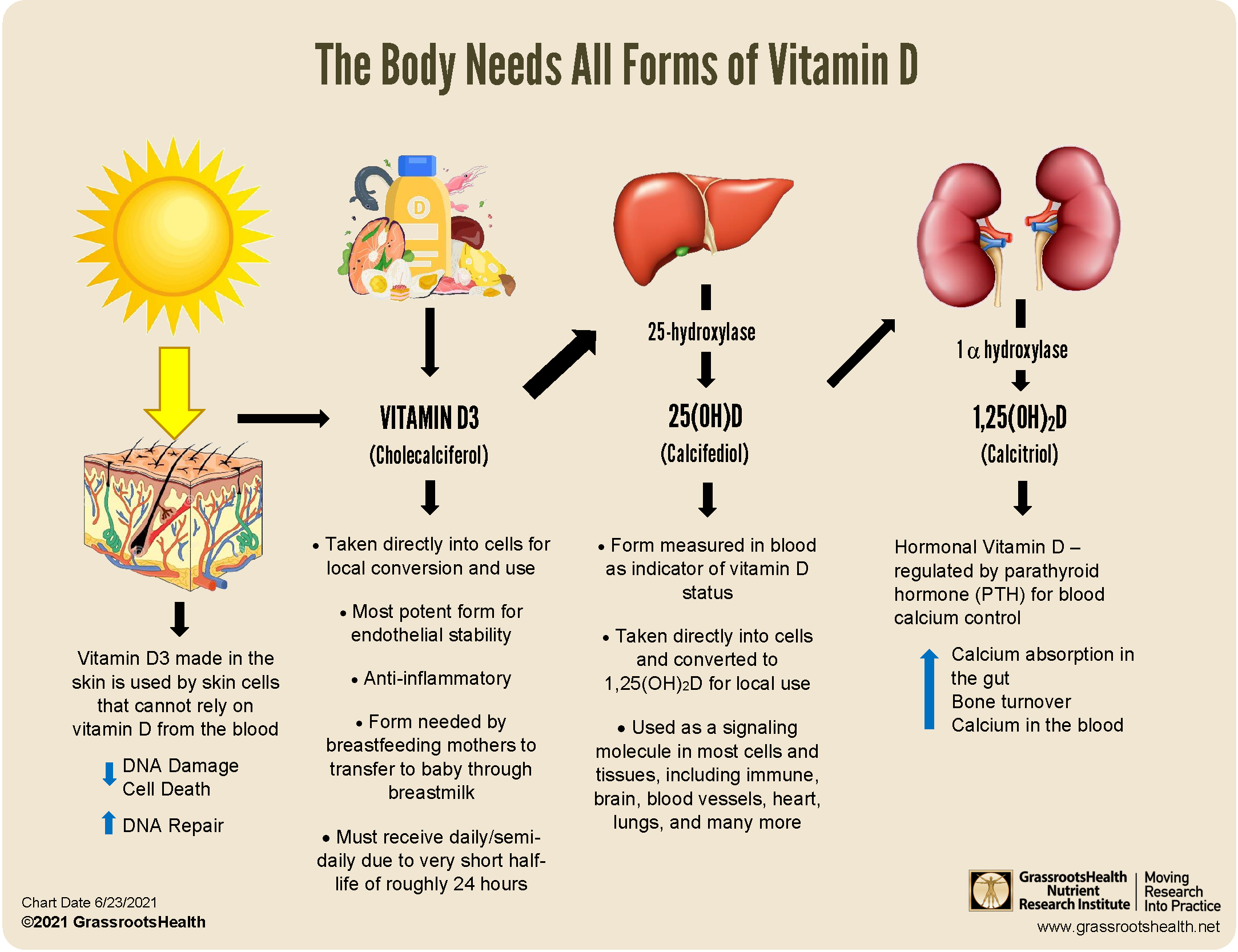
Vitamin D exists in different forms, commonly D2 and D3. They share the same ultimate job—supporting the body’s calcium balance and many endocrine functions—but they can differ in metabolic behavior and how they raise circulating levels.
Absorption loss is not a universal constant that affects every supplement identically. The form, the formulation (including whether it’s micronized or emulsified), and the presence of carrier ingredients can all tilt the outcome. Some products are designed to improve fat-soluble vitamin handling, which may partially soften the disadvantage of a lean meal.
Still, the underlying physiological preference remains: vitamin D tends to absorb better when the body receives the digestive signals associated with fat digestion.
Why Your Body Is So Particular: Hormonal Scheduling and Endocrine Physics
Here is the part that turns a health tip into a story worth lingering over. The body doesn’t absorb nutrients randomly; it absorbs them in ways that match evolutionary logic. In environments where fat intake varied, fat-soluble vitamin availability also fluctuated. The gut and liver developed mechanisms to synchronize vitamin absorption with dietary context.
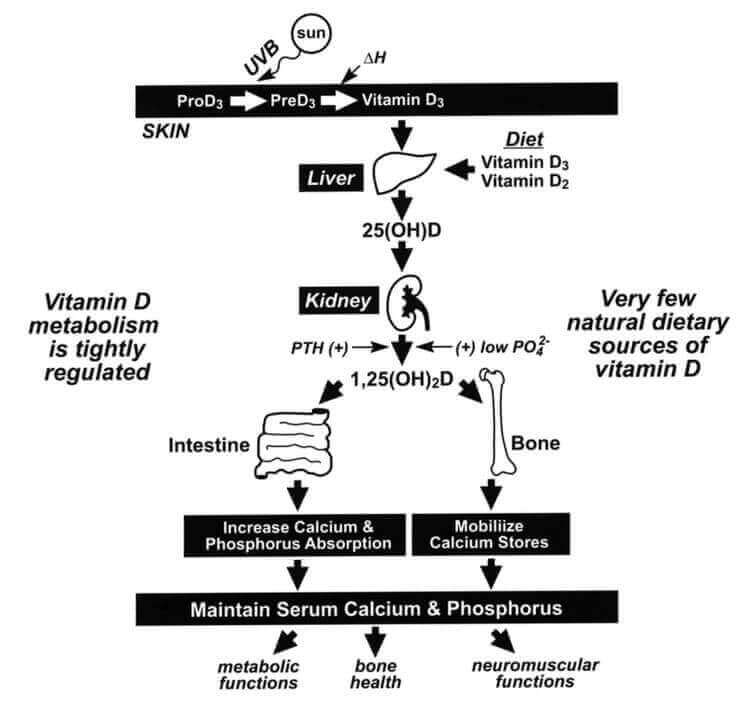
Vitamin D interacts with endocrine rhythms—its conversion pathways and downstream actions resemble a relay race rather than a single moment. If absorption is reduced, downstream effects can also be less vigorous, even if the supplement remains “good” in the literal sense.
So fascination isn’t misplaced. The observation about fat-free meals isn’t just nutrition trivia. It’s evidence that your digestive system behaves like a tuned instrument, reacting to specific cues rather than blanket assumptions.
Calcium and Vitamin D: The Classic Pair With a Less Obvious Link
Vitamin D is frequently discussed alongside calcium absorption. When vitamin D status is adequate, calcium handling tends to improve. But if vitamin D absorption is compromised, calcium-related benefits can feel underwhelming, even when dietary calcium is present.
It’s not that calcium is powerless. It’s that vitamin D may be the missing conductor. In the orchestra of mineral metabolism, fat digestion can influence whether vitamin D enters the body efficiently enough to lead the process.
Practical Ways to Reduce the Absorption Loss
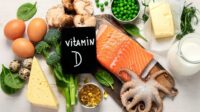
You don’t necessarily need to abandon fat-free meals forever. But you can use smarter timing and meal pairing. Many people choose to take vitamin D with a meal that includes a modest amount of healthy fat—often the difference between “okay absorption” and “better absorption.”
A small amount can be enough to stimulate the relevant digestive processes. Think in terms of a culinary nudge rather than a calorie overhaul. If a meal is extremely lean, consider pairing the supplement with a side that contains a little fat: a spoon of olive oil, a small portion of nuts, or a yogurt option that isn’t fully fat-free.
Also consider formulation. Some liquid or emulsified products may improve uptake when dietary fat is minimal. Capsules can vary as well. In practice, choosing a product designed for fat-soluble absorption can be a quiet lever.
A Thoughtful Bottom Line: It’s Not About Willpower, It’s About Chemistry
Taking vitamin D with a fat-free meal can lead to absorption loss because vitamin D relies on digestive conditions that are typically enhanced by dietary fat—particularly bile secretion and micelle formation. The body’s preference is not arbitrary. It reflects a deeper logic: nutrients that dissolve in fat are “meant” to travel with the help of fat-associated transport systems.
If you’ve noticed slower progress in vitamin D levels, this is one plausible reason. And if you’re simply trying to optimize, the solution is often simpler than it sounds: align your supplement timing with a meal that supports the gut’s logistics. Small changes can carry outsized effects, especially when absorption is the gatekeeper.
Vitamin D isn’t just taken. It’s negotiated—between your supplement and your digestive environment. When those sides speak the same biochemical language, the outcome becomes dramatically more favorable.