Imagine this: you’re consistent with vitamins, yet your results feel stubbornly muted. Sometimes it isn’t the vitamin—it’s the choreography. Vitamin D is notoriously particular, and when you pair it with the right timing and a little dietary fat, absorption can shift from “almost” to “now.” Not dramatically. Not magically. But in a way that feels like a quiet reorientation of your routine.
Why Timing Matters for Vitamin D Absorption (More Than Many People Think)
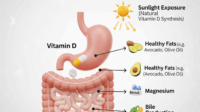
Vitamin D is fat-soluble, which means it doesn’t behave like a quick, watery nutrient that dissolves and moves on. It requires a physiological entourage—lipids, bile activity, and time—to travel through digestion and enter circulation effectively. When your body has the resources available (especially dietary fat), vitamin D can be packaged and escorted rather than left stranded.
Here’s the first perspective shift: think less about “eating vitamin D” and more about “helping your body transport it.” That’s where timing becomes a lever. If you consume vitamin D-rich foods when your meal already contains fats, you’re essentially widening the doorway for absorption.
Long after you eat, your digestive system is still busy orchestrating: stomach processes begin, intestinal signals follow, and transport mechanisms kick into motion. Timing determines whether vitamin D lands in the right sequence or arrives at a closed gate.
Fat Isn’t an Extra—It’s the Absorption Partner
Fat-soluble vitamins—including vitamin D—prefer an environment where they can hitch a ride with micelles and lipoproteins. Without adequate dietary fat, vitamin D may still be absorbed, but the process becomes less efficient. That’s why “with fat” matters not as a trendy add-on, but as a functional requirement.
Picture micelles as tiny couriers. When bile emulsifies dietary fat, it creates conditions for fat-soluble molecules to be incorporated into micelles. Vitamin D travels more smoothly when those couriers are abundant.
You don’t need excess. You need intention. The goal is a meal architecture that includes both vitamin D and a moderate amount of healthy fat. That balance is often easier than people expect—especially because many vitamin D-rich foods naturally contain some fat (like fatty fish), while others can be paired strategically.
The Best Time of Day: When Your Digestive System Is Most Cooperative
There isn’t one universal “clock” that fits everyone, yet patterns emerge. Most people experience the highest appetite and digestive throughput during main meals—breakfast, lunch, or dinner—rather than between them. Vitamin D-rich foods typically absorb best when eaten during a meal that contains fat.
Many people find midday or early evening to be particularly cooperative. Why? Meals during these windows are often more substantial, and fat presence tends to be more consistent. Your gut isn’t simply processing food; it’s coordinating enzymes, bile secretion, and transport readiness.
Short sentence, important idea: choose a mealtime rhythm you can repeat. Absorption improves with consistency because your digestive system can predict the pattern. If you routinely eat vitamin D-rich foods at random times—some days on an empty stomach, other days late and light—you create variability that makes results harder to track.
Morning vs. Night: What Changes in Practice
Morning can work wonderfully, especially if breakfast includes fat. Consider yogurt with whole milk, eggs, or smoked salmon paired with a small source of fat. The body is still awake, alert, and ready to process. Some people feel better front-loading nutrients, and breakfast is often the easiest “anchor meal” for habits.
Night can also be excellent. Dinner tends to be a full meal with predictable fat content. If you’ve been under-eating earlier in the day, dinner may provide a broader absorption environment. However, very late meals can be less comfortable for some individuals. Comfort matters because digestion works best when you aren’t rushing sleep.
The most useful question isn’t “Is morning better than night?” It’s: “Is my meal actually fat-containing?” If the meal contains fat and you’re not consistently skipping it, you’re in the absorption sweet zone.
Meal Composition: Pair Vitamin D with Healthy Fats (Not Random Snacking)
To harness the absorption advantage, pair vitamin D foods with fats in the same eating window. Think of it as synchronizing ingredients rather than treating vitamin D like a standalone event.
Here are practical pairing concepts:
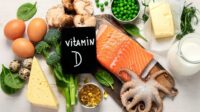
Fatty fish (like salmon, sardines, mackerel) naturally supply vitamin D and fat.
Egg yolks combine vitamin D with fat; they’re a simple, efficient duo.
Fortified dairy or fortified plant alternatives often work best when paired with a small fat component—such as yogurt, olive oil drizzle, nuts, or seeds.
Curated meal arcs beat scattered snacks. A bowl of fortified yogurt plus fruit and a handful of nuts can outperform a vitamin D source eaten alone, especially if you’re not getting adequate fat elsewhere.
Curiosity point: the “with fat” strategy doesn’t require culinary excess. It requires co-location—vitamin D and fat in the same digestive moment.
How Much Fat Is “Enough” for Absorption?
Absorption thrives on adequate fat, but “more” isn’t the objective. A reasonable portion of dietary fat can be sufficient to enable micelle formation and nutrient transport. The body is efficient; it’s designed to use what you provide.
Many people do well with a modest fat portion at the meal containing vitamin D. Examples include a teaspoon of olive oil on a plate, a tablespoon of nut butter, a few tablespoons of yogurt with creamier milk, or a naturally fatty protein serving.
If you’re currently eating very low-fat meals, consider easing upward slightly rather than reversing everything at once. Your digestion can adapt, and your routines can remain stable.
With Food vs. On an Empty Stomach: A Subtle but Powerful Distinction
Vitamin D-rich foods consumed on an empty stomach may not deliver the same absorption efficiency. Without dietary fat, the absorption machinery has less to work with. The result can feel like you “did everything right” yet didn’t notice the same downstream effect.
Short sentence: digestion needs context. Vitamin D is not just a molecule; it’s a commuter requiring a ride.
If your schedule forces you to eat vitamin D at a less-than-ideal time, consider a small adjustment: pair it with a fat-containing side. Even a small amount can make the meal less nutrient-isolated.
Pairing Vitamin D-Rich Foods with Other Nutrients (The Hidden Synergies)
Vitamin D can feel like a lone actor, but it often performs better in a supportive ensemble. Adequate vitamin K (found in leafy greens and certain fermented foods) and magnesium (found in nuts, seeds, and legumes) play roles in the broader metabolic pathway landscape. These aren’t the same as “absorption,” but they influence how the body utilizes nutrients.
In other words: absorption is the doorway; utilization is the room beyond. The best timing strategy helps with the doorway, and smart meal design helps with the room.
Try building meals where vitamin D-rich items share space with greens, whole grains, and healthy fats. It’s not complicated. It’s coherent.
Practical Timeline Examples: Make It Effortless
To turn theory into momentum, here are sample meal rhythms:
Midday approach: lunch with salmon salad, olive oil dressing, and leafy greens. Vitamin D lands alongside fat and supportive plant compounds.
Morning approach: breakfast with eggs and a side of avocado or whole-milk yogurt. Your meal becomes a delivery system, not a checklist.
Evening approach: dinner with sardines, roasted vegetables, and a drizzle of olive oil. Dinner provides both fat and adequate time for digestion before sleep.
What to Watch For: Signs Your Strategy Is Working
Absorption outcomes aren’t always immediate. Yet when your timing and meal composition improve, you may notice steadier energy, fewer “nutrient fatigue” moments, or better alignment with your training and recovery routines.
For the most confident evaluation, labs matter. A healthcare professional can help interpret vitamin D status and recommend appropriate follow-up intervals. The key is that timing and meal structure can improve the probability that you’re actually absorbing what you’re consuming.
Long sentence with a meaningful twist: consider nutrient habits as experiments with design, not just choices. The most effective diet shifts are the ones that change inputs and context simultaneously.
Final Take: The Real “Best Time” Is the One That Includes Fat
The best time to eat vitamin D-rich foods isn’t simply a morning or evening preference. It’s the moment when your meal includes enough fat to support absorption—when digestion has the tools to escort vitamin D rather than leave it to struggle.
Choose a repeatable meal anchor. Pair vitamin D with healthy fats. Keep portions sensible. Let your routine become predictable, and let your biology do what it’s built to do.