Ever stared at a supplement label and wondered: Is this vitamin D2 or vitamin D3—and does it even matter? It’s a fair question, because the two versions look almost identical on the shelf. Yet inside your body, they behave differently. And here’s the playful challenge: what if you’ve been choosing “the right” one for the wrong reason—cost, marketing, or the vibe of the bottle—while your actual vitamin D status stays stubbornly low? Let’s untangle the mystery with five key differences you need to know before you decide what to add (or stop) in your routine.
1) Origin Story: Where D2 and D3 Begin Their Journey
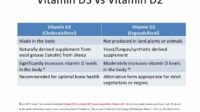
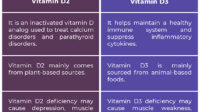
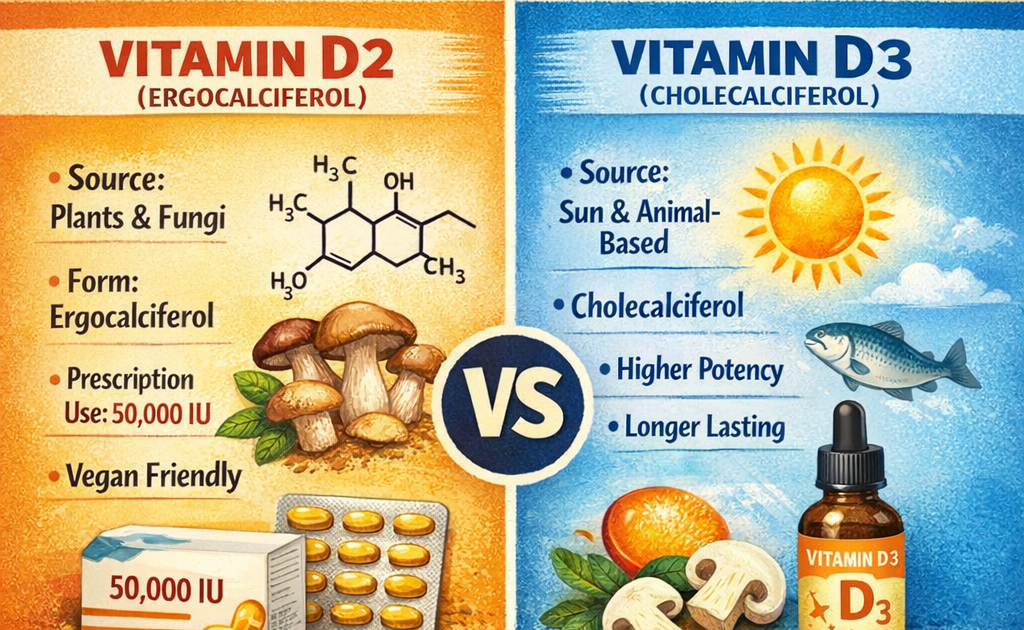
Vitamin D3 is typically derived from animal-based sources and certain lanolin preparations. Vitamin D2 is commonly sourced from plants and fungi, often ultraviolet-irradiated yeast. That difference in origin isn’t just trivia—it hints at how each compound is engineered to interact with biological systems.
Imagine your body as a sophisticated library. When vitamin D enters, the “book” must be recognized, cataloged, and processed efficiently. D3 tends to feel more familiar to the human system, while D2 can be perfectly useful—but it may not feel as natural in the cataloging workflow.
Still, don’t rush to conclusions. Labels rarely disclose the full backstory of bioavailability, and individual context (sun exposure, baseline deficiency, diet, genetics) can shift outcomes.

2) Molecular Behavior: How They Bind, Transport, and Act
Both D2 and D3 are forms of vitamin D that your body can convert into active metabolites, including calcitriol (the biologically active form). But the downstream kinetics—how fast and how steadily they raise and maintain vitamin D levels—can diverge.
D3 is frequently associated with more robust improvements in serum 25-hydroxyvitamin D, the common marker used to assess vitamin D status. D2 can also increase levels, yet it may do so with different efficiency and duration. Translation: two people can take the same “international units” and end up with different blood concentrations over time.
This is where a subtle trap lurks. When you rely solely on the IU number, you may miss the practical outcome: steady sufficiency versus brief elevation. Your body doesn’t measure label typography—it measures concentration and time.
3) Potency Over Time: Which One Tends to Last Longer
Let’s talk about endurance. Vitamin D isn’t a “take it today, feel it tomorrow” nutrient. It’s more like a long-term thermostat setting: the goal is consistent maintenance.
In many real-world patterns, vitamin D3 appears to produce a more durable rise in vitamin D stores compared with D2. That doesn’t mean D2 is ineffective; it means the strategy may require different dosing frequency or a longer timeline to achieve the same staying power.
So here’s the practical check: consider your history. If past labs showed slow recovery, or your levels bounce up then fall again, the form of vitamin D could be one missing variable among several.
Also, pay attention to adherence. Short-term routines are easy to start. Sustained consistency is harder, and inconsistency can masquerade as “the supplement didn’t work.”
4) Bioavailability and Absorption: The “Delivery System” Question
Even excellent molecules need a competent delivery route. Vitamin D is fat-soluble, which means absorption is influenced by dietary fat, overall gut function, bile production, and sometimes even the formulation of the product.
Here’s a playful but serious twist: if you take vitamin D on an empty stomach, you’re essentially asking your body to do logistics without trucks. Some people absorb D2 and D3 sufficiently regardless of timing, but others won’t.
For many supplements, taking with a meal that includes fat improves absorption. However, formulation details matter too. Softgels, oil-based liquids, and certain emulsified preparations can behave differently than tablets. If you’ve ever wondered why two people respond differently to “the same IU,” absorption variability is often a major culprit.
And don’t overlook gastrointestinal sensitivities. Conditions affecting absorption—celiac disease, inflammatory disorders, or certain medications—can create a fog over results.
5) Choosing a Form: Diet, Lifestyle, and Safety Considerations
Now for the decision-making layer. If you’re vegan or vegetarian, vitamin D2 may align more naturally with your preferences. If you’re aiming for a straightforward approach to maintaining vitamin D status, D3 is often the default choice in many supplement routines.
Yet the “best” option depends on your specific scenario. Baseline deficiency, seasonal sun exposure, geographic latitude, skin pigmentation, age, and body composition can all shift the optimal approach.
Safety matters, too. Vitamin D is not something to treat like an infinite slider. Too much can cause hypercalcemia—an imbalance that can lead to nausea, weakness, confusion, and kidney stress in severe cases. The safest path is guided dosing and periodic lab checks, especially if you’re taking higher amounts.
Think of vitamin D as a “precise instrument,” not a “broad hammer.” The goal isn’t maximal vitamin D—it’s appropriate vitamin D. Too little can raise risk for bone-related issues; too much can create its own problems. Balance is the quiet superpower.

Bonus: A Quick Self-Assessment Before You Change Anything
Before swapping your supplement like it’s a casual wardrobe change, run a quick internal audit. When was your last 25-hydroxyvitamin D test? What was the value? How consistent have you been with dosing? Do you take it with meals?
If you’re currently on D2 and your levels never quite budge, consider discussing a form change or dosing adjustment with a qualified clinician. If you’re on D3 and levels are stable, that’s useful data. If you’re unsure, the lab becomes the referee.
And since this topic is filled with subtlety, keep your expectations calibrated. Vitamin D responds to time, consistency, and context more than to brand marketing.
Bottom Line: The “Right” Choice Is the One That Works for Your Body
Vitamin D2 and D3 are both legitimate players, but they differ in origin, behavior, endurance, absorption dynamics, and practical outcomes. The real win is matching the form and routine to your body’s needs—then verifying with labs rather than assumptions.
So, the playful question returns: are you choosing vitamin D based on what sounds good, or on what actually raises and maintains your status? The potential challenge is not just picking the right bottle—it’s building a strategy that sticks, absorbs well, and is monitored intelligently. When you do that, “vitamin D2 vs D3” stops being a debate and starts being a plan.