Men rarely talk about it directly, but the question is everywhere: “Why does my muscle feel harder to build than it used to?” In gym culture, the spotlight usually swings toward training volume, protein intake, and sleep. Yet a quieter duo often lurks in the background—vitamin D and testosterone. Their connection can seem almost paradoxical at first. One is often filed under “bone health,” while the other is treated like a primal engine for strength. Still, when you connect the biology, the fascination starts to make sense.
Why muscle growth feels like it has invisible controls
Muscle mass isn’t built by willpower alone. It’s assembled through a chain of cellular events—protein synthesis, recovery, neuromuscular coordination, and hormonal signaling. When people miss a step, progress becomes jagged. A common observation is that two men can train similarly, eat similarly, and yet one progresses more consistently. The deeper reason may not be discipline. It may be physiology working behind the scenes.
Vitamin D and testosterone sit at the crossroads of that backstage choreography. When vitamin D status is low, testosterone can become less reliable. When testosterone is suboptimal, recovery and training adaptation can dull. The result can look like a plateau, even when effort remains high. That’s why the topic draws attention: it feels like unlocking a missing gear.
Vitamin D: more than “just vitamin”
Vitamin D is frequently reduced to a headline—“good for bones.” But in reality, it behaves more like a steroidal hormone precursor, interacting with cellular machinery across multiple tissues. It influences immune modulation, inflammation signaling, and muscle function pathways. This matters because muscle growth is not purely mechanical. It’s also biochemical.
Sunlight can elevate vitamin D, and dietary sources can help, but many adults land in the insufficient range due to indoor lifestyles, darker skin pigmentation, and seasonal variation. When vitamin D availability is low, cells may struggle to maintain optimal signaling. That can translate into reduced efficiency in muscle repair and possibly impaired endocrine rhythm.
Testosterone: the strength signal that shapes outcomes
Testosterone supports muscle protein synthesis, helps maintain lean mass, and influences neuromuscular function. It also plays a role in how the body handles training stress. However, testosterone isn’t only about “more is better.” The meaningful question is whether levels are adequate for the demands of training and recovery.
In real life, men are rarely optimizing testosterone in a vacuum. Diet composition, body fat distribution, sleep quality, stress hormones, and activity levels all create a hormonal atmosphere. Testosterone can dip when that environment becomes hostile. The intrigue of pairing it with vitamin D is that vitamin D may help restore a healthier endocrine background.
How vitamin D may influence testosterone production
The relationship is often described as indirect—but it can still be powerful. Vitamin D interacts with receptors in reproductive tissues, including Leydig cells in the testes, which are central to testosterone synthesis. When vitamin D is low, signaling at the molecular level may be suboptimal. That can nudge testosterone production downward.
There’s also an inflammation angle. Chronic low-grade inflammation can impair metabolic health and endocrine function. Vitamin D participates in immune regulation, potentially reducing inflammatory interference. The endocrine system tends to respond poorly when it senses persistent systemic stress.
In short, vitamin D may help create conditions where testosterone can function more effectively—like tuning an instrument so the same training melody sounds clearer.
Muscle mass: the bridge from hormones to hypertrophy
Muscle mass is the visible result of invisible processes. Testosterone supports anabolic signaling and can influence recovery capacity. Vitamin D, meanwhile, contributes to muscle contractile performance and may support the signaling environment that favors adaptation after training.
People often focus on sets and calories, but muscle growth is also about “readiness.” If vitamin D status is poor, muscle cells may not respond as robustly to training stimuli. If testosterone is low, recovery and hypertrophy signaling may be muted. Together, these factors can create a double-lock scenario: you train, but the return on that investment feels smaller than expected.
The common observation: “I do everything right, but nothing changes”
This is one of the most frequent stories. A man adjusts his protein, tracks his carbs, increases his steps, and still finds that his body composition won’t shift the way it should. At first, he suspects inconsistency—missing sleep, underestimating stress, or not training hard enough. Those may be true. But there’s another possibility: his internal biochemical inputs are insufficient.
Low vitamin D can hide in plain sight. Testosterone can fluctuate with lifestyle and aging. When both drift downward, muscle gain becomes stubborn. The fascination comes from the possibility of correcting something foundational, something that makes the rest of the routine suddenly “work.”
Signs that may suggest low vitamin D or low testosterone
No single symptom is diagnostic, but patterns can offer clues. Vitamin D insufficiency may correlate with frequent fatigue, low mood, muscle aches, and reduced performance in outdoor activity. Testosterone insufficiency may be associated with decreased libido, fewer morning erections, reduced strength progression, higher body fat accumulation, and mood changes.
These signals overlap with stress, poor sleep, and overtraining—so it’s easy to misread them. The best approach is to verify with objective measurements rather than guess. Biology is persuasive, but it’s also subtle.
Testing and interpretation: moving from guesswork to clarity
If you want a rational plan, start with labs. For vitamin D, a common marker is 25-hydroxyvitamin D. For testosterone, total testosterone is often checked first, and if results are borderline or inconsistent, clinicians may add free testosterone or calculations based on sex hormone-binding globulin (SHBG). Timing can matter; testosterone naturally varies throughout the day.
Interpretation should consider age, medication use, sleep quality, and body composition. A number without context can mislead. Still, objective data can remove uncertainty and guide next steps—dietary, behavioral, or medical.
Food, sun, and supplementation: practical levers
Sun exposure can raise vitamin D, but it isn’t always consistent or feasible. Dietary sources include fatty fish, egg yolks, and fortified foods. Still, many men find it difficult to maintain adequate levels solely through food.
Supplementation can be useful, but it should be approached thoughtfully. Dose depends on baseline status, body weight, and lab targets. Overdoing vitamin D can also be harmful, so “more” is not the strategy. A measured plan, followed by repeat testing, tends to be the cleanest route.
For muscle mass goals, supplements are not replacements for training and nutrition. Think of vitamin D as environmental calibration: it supports the conditions where your effort produces results.
Training strategy that pairs well with hormonal support
When hormones and muscle physiology are aligned, training adaptation can feel smoother. You may notice better performance during sessions, improved recovery between workouts, and less soreness that lingers for too long. This doesn’t mean you should abandon progressive overload. It means your training may finally be matched by internal readiness.
A sensible program includes strength work for hypertrophy (compound lifts and accessories), adequate volume for the individual, and deload periods. Sleep is a hormonal amplifier—particularly for testosterone dynamics. If vitamin D helps the endocrine environment, sleep helps protect it.
Body fat, insulin sensitivity, and the endocrine feedback loop
Excess body fat can influence testosterone via multiple pathways, including changes in insulin sensitivity and altered inflammatory signaling. Vitamin D may influence metabolic health indirectly through inflammation and cellular signaling. The net effect can be that improving vitamin D status and body composition improves the hormonal ecosystem.
This is part of why people become fascinated by the topic. It feels like the body is connected in a way that isn’t obvious in the mirror. A change in one variable can echo across the system.
Common pitfalls: chasing numbers without a plan
Some men take supplements aggressively hoping for dramatic changes. Others obsess over testosterone without evaluating sleep, stress, alcohol intake, or resistance training quality. Both extremes can backfire.
A stronger approach is layered: verify levels, address lifestyle drivers, support vitamin D appropriately, and keep training fundamentals consistent. The goal is not a shortcut. The goal is a stable internal environment where muscle-building processes run with fewer obstacles.
Visual context: how the pieces seem to fit together
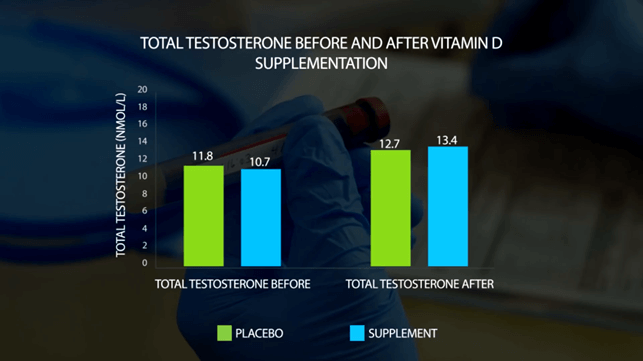
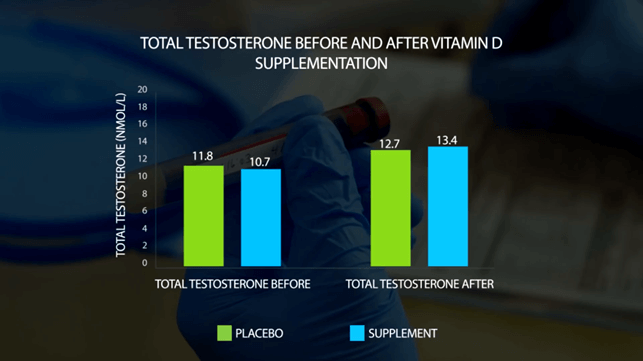
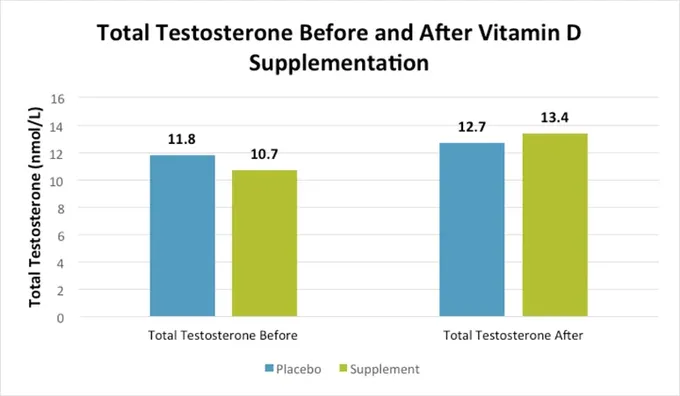
Seeing the relationship can help motivate a practical plan. Here are relevant visuals that often highlight the interplay between vitamin D and testosterone:

The takeaway: why vitamin D and testosterone matter for muscle mass
Muscle gain isn’t a single-variable story. It’s a network of signals and responses. Vitamin D may support endocrine function and muscle physiology, while testosterone supports anabolic signaling and recovery capacity. When either is lacking, adaptation can slow. When both are addressed, the same training effort can produce a more dependable outcome.
That’s the deeper reason the topic keeps pulling attention. It offers a plausible explanation for stubborn plateaus—and a realistic pathway for men who want to build muscle with both discipline and biological support.