Walk into any supplement aisle—or scroll through the algorithmic bustle of health feeds—and you’ll notice a repeating chorus of claims about vitamin D3 and K2. Some are harmless, others are quietly misleading, and a few are outright risky. The tricky part is that D3 and K2 are interdependent players in a biological “two-step,” yet people often treat them like unrelated ingredients. Let’s untangle the most persistent myths, so your next decision feels less like a gamble and more like an informed choice.
Myth #1: “D3 and K2 are interchangeable, so one is enough”
This myth spreads fast because both nutrients appear to support bones. But their jobs are not duplicates—they’re complementary. Vitamin D3 mainly helps your body absorb calcium through the gastrointestinal tract. Think of D3 as the key that turns on calcium traffic through your intestinal “checkpoints.”
Vitamin K2, however, is closer to the quality-control engineer. It activates proteins (notably those involved in calcium handling), helping direct calcium toward the places where it belongs and away from tissues where it can cause trouble. In other words, D3 improves the intake and availability of calcium; K2 helps with proper utilization and regulation.
So while some people get partial benefit from D3 alone, the “D3-only” strategy can be like building a house foundation without caring how the plumbing is routed. You might still get shelter, but the long-term system design matters.

Myth #2: “More D3 always means better results”
More is not automatically better—especially with fat-soluble vitamins. Vitamin D3 can accumulate because your body stores it in fatty tissues. When dosing overshoots, you don’t just “use up extra.” You can drift into a state where calcium regulation becomes less predictable.
Symptoms linked to excessive vitamin D include nausea, constipation, excessive thirst, and fatigue. These aren’t merely “supplement side effects”; they may signal calcium imbalance. That imbalance can be serious and sometimes requires medical attention.
Instead of chasing megadoses as a shortcut, many people do better with dose calibration: a thoughtful amount that matches their baseline status, diet, sun exposure, and existing lab values. Short sentences deserve emphasis here: labs guide dosing. Randomly escalating does not.
Also note that vitamin D absorption and metabolism vary across individuals. Two people with the same capsule label can have different biological outcomes. The ideal approach is patient-centered, not label-centered.
Myth #3: “K2 is K2—every form works the same way”
Not all vitamin K2 is created equal. K2 exists in multiple subtypes, commonly discussed as MK-4 and MK-7. Their kinetics differ: the duration of activity and how they distribute in the body can vary.
MK-7 often enters the conversation because it tends to have a longer presence in circulation compared to shorter-acting forms. MK-4 can be more prominent in certain contexts, though its dosing patterns are often different. This is not trivia—it affects how you interpret a product’s label and how frequently it might be taken.
Another subtle point: K2 products aren’t always standardized in how they deliver the active compound. Some formulas emphasize oils, others use different bases to support absorption. If you’ve ever wondered why two “5000 IU + 200 mcg K2” products don’t feel identical, form and delivery can be part of the answer.
When comparing options, don’t just compare numbers. Compare form, dose intent, and absorption strategy. Your body is not a spreadsheet; it’s a living system.
Myth #4: “D3 and K2 are only for older adults with fragile bones”
Bones are not a late-life project. Bone remodeling is continuous—an ongoing remodeling cycle that responds to mechanical stress, hormones, nutrition, and metabolic signals. That means younger adults and even active people may benefit from maintaining sufficient vitamin D status and healthy calcium handling.
Yet it’s equally true that not everyone needs supplements in the same way. People with limited sun exposure, darker skin pigmentation (which can affect vitamin D synthesis), certain dietary patterns, malabsorption conditions, or higher physiological demands may be more likely to have a deficiency risk.
There’s also a broader framing: vitamin D and K2 are often discussed in connection with immune signaling and cellular regulation. While claims should be evaluated carefully, the “only for osteoporosis” narrative is simply too narrow.
Instead of waiting for a fracture to begin caring, many people aim for proactive stewardship—steady support for foundational physiology. A small action now can prevent a bigger problem later.
Myth #5: “If a supplement has D3 and K2, it’s automatically safe”
Safety isn’t automatic just because a product sounds “natural.” Vitamin D3 and K2 can interact with medications and health conditions. The most notable caution involves anticoagulants (blood thinners). Because vitamin K plays a role in blood clotting pathways, certain medications can be affected by changes in vitamin K intake.
There are also considerations related to kidney health and calcium metabolism. If your kidneys struggle to manage calcium balance, more calcium and altered calcium regulation could be problematic. This is one reason healthcare guidance matters—especially if you already have lab abnormalities.
Quality is another layer. Supplements vary in formulation consistency, bioavailability, and testing standards. Some products include fillers or different oil matrices; some use different verification practices. If you want outcomes, you need a product that’s made with precision—not merely packaged with confidence.
Safety is not a buzzword; it’s an operational requirement. Always check for contraindications, review medications, and consider baseline labs before making long-term changes.
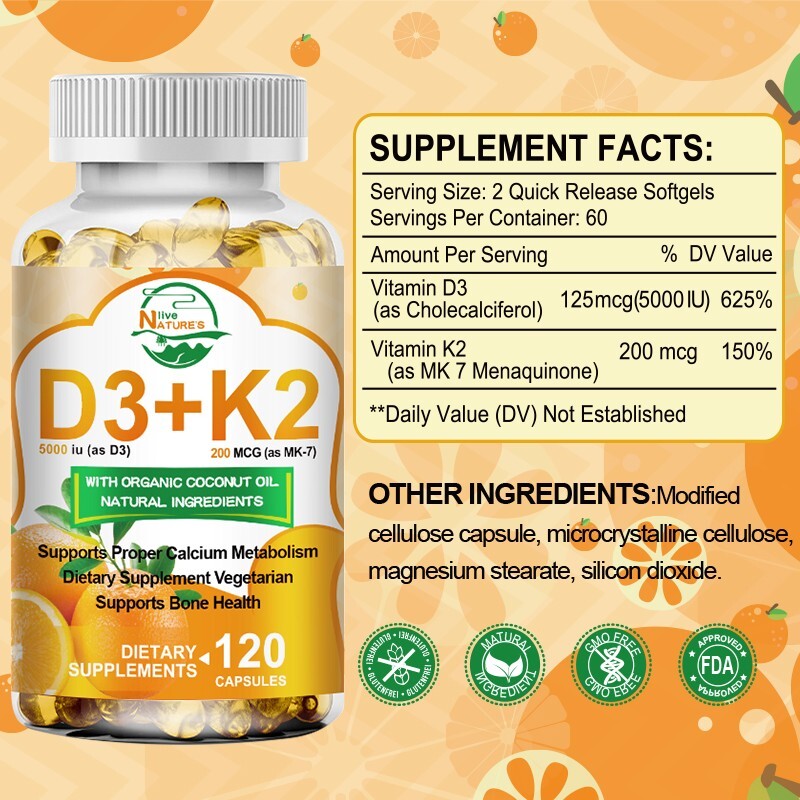
What readers can expect when choosing a D3 + K2 product
After debunking myths, the next question is practical: how do you evaluate product types and content formats? Many readers start with “top list” comparisons because they quickly reveal what’s common on the market—capsules, softgels, and liquid drops. Short content tends to summarize ingredients and headline dosages. Long content tends to explore absorption, dosing logic, and lab-driven personalization.
Capsules and tablets are often convenient and consistent for dosing. Softgels may improve absorption for some people because they dissolve into fats more readily. Liquid drops can be useful for those who prefer flexible dosing or dislike swallowing pills. One reader might choose the format that matches their routine; another might choose based on absorption preferences.
Look beyond aesthetics. Evaluate the ratio philosophy: some formulas emphasize higher D3 with moderate K2; others emphasize balance. The “right” ratio depends on your starting vitamin D status, dietary calcium, and your clinician’s guidance if labs indicate a need.
As a final narrative note: the most effective approach usually feels boring. It’s measured. It’s consistent. It’s supported by sensible documentation—labels, labs, and sometimes professional input. Supplements can be allies, but they’re not replacements for the fundamentals: diet, sunlight where appropriate, movement, and medical awareness when necessary.

Closing perspective: Replace myths with a better decision pathway
Myths thrive in the gaps between curiosity and evidence. When you replace “one-size-fits-all” beliefs with nuance—forms matter, dosing matters, interactions matter—you gain control. Vitamin D3 and K2 don’t compete; they coordinate. Your goal isn’t to chase extremes. It’s to support the biochemical choreography that helps calcium move, signal, and settle where it should.
And once you see the story clearly, supplement shopping becomes less of a mystery and more of a deliberate, personalized plan.