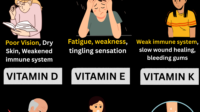
Chronic Fatigue Syndrome often feels like an invisible architecture—rooms you once entered easily now require effort, and familiar days become an exhausting labyrinth. In that dim corridor of symptoms, a quiet suspect has been circling for years: vitamin D. Not because vitamin D is a magic key, but because it participates in so many biological “circuits” that govern inflammation, immune signaling, neuromuscular function, and perhaps even how fatigue is perceived by the body and brain. The link is not settled like a finished proof. Still, it’s intriguing enough to invite a shift in perspective—and, if nothing else, to widen the conversation beyond tiredness as a purely psychological phenomenon.
Fatigue as a System, Not a Mood
Chronic Fatigue Syndrome (often discussed alongside myalgic encephalomyelitis) is frequently misunderstood as a single, uniform experience: “just fatigue.” But fatigue in this context behaves like a systems-level disturbance. It can travel with post-exertional malaise, cognitive fog, unrefreshing sleep, and diffuse pain. These clusters suggest that multiple processes—metabolic, inflammatory, neuroimmune, and autonomic—may be interacting.
Vitamin D enters the scene because it functions more like a regulator than a mere vitamin. It is involved in gene transcription, immune modulation, and cellular resilience. When vitamin D pathways are disrupted, the body’s internal balance can tilt toward dysregulation. That tilt may not “cause” every symptom directly, yet it could lower the threshold for symptom emergence, turning normal stressors into disproportionately costly events.
Vitamin D: The Endocrine Choreographer
Many people imagine vitamin D as a bone-supporting nutrient. That is only one chapter. Vitamin D also behaves as an endocrine messenger. Its active form—calculated from intake through metabolic steps—binds to receptors present in diverse tissues, including immune cells. In that sense, vitamin D can be understood as a choreographer coordinating immune tempo.
When levels are low, immune signaling may become less precise: inflammation may become harder to resolve, and regulatory mechanisms may weaken. Chronic Fatigue Syndrome frequently includes inflammatory irregularities and immune activation patterns. The question becomes less “Could vitamin D matter?” and more “How might vitamin D scarcity amplify an already fragile equilibrium?”
Immune Modulation and Inflammatory Tone
The immune system does not operate as a binary switch. It behaves like a volume dial, continuously adjusting inflammatory tone. Vitamin D appears to help manage that dial—supporting pathways that temper excessive activation while maintaining the ability to respond appropriately to threats.
If vitamin D deficiency is present, the immune system may drift toward a pro-inflammatory bias. That bias can translate into symptoms that feel systemic: aches, malaise, and the kind of lingering “aftertaste” that persists long after an exertional event.
Even subtle inflammation can be energetically expensive. The body then spends more resources on containment and repair, leaving fewer calories of function for daily life. Fatigue, in this framing, becomes an ecological consequence of persistent biological negotiations.
Neuroimmune Cross-Talk and Cognitive Fog
Chronic Fatigue Syndrome is notorious for cognitive symptoms—often described as concentration problems, slowed thinking, or a foggy mental quality. This is where vitamin D’s broader influence becomes especially thought-provoking.
Vitamin D-related signaling appears in brain-supportive pathways and in immune-to-brain communication. The concept of “neuroimmune cross-talk” suggests that the immune system can affect neuronal activity through cytokine networks and other messengers. If vitamin D helps stabilize immune signaling, then low vitamin D might contribute to a brain environment that is less efficient at maintaining clarity.
Not every person with low vitamin D will experience cognitive fog, and not everyone with cognitive fog will have low vitamin D. Yet the overlap invites curiosity: could vitamin D scarcity be one ingredient among several, shaping symptom intensity rather than determining diagnosis?
Energy Metabolism: Where Fatigue May Start
Fatigue is not merely perceived; it is metabolically expressed. Cells require energy, mitochondrial function, and adequate resource distribution. Vitamin D intersects with metabolic pathways and may influence insulin sensitivity and muscle function—two areas relevant to sustaining energy.
In people experiencing chronic fatigue, even modest exertion can produce prolonged exhaustion. That pattern aligns with a system that struggles to meet demand and recover efficiently. If vitamin D affects muscle physiology or inflammatory recovery, then its deficiency could worsen the body’s ability to restore equilibrium after strain.
This is not a simplistic “low vitamin equals tired” narrative. It’s more like a gears-and-oil story: when one component lacks optimal lubrication, the whole machine may run noisier and break down sooner—especially under stress.
Sleep Quality and the Circadian Question
Unrefreshing sleep is another common hallmark. Sleep is not merely rest; it is biological recalibration, a nightly maintenance routine for the immune system, nervous system, and metabolic regulation.
Vitamin D has been linked—directly or indirectly—to sleep quality in various contexts. It may affect neuroendocrine signaling and inflammatory cascades that interact with sleep. When inflammation remains elevated, sleep can become lighter, fragmented, or less restorative.
That creates a feedback loop. Poor sleep can worsen immune dysregulation; immune dysregulation can further impair sleep. Vitamin D, functioning as a regulator, may influence where that loop tightens or loosens.
Why Deficiency Is Common: The Environmental Layer
Even if vitamin D is only one contributor, deficiency can be widespread. Indoor lifestyles reduce sunlight exposure. Geographic latitude, skin pigmentation, seasonal patterns, and cultural clothing practices all affect vitamin D synthesis. Dietary intake may also be inconsistent.
Chronic Fatigue Syndrome can itself encourage reduced activity. And reduced activity often correlates with reduced outdoor time. The result can be a subtle spiral: illness limits movement, movement limits sunlight, sunlight limits vitamin D, and the body enters a potentially less resilient state.
This does not mean vitamin D deficiency is “caused” by the syndrome. But it does suggest that the relationship could be bidirectional, with deficiency both as a risk factor and as a possible aggravator.
Promises of a Shift in Perspective
The most valuable promise here is not cure-by-compound; it is a reorientation of attention. Vitamin D reframes part of the fatigue narrative into a measurable biological variable. That shift can be psychologically liberating. When symptoms are acknowledged as physiologically tethered, patients and clinicians may feel less trapped in explanations that dissolve under scrutiny.
Perspective matters. When someone learns that vitamin D is often checked and can be corrected safely under guidance, the conversation can move from hopelessness to targeted exploration. It also opens a door to broader “systems thinking”: sunlight, nutrition, inflammation control, pacing strategies, sleep hygiene, and careful symptom tracking.
Curiosity is not denial. It is a decision to ask better questions—questions that honor complexity instead of demanding one neat answer.
What Evidence Suggests About Vitamin D and Symptoms
Research has explored whether vitamin D status differs in people with chronic fatigue compared with others, and whether supplementation influences symptom patterns. Some studies point toward associations between lower vitamin D levels and fatigue severity, while others suggest that correcting deficiency may improve certain aspects of well-being.
The scientific landscape remains mixed. That is expected, given the heterogeneity of chronic fatigue presentations. Still, trends can be informative: if vitamin D deficiency is common in this population and if vitamin D pathways affect immune tone and cellular resilience, it is reasonable to investigate supplementation as a potential adjunct rather than a standalone solution.
It’s worth emphasizing that vitamin D is not a universal remedy. Rather, it may function like a stabilizing parameter—helping the body respond more efficiently to the stresses that trigger symptom flares.
Supplementation: Hope Without Recklessness
Vitamin D supplementation can be considered when deficiency is present, but it should be approached with measurement and guidance. Blood levels, baseline risk factors, and coexisting conditions matter. Over-supplementation can cause harm, and that risk is a reminder that “natural” does not mean “risk-free.”
Clinically, the most cautious strategy is to test, correct deficiency, and monitor. Changes should be evaluated over time, with attention to symptom patterns such as post-exertional reactions, sleep restoration, and cognitive clarity. Improvement—if it occurs—may be gradual and multifactorial.
Even if supplementation does not transform fatigue overnight, it can still contribute to a broader treatment architecture: one that includes pacing, nutritional sufficiency, and symptom-tailored interventions.
Uncommon Mechanisms Worth Wondering About
There are several plausible mechanisms that make the vitamin D–fatigue connection feel less like coincidence and more like biology with a signature. Vitamin D may influence inflammatory mediators, modulate immune cell behavior, support neuromuscular function, and affect the regulation of oxidative stress.
Another possibility involves recovery signaling. Chronic Fatigue Syndrome can be characterized by difficulty bouncing back after exertion. If vitamin D supports processes related to recovery—repair, immune resolution, and metabolic recalibration—then deficiency could tip the balance toward prolonged symptom persistence.

How to Turn Curiosity Into Action
A shift in perspective can be practical. If chronic fatigue symptoms are present, asking for a vitamin D test can be a reasonable step. It provides concrete information rather than leaving the situation entirely abstract. If levels are low, discussing a personalized correction plan with a clinician may be worthwhile—especially alongside other supportive strategies.
Track outcomes. How does energy change after exertion? Does sleep feel more restorative? Does cognitive fog lift even slightly? These observations can help distinguish placebo-driven expectations from genuine physiological shifts.
Finally, treat vitamin D as one thread in a tapestry. The goal is not to replace comprehensive care with a single nutrient. The goal is to enrich the care plan with evidence-guided optimization.
A Future Built on Nuance
The link between vitamin D and Chronic Fatigue Syndrome is best understood as a hypothesis with biological plausibility and growing observational interest. It offers promises—not of instant transformation—but of a more nuanced approach. A more measurable approach. A more humane approach that respects complexity.
In the quiet hours when fatigue tightens its grip, vitamin D may not be the whole story. But it could be part of the mechanism that determines whether the body can recover, regulate, and move through the day with less resistance. And that possibility—small, uncertain, yet meaningful—deserves to stay on the table.