Vitamin D3 and vitamin K2 often travel as a team, but pairing them with the right foods turns that partnership into a daily ritual. Think of K2 as the “directing hand” and D3 as the “ignition.” When you supply both nutrients through diet and supplementation, you create a more graceful path for calcium to move where it belongs. The result is less chaos at the cellular level and more disciplined mineral management—an outcome especially valuable for bones, teeth, and cardiovascular tissues. Below, you’ll find the best food sources of K2 to complement your D3 supplement, along with practical guidance on how to structure intake so the synergy feels effortless rather than accidental.
Why K2 Pairs Naturally with D3: The Calcium Choreography
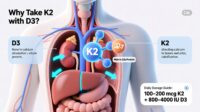
Most people know D3 helps your body absorb calcium. Fewer realize that absorption is only one chapter. The rest of the story involves where calcium goes, and that’s where K2 becomes essential. K2 supports proteins involved in directing calcium toward skeletal tissue while discouraging unwanted calcification pathways. This is less about “more minerals” and more about appropriate mineral routing.
To make the relationship intuitive, imagine D3 as widening the doorway for calcium to enter the bloodstream. Then K2 steps in like an attentive conductor, coordinating whether calcium is incorporated into bones and teeth or left to wander. Your dietary choices can strengthen that conductor role by providing K2 in forms your body can use effectively.
Food-based K2 is not one-size-fits-all. Different food sources vary in menaquinone types—particularly MK-7 and MK-4—each with distinct longevity and metabolic behavior. Understanding that nuance helps you build a pairing strategy that matches your routine.
Best Overall: Fermented Dairy for MK-7—Nutrient-Forward and Ritual-Friendly
If you want a reliable, widely accessible source of MK-7, fermented dairy is a top starting point. MK-7 is well represented in foods created through specific fermentation processes, and the gut-friendly nature of these products can make daily inclusion easier. Fermented dairy also tends to deliver complementary compounds—like peptides and bioactive fats—that may support overall metabolic balance.
Look for options such as aged cheeses, especially when they are naturally fermented and aged longer. Aged cheeses often provide both fat-soluble vitamins and the menaquinones associated with fermentation.
How to pair with D3: Consider consuming fermented dairy in meals where dietary fat is present. Fat enhances D3-related absorption, and it can also improve the overall “delivery system” for fat-soluble nutrients.

A High-Impact Classic: Natto for MK-7—The Fermented Powerhouse
Natto is famous for a reason: it’s one of the most concentrated dietary sources of MK-7. Originating in Japanese cuisine, natto is produced by fermenting soybeans with specific bacterial cultures. The fermentation transforms the nutrient profile, resulting in a K2-rich food that can be remarkably potent.
However, natto is not a “casual” food for everyone. Its texture can be sticky and its flavor can be divisive. Still, there’s a practical way to make it approachable. Pair it with rice, add a squeeze of lemon, mix in chopped green onions, or blend with a mild condiment. One small change can turn a reluctant first bite into a sustainable routine.
How to pair with D3: Because natto is often eaten at meals that naturally include carbs or fats, it integrates smoothly into everyday eating patterns. Timing-wise, a consistent meal schedule matters more than obsessing over exact minutes.
For readers who like a measurable approach, natto can be your “anchor food.” It provides K2 where you can more easily track intake from day to day.
Lean in Flavor, Rich in Function: Egg Yolks for MK-4 and a Balanced Micronutrient Stack
Egg yolks offer another important angle: K2 in the form of MK-4, which is typically associated with shorter biological persistence than MK-7. That doesn’t make it less valuable; it simply means your body may benefit from more frequent food sources or a consistent daily pattern.
Egg yolks also come with essential nutrients that complement a D3 lifestyle: choline, vitamin A, and beneficial fats. This combination supports a broader nutritional environment, not just a single nutrient target.
How to pair with D3: Include egg yolks in a breakfast or brunch meal that already contains fat. If you take D3 with a meal, try to align your yolk-containing meals on the same day.
For people who dislike fermented foods, eggs can feel like the “middle path”: familiar, versatile, and easy to dose naturally within normal cooking habits.
Meat-Based Sources for K2: Practical Options When You Want Higher Frequency
Some animal foods contribute K2 (notably MK-4) and can be useful when your goal is to spread K2 intake across the week. Lean toward options like poultry and certain organ-related preparations if they fit your dietary pattern and personal comfort level.
MK-4’s profile makes it particularly relevant for readers who prefer dietary variety rather than one concentrated food. If you rotate meats and eggs, you create an intake cadence that may better match K2’s metabolic behavior.
How to pair with D3: Pair your D3 days with meals that include protein and healthy fats. Think of it as strengthening absorption conditions. If you keep your meals consistent, your supplement routine becomes easier to “support” with food.
As always, quality matters. Favor minimally processed options and, where appropriate, choose products from better-managed farming systems.
Fermented Alternatives Beyond Dairy: Broths, Vegetables, and Gut-Forward Inclusion
Not every fermented food provides substantial K2, but fermentation can still support the environment where nutrient absorption and gut health thrive. While fermented vegetables aren’t typically the main MK-7 drivers, they can complement your K2 strategy by enhancing digestive comfort and maintaining dietary diversity.
Consider including fermented vegetables like sauerkraut or kimchi—especially if they help you build consistent meals. Some readers find that better gut tolerance makes it easier to adhere to D3 supplementation consistently, which indirectly supports the overall goal.
How to pair with D3: Pair these foods with balanced meals containing fats. This keeps your day “fat-soluble friendly,” helping the overall system stay aligned.
In narrative terms, this section is about resilience. It’s not only what you add; it’s how you make your plan sustainable when life gets unpredictable.
What a “K2 + D3 Meal Day” Can Look Like: Sample Eating Structures
Building structure reduces decision fatigue. Here are two sample day templates you can adapt to your appetite and schedule.
Template A (Fermented Anchor Day): Breakfast includes egg yolks or a protein-forward meal. Lunch features fermented dairy or a cheese-based dish. Dinner includes a balanced plate with healthy fats, and you sprinkle fermented vegetables on the side for gut comfort.
Template B (Natto-Focused Day): Breakfast is light and fat-aware (e.g., yogurt with added fats or eggs). Lunch centers on natto with rice and greens. Dinner includes protein and vegetables, keeping the meal satisfying without overwhelming digestion.
These templates emphasize coherence. Short sentences help the mind remember: fat with D3, K2 from targeted foods, consistency over intensity.
Practical Tips for Maximizing Absorption and Reducing Friction
Timing and context can matter. D3 is fat-soluble, so taking it with a meal that contains healthy fats generally supports absorption. Pairing that with K2-rich foods makes the day feel like a coordinated system rather than a set of isolated pills and meals.
Also consider these friction-reducers:
Start small: Introduce stronger flavors (like natto) gradually. Your palate can adapt.
Balance textures: If fermented foods are sticky or pungent, combine them with complementary flavors—citrus, herbs, or mild grains.
Watch total dietary patterns: High sodium can sneak into fermented foods. Choose lower-sodium options when possible.
Consistency beats randomness: One excellent meal can’t fully replace steady dietary rhythm.
Safety and Medication Considerations: When You Need Extra Caution
If you take blood thinners—particularly warfarin—don’t assume that “food-based K2” is automatically safe. K2’s biological role can interact with how such medications function. This is not a fear-based message; it’s a precision-based one.
For anyone on anticoagulants, the best path is to coordinate supplement and dietary changes with a qualified clinician. Even if food is used as a supportive strategy, the direction should be deliberate rather than improvised.
Safety doesn’t erase benefits. It simply ensures your gains are earned without unnecessary uncertainty.
How to Choose Your K2 Sources: A Reader-Friendly Priority List
Different readers want different strategies. Here’s a practical prioritization approach:
If you want maximum MK-7 concentration: natto is the standout.
If you prefer familiar, easy cooking: eggs and fermented dairy are versatile.
If you want frequent MK-4 exposure: include meat and eggs in rotation, rather than relying on a single food.
If you want gut support alongside targeted K2: add fermented vegetables for consistency and comfort.
In the end, the “best” sources aren’t only the richest—they’re the ones you’ll actually eat. The most effective pairing is the one that survives busy weeks, travel, and shifting appetites. Choose a small set of K2 foods, keep them consistent, and let your D3 routine become part of a well-tuned nutritional narrative.