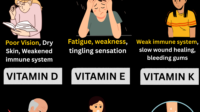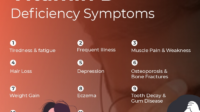
Vitamin D is the body’s quiet courier—delivering “sun-made” instructions to cells long before you feel anything noticeable. Most healthy people assume it’s an automatic benefit: sunlight comes, vitamin D appears, everything works. Yet the reality can be far stranger. Like a lighthouse that occasionally runs out of fuel, your internal signaling may weaken even while the rest of your life looks bright. What follows are five deficiency signs that are easy to misread—signals that often arrive disguised as stress, aging, or “just being busy.”
1) Mood That Feels Like Weather, Not Medicine
One of the most frequently ignored vitamin D deficiency signs is mood disturbance—specifically, a drizzly sameness. You may not call it depression. It might feel like muted motivation, low-grade irritability, or the emotional equivalent of gray skies that won’t lift. Vitamin D participates in neurochemical regulation and may influence pathways connected to serotonin signaling.
Think of vitamin D as a backstage lighting operator. When it’s present, emotional “spotlights” land smoothly. When it’s missing, the show continues, but the lighting shifts—faces look flatter, reactions take longer, and optimism feels like it costs more than usual.
Intriguingly, you can be “functionally fine” while still experiencing a subtle cognitive dulling—an ineffable weariness that no amount of willpower seems to reverse. If your mood changes correlate with low sun exposure (seasonal patterns, indoor lifestyles, heavy sunscreen use), it’s a strong clue that vitamin D status may be involved.

2) Muscle Aches and Stiffness That You Blame on Work
Another “healthy-person” trap: attributing muscle pain to exercise, posture, or stress. A subtle deficiency can present as diffuse aching, stiffness, or a lingering sense that your muscles never quite warm up. Some people notice it when they stand from a chair, climb stairs, or wake up feeling less springy than they used to.
Vitamin D is intertwined with muscle function and neuromuscular coordination. When levels run low, muscle cells can lose a portion of their efficiency, leading to discomfort that behaves like an uninvited background track.
Here’s the metaphor that helps: imagine your muscles as a stringed instrument. Without proper “tuning” from nutrient signals, the notes still come out—but they’re slightly off. You compensate with movement, stretching, and extra coffee. Then you wonder why relief is temporary.
If your aches appear without clear cause and track toward winter months or minimal outdoor time, consider a medical check of vitamin D along with other relevant labs. It’s not about panic—it’s about precision.

3) Fatigue That Mimics Sleepiness, Yet Won’t Fully Resolve
Fatigue is one of those symptoms with a thousand disguises. It might be linked to poor sleep, high workload, hydration issues, or simply life being life. But vitamin D deficiency can contribute to persistent tiredness that doesn’t behave like classic exhaustion.
Picture your energy as a battery and your sunlight exposure as the charging cable. Most people look for faulty outlets—stress, insomnia, schedule overload—while ignoring the possibility that the charging cable is frayed. The battery never fully reaches “full charge,” and you spend the day operating at a slightly dimmer brightness.
Vitamin D may also interact with inflammatory signaling and immune regulation, both of which can influence how “rested” you feel. The fatigue can appear foggy, not just heavy. Your mind feels sluggish. Your body feels delayed. Even after adequate sleep, the recovery seems incomplete.
Healthy people often interpret this as normal aging or burnout. But burnout has a narrative. Vitamin D-related fatigue can be more characterless—just a steady, low-level drain.

4) Increased Falls or Trouble With Balance (Even Before “Old Age”)
Balance problems are easy to blame on shoes, vision, or “clumsiness.” Yet vitamin D deficiency can contribute to muscle weakness and impaired neuromuscular control—two ingredients that raise fall risk. Not everyone experiences obvious falls. Some people simply notice increased near-misses: tripping on curbs, feeling unsteady on stairs, or hesitating more than before.
Think of your balance system as an internal GPS. It doesn’t map your life; it maps your body in space. Vitamin D helps keep certain “calibration” processes functioning. When it’s low, the GPS signal can become noisy—still workable, but occasionally wrong.
Healthy people sometimes overlook this sign because it feels too mundane to be medical. But the body’s warning lights are often subtle first. If you notice new instability, especially paired with muscle aches or weakness, it’s worth evaluating vitamin D status.
Also, consider context. If you’re indoors most of the day, live at higher latitudes, have darker skin pigmentation, or regularly cover up for sun safety, deficiency becomes more plausible—even if your diet seems respectable.

5) Frequent Infections or Slow Recovery That You Don’t Connect to Sunlight
Vitamin D plays a role in immune function. When levels are suboptimal, some people experience an uptick in susceptibility to respiratory infections or find recovery takes longer. This doesn’t mean vitamin D deficiency is the sole cause of every cold. Life is multicausal, and biology loves complexity. Still, low vitamin D can act like a draft under a door—small, persistent, and noticeable over time.
Imagine your immune system as a well-trained theater crew. With proper vitamin D signaling, the crew organizes quickly: props appear, lighting cues land on time, and scenes flow. With deficiency, the show can still happen—but rehearsals run late. You may feel sicker longer, or you may catch more “small” illnesses than expected.
Healthy people sometimes excuse this as seasonal exposure, stress, or “my immune system is just touchy.” But patterns matter. If you repeatedly get knocked down by minor infections and don’t bounce back the way you used to, vitamin D status is one variable worth checking.
In parallel, address other allies: adequate sleep, nutrition richness, and vaccination where appropriate. Yet vitamin D is a distinctive lever, because it sits at the intersection of sunlight, metabolism, and cellular signaling.

The Hidden Throughline: Why Healthy People Miss the Clues
These signs share a common camouflage. Vitamin D deficiency often presents as “normal life adjustments”: mood drift, mild aches, fatigue that feels busy rather than sick, balance changes that are blamed on environment, and infections interpreted as bad luck. The intrigue is that none of these symptoms are exclusive. They rarely shout “vitamin deficiency.” Instead, they whisper in a choir of everyday explanations.
That’s why testing can be so clarifying. A blood measurement of 25-hydroxyvitamin D helps move the discussion from guesswork to targeted decision-making. If levels are low, supplementation—guided by healthcare professionals—can be a structured pathway back to stability.
Finally, don’t let perfection become paralysis. Practical sunlight exposure where appropriate, dietary sources such as fatty fish and fortified foods, and reasonable supplementation strategies can help many people restore adequate levels. The goal isn’t to chase sunshine like a trend. It’s to ensure your internal systems receive the message they need to run smoothly—quietly, consistently, and without drama.