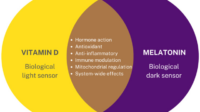
Vitamin D is often framed as the “sunshine vitamin,” but its influence reaches far beyond bone health. It can act like a subtle conductor, shaping how the body’s internal clock—your circadian rhythm—signals darkness to the brain. That signaling matters, because melatonin production depends on a cascade of timing cues. When vitamin D status is misaligned, the night may feel less “night-like,” and sleep quality can become more fragmented.
Vitamin D: More Than a Nutrient, a Neuroendocrine Signal
Vitamin D behaves like a steroid hormone precursor. Once activated—primarily through hydroxylation in the liver and kidneys—it binds to vitamin D receptors that are found in many tissues, including brain regions involved in rhythm regulation. This is where the story becomes more intricate. Circadian biology is not merely a set of passive switches; it is a dynamic choreography of gene expression, neurotransmitters, and environmental signals.
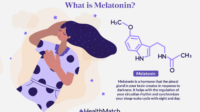
Melatonin, meanwhile, is produced mainly in the pineal gland. Its release rises in darkness, helping the body interpret nighttime. The timing system depends on precise neural communication from the retina through the suprachiasmatic nucleus (SCN), the brain’s master clock. Vitamin D does not replace light cues, but it can modulate the biological receptivity of the pathway, affecting how effectively the body translates “night” into melatonin release.
Melatonin Production: A Timing Cascade, Not a Single Switch
Melatonin synthesis is built on biochemical steps that respond to darkness. In simplified terms: when light decreases, the brain reduces inhibitory signals and activates enzymes that convert precursor molecules toward melatonin. The pineal gland is like a biochemical workshop that speeds up production at the right time.
While light is the primary driver, other regulators can sharpen or soften the response. Vitamin D’s potential involvement includes effects on oxidative balance, immune signaling, and the expression of genes related to circadian function. These influences can indirectly alter melatonin kinetics—how quickly levels rise, how high they peak, and how smoothly they decline.
Expect content in this area to explain pathways with a mix of molecular detail and practical implications, often using analogies such as “biochemical timing” and “signal amplification.” The best readers will come away with a sense of cause-and-effect rather than isolated associations.
How Vitamin D May Influence Clock Genes and Rhythm Robustness
Circadian rhythms are sustained by “clock genes,” which generate oscillations inside cells. These oscillations coordinate with one another, producing stable daily cycles in sleep-wake timing, hormone secretion, and metabolism. Vitamin D receptors can interact with transcriptional machinery, potentially influencing the amplitude and stability of these oscillations.
In practical terms, robust circadian rhythms help melatonin rise at the appropriate hour. When rhythms become noisy—due to irregular schedules, stress hormones, or insufficient environmental time cues—melatonin timing can drift later into the night or become less predictable.
Readers can expect discussions that connect vitamin D status with the “quality of timing,” not merely the presence of melatonin. Short-term fluctuations matter, but so does the overall coherence of daily biological oscillations. Vitamin D may be more relevant for rhythm resilience—helping the system hold a steady tempo—than for causing dramatic melatonin surges on its own.
Sunlight, Vitamin D, and Light Exposure: Two Different Pathways, One Daily Rhythm
Sunlight influences melatonin primarily through light reaching the retina. That process is immediate and photic, governed by wavelength-sensitive photoreceptors and neural pathways. Vitamin D production in the skin, however, is biochemical and slower. It doesn’t “turn on” melatonin in the moment; it contributes to longer-term physiological context.
This distinction is crucial. A person may get enough daylight to suppress melatonin during the day while still having low vitamin D status due to lifestyle factors such as indoor work, skin coverage, latitude, or season. Conversely, someone may have adequate vitamin D from supplementation or reduced clothing exposure but still have poor sleep timing because their light environment is mismanaged.
In a well-structured article, you’ll see separate lanes for “light-driven melatonin” and “vitamin D–driven modulation.” That narrative helps readers avoid the common oversimplification that sunshine is one single lever.
>
Low Vitamin D Status and Sleep Timing: What the Reader Often Notices
People experiencing low vitamin D sometimes report sleep that feels less restorative. They may struggle with sleep onset, experience early awakenings, or notice that their body clock seems stubbornly delayed or accelerated. These symptoms can overlap with many conditions—stress, screen exposure at night, irregular bedtime, restless legs, or sleep apnea—so vitamin D is not a standalone diagnosis.
However, when vitamin D is deficient, the body may have less capacity to maintain biochemical stability. Melatonin production requires careful regulation of enzyme activity and cellular signaling. If circadian-related pathways are less well tuned, melatonin may rise more weakly or shift in timing.
Readers can expect content here to focus on nuance: associations are not destiny, and sleep outcomes are multi-causal. The value lies in understanding how nutritional status can contribute to the background “readiness” of circadian systems.
Inflammation, Oxidative Stress, and the Melatonin Environment
Melatonin is sometimes described as an antioxidant, but its role extends further into immune modulation and redox balance. The cellular environment where melatonin is produced and metabolized is influenced by inflammation and oxidative stress. Vitamin D is known for its immunoregulatory potential—often described as helping calibrate inflammatory signaling rather than simply pushing it up or down.
When inflammation is elevated, the body’s rhythm signals can become less coherent. Stress-related hormones and immune mediators can interfere with the brain’s timing architecture. Vitamin D’s anti-inflammatory tendencies may therefore support a calmer internal milieu that allows circadian timing cues to work more efficiently.
Expect articles to discuss this with a careful tone: vitamin D may influence the “biochemical weather,” and melatonin production can be affected by how calm or turbulent the internal system becomes.
Daytime Behavior, Nighttime Exposure, and Why Vitamin D Alone Isn’t Enough
Circadian rhythm health is not just about internal hormones; it’s also about external timing. Light exposure in the morning helps anchor the SCN. Dimness and reduced blue-light exposure in the evening protect the nocturnal melatonin signal. Even if vitamin D supports rhythm stability, poor light hygiene can still blunt melatonin rise.
So readers should expect practical sections outlining behavior patterns: consistent wake times, morning outdoor light, limiting bright screens close to bedtime, and maintaining a cool, dark sleep space. Short sentences can reinforce key points: “Light tells time.” “Vitamin D supports rhythm.” Together, they form a more complete picture.
Different Content Styles Readers May Encounter
When exploring vitamin D and melatonin, readers often see three distinct content formats. First are molecular explainers: they map pathways with enzymes, receptors, and gene expression patterns. These are intellectually satisfying but can feel dense. Second are evidence summaries: they describe study findings with careful language and cautious interpretation. Third are actionable guides: they focus on routines, supplementation considerations, and sleep hygiene practices.
For a cohesive understanding, readers benefit from blending styles. Molecular insights explain plausibility. Evidence summaries prevent overreach. Actionable guidance turns concepts into behaviors. The most effective writing moves between these modes smoothly—short paragraphs for key takeaways, longer ones for context, and transitional phrasing that respects how attention works.
Practical Considerations: Supplementation, Testing, and Safety
Vitamin D status is best evaluated through blood testing (often measuring 25-hydroxyvitamin D). Supplementation may help restore adequacy, which could support overall circadian robustness. Yet dosage should be individualized. Too little undermines potential benefits; too much can lead to hypercalcemia and other complications.
Expect content to include cautious disclaimers about consulting clinicians, especially for people with kidney disease, sarcoidosis, or those taking certain medications. A professional article should also clarify that sleep outcomes are multifactorial—vitamin D is a contributor, not a master remote control for melatonin.
Imagery That Helps Readers Visualize the Rhythm
Visual cues can make timing relationships easier to grasp: light as a daytime “brake,” darkness as a nighttime “accelerator,” and vitamin D as a background tuning mechanism.

In many professional resources, imagery is paired with captions that translate physiology into everyday experience—why bedtime consistency matters, why morning light has leverage, and why a nutrient can influence rhythm stability even when it cannot replace light cues.
Conclusion: Vitamin D as a Subtle Timing Ally
Vitamin D may influence melatonin production and circadian rhythms through modulation of biological pathways—potentially supporting clock gene robustness, tuning neuroendocrine signaling, and improving the internal environment where melatonin synthesis occurs. Yet the most accurate narrative is balanced: light drives the main signal for melatonin; vitamin D may strengthen the system’s ability to respond.
In the end, consider vitamin D as a steadying force. It can help your body’s internal tempo stay on beat—especially when paired with sensible light exposure, consistent sleep schedules, and a sleep environment designed for night.
-200x112.jpg "天気による1日の気温の変化(問題)")