Can 5,000 IU daily of vitamin D cause toxicity? It’s a question that arrives with equal parts caution and curiosity—especially when people hear warnings about “overdosing” yet notice how many wellness routines quietly include 4,000 IU or more. The short answer is: toxicity is not a guaranteed outcome at 5,000 IU. The longer truth is more nuanced. Toxicity depends on how vitamin D behaves in your body over time, how your kidneys regulate calcium, and whether other variables—baseline vitamin status, sunlight exposure, supplemental stacking, and medical conditions—tilt the balance.
What makes this topic so captivating is the paradox. Vitamin D is often described as protective, even restorative, but the same nutrient can become a liability when the body’s regulatory systems are overwhelmed. Let’s untangle the evidence, address the common observation that “higher doses must be dangerous,” and explore the subtler reasons people remain fascinated by these numbers.
Understanding Vitamin D Toxicity: The Core Mechanism
Vitamin D toxicity is rarely about vitamin D itself acting like a “poison.” Instead, it’s primarily about downstream effects—especially hypercalcemia, an elevated blood calcium level. Vitamin D increases intestinal calcium absorption and helps regulate calcium balance. When vitamin D is excessive for a sustained period, calcium can rise to levels that provoke symptoms across multiple systems.
Think of vitamin D as a volume knob for calcium uptake. Your body can compensate within a range, but when the knob is turned too far, it becomes harder for regulation to keep pace. That’s why toxicity is usually linked to prolonged excess rather than a brief high dose.
Typical toxic manifestations include:
– Nausea, vomiting, constipation, or abdominal discomfort
– Excessive thirst and frequent urination
– Confusion, weakness, or lethargy
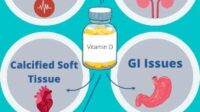
– Kidney strain, including kidney stones in some cases

Even the most health-conscious supplement routines can become accidental experiments if blood levels are never checked and multiple sources stack without awareness.
The 5,000 IU Question: Dose vs. Individual Biology
At 5,000 IU per day, many people wonder whether toxicity is inevitable. It isn’t. The risk is influenced by baseline vitamin D status. Someone deficient may respond robustly to supplementation and stabilize without overshooting. Another person with already-high 25-hydroxyvitamin D (the primary marker) might reach higher concentrations quickly.
In other words, the same dose can yield different outcomes. Genetics, body composition, liver metabolism, renal function, and concurrent medications all matter. For example, conditions that predispose to hypercalcemia—such as certain granulomatous diseases or disorders affecting calcium metabolism—can lower the tolerance for vitamin D.
A practical way to frame it: toxicity is not purely “dose-driven.” It is “dose plus context.”
What the Evidence Suggests: Serum Levels and Safety Thresholds
Most clinical reasoning centers on 25(OH)D, the circulating form used to estimate vitamin D stores. Toxicity risk increases when levels climb and calcium rises. Many guideline approaches set a cautious upper limit for routine intake, often far below 5,000 IU, while also acknowledging that higher doses may be used temporarily under supervision.
Evidence reviews consistently highlight that toxicity usually appears in scenarios involving much higher intakes or prolonged high-dose use, particularly when monitoring is absent. That said, rare cases can occur when individuals are particularly sensitive, already have high baseline levels, or have other contributing medical factors.
This is where the fascination begins: the line between “therapeutic” and “excessive” can look surprisingly thin on paper, yet in reality it behaves like a moving target, tracked by lab values rather than feelings.
Common Observation: “Higher IU Must Mean Toxicity”
A widespread observation—almost an instinct—is that if 5,000 IU sounds like “a lot,” it must therefore be dangerous. It’s a compelling logic, but it collapses under biological complexity.
Vitamin D is fat-soluble, which means it can accumulate. However, accumulation does not automatically equal toxicity. The body still uses checks: calcium regulation, kidney handling of minerals, and feedback mechanisms involving hormones that modulate vitamin D activation.
In people with deficiency, 5,000 IU may simply bring levels toward an adequate range. In people who are not deficient—or who already receive vitamin D from sunlight and fortified foods—5,000 IU may push them closer to thresholds. The same number can land differently depending on the starting point.
So, rather than asking whether 5,000 IU is “too toxic,” the more evidence-aligned question is: what does it do to your blood levels over time?
Deeper Reasons People Keep Tracking the Numbers
Why does this topic keep resurfacing in wellness circles? Partly because vitamin D is both mysterious and measurable. It feels intangible—linked to mood, immunity, and bone health—yet it produces concrete lab outcomes. That combination tempts people to treat IU as a simple lever.
But the lever is better understood as an interactive system. Sun exposure, seasonal variation, dietary patterns, and supplement brands can subtly shift the outcome. Even the timing and consistency of dosing influence the pattern of accumulation.
Another reason is the emotional rhythm of health optimization. People want certainty. But with vitamin D, certainty is usually gained through monitoring rather than assumptions.
Other Factors That Increase Toxicity Risk
Even if 5,000 IU is reasonable for some, several conditions can elevate risk. These include:
– Already high baseline vitamin D (high 25(OH)D before starting)
– Additional vitamin D stacking from multiple supplements or fortified products
– Medical conditions affecting calcium balance (e.g., hyperparathyroidism, certain granulomatous diseases)
– Kidney impairment, which can alter mineral clearance
– Medications that influence calcium handling or vitamin D metabolism
There’s also the quiet variable of environmental exposure. Some individuals combine high-dose supplements with significant sun exposure. The cumulative effect can be greater than what’s estimated from IU alone.
How to Evaluate Whether 5,000 IU Is Safe for You
The most evidence-driven approach is not “guesswork,” but measurement. If someone chooses to take around 5,000 IU daily, a rational plan often includes baseline labs and follow-up testing. The key markers typically include:
– 25(OH)D (vitamin D status)
– Serum calcium (early sign of imbalance)
– Sometimes creatinine or kidney-related measures, depending on context
Timing matters. Testing after an interval allows the body to reach a steadier state. Symptoms—like unusual thirst, frequent urination, constipation, or mental fog—should not be dismissed. They can be signals that calcium regulation is struggling.
Long sentences can hide caution in them, but the principle is simple: monitoring converts uncertainty into clarity.
Signs of Possible Excess: When to Stop and Seek Guidance
If vitamin D is truly causing toxicity, symptoms often cluster around calcium excess. Common red flags include persistent gastrointestinal upset, profound fatigue, confusion, or dehydration-like patterns. Kidney stones, flank pain, or decreased urine output warrant prompt evaluation.
Because these symptoms overlap with many other conditions, self-diagnosis can mislead. Still, lab confirmation is the decisive step. If hypercalcemia is suspected, stopping supplementation and seeking medical guidance is prudent.
Vitamin D is not meant to be “felt” as a toxicity in real time. The body’s feedback is biochemical first, subjective later.
Conclusion: A Measured Answer to a High-Voltage Question
So, can 5,000 IU daily cause toxicity? It can, but it is not the typical outcome for everyone. The risk depends on baseline vitamin D status, how long the dose is maintained, whether other sources are contributing, and whether health conditions affect calcium regulation.
The most reliable “evidence review” conclusion is that toxicity is less about the number alone and more about the trajectory of blood levels. With thoughtful monitoring, appropriate medical context, and awareness of stacking risks, many people can take higher-than-typical doses without crossing into harmful territory. Without those safeguards, the fascination with IU can become a gamble.