It’s a familiar pattern: you diligently take vitamin D, you even get regular sunshine, yet your blood levels remain stubbornly low—or fluctuate in a way that feels strangely uncooperative. Many people quietly blame lifestyle, body weight, or “bad luck.” But there is a more intricate possibility, one that begins with your blueprint at the molecular level. Your genetics—especially variations in the VDR gene (vitamin D receptor)—can influence how effectively vitamin D is absorbed, processed, and translated into usable biological signals. In other words, the problem may not be only “getting vitamin D in.” It may be how your cells interpret it.
VDR: The Cellular Switchboard for Vitamin D
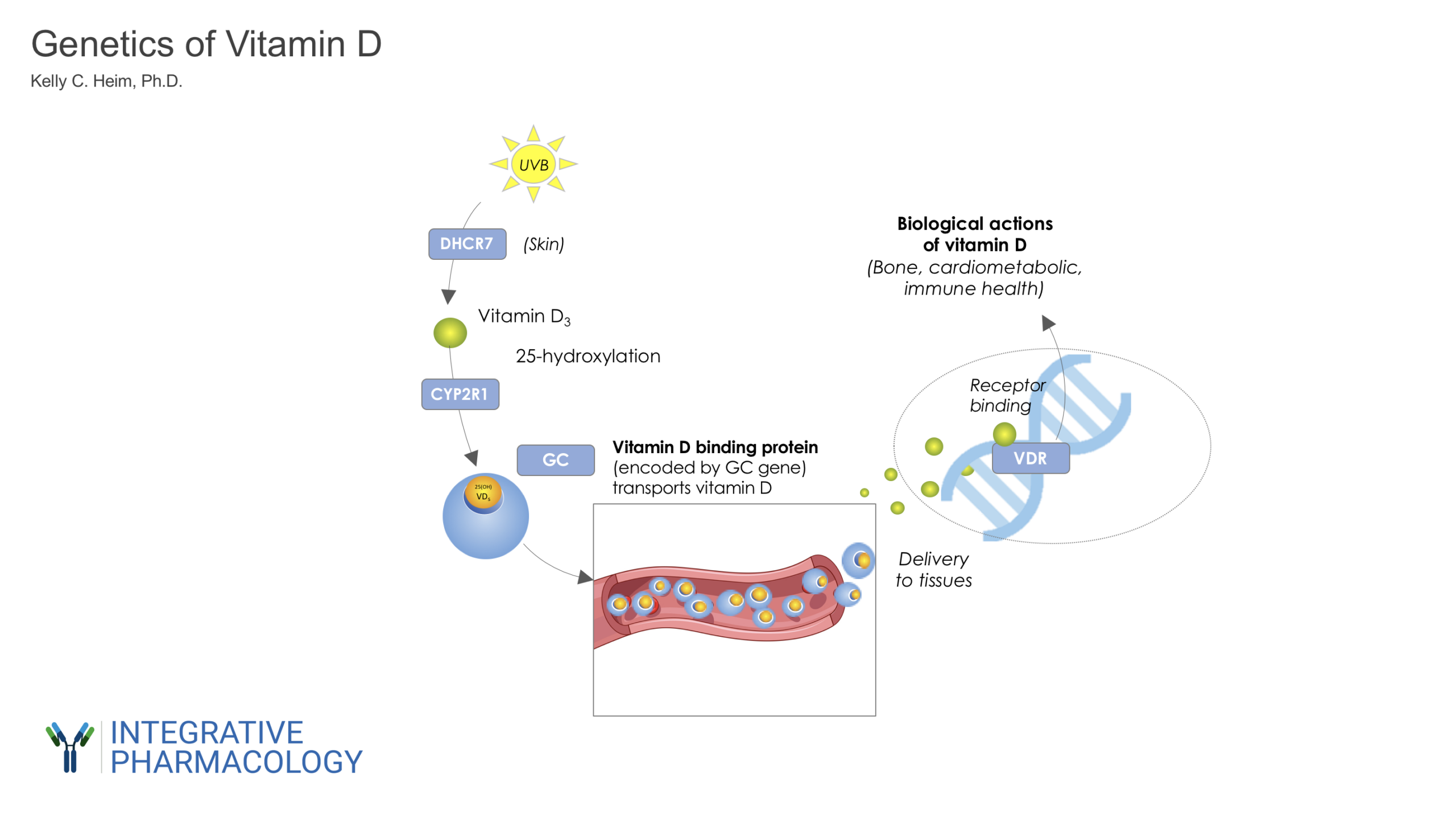
Vitamin D doesn’t act like a simple nutrient that merely circulates and helps wherever it’s needed. Instead, it behaves more like a regulatory messenger. Once vitamin D is transformed into its active forms, it must dock onto a receptor—the vitamin D receptor (VDR)—inside target cells. Think of VDR as a cellular switchboard operator. Without the right wiring (or with wiring that behaves slightly differently), the signal can be muffled.
Genetic variants in the VDR gene may alter receptor quantity, receptor sensitivity, or the efficiency of downstream signaling. When this happens, vitamin D may still be present in the bloodstream, yet your body’s vitamin D “response machinery” may underperform. That creates the paradox: vitamin D intake appears high, but biological outcomes remain limited, and lab results can stay unimpressive.

Absorption Isn’t the Whole Story: “Low Levels” Can Be a Misleading Clue
Most people assume poor vitamin D status always means poor absorption in the gut. Sometimes that is true. Yet genetics can complicate the narrative. A person might absorb vitamin D reasonably well, but still show low measured levels because of differences in transport, metabolism, or utilization.
VDR polymorphisms can indirectly affect the broader metabolic ecosystem. If signaling through VDR influences the expression of proteins involved in vitamin D trafficking or clearance, blood concentrations may drift downward. In this setting, the lab number becomes less like a scoreboard of absorption and more like a weather report of systemic physiology.
That’s why the common observation—“I take vitamin D, nothing changes”—can hint at deeper mechanisms. It may be less about the initial entry and more about the molecular handshake between vitamin D and cellular machinery.
How Genetic Variants Can Alter Receptor Expression and Responsiveness
Not all VDR variants are equal, and their effects can be subtle. Some polymorphisms may reduce receptor expression on cell surfaces or within nuclei. Others may shift how well the receptor binds its ligand—the active vitamin D metabolite. Binding efficiency matters. Even small differences can change the amplitude of gene regulation.
When VDR responsiveness is diminished, the body might compensate by adjusting metabolic pathways. Compensation can take time. It can also be incomplete. The result may look like persistent insufficiency, especially if the person’s vitamin D intake is modest or their body’s vitamin D requirements are higher due to age, inflammatory tone, or other hormonal influences.
Biologically, this can be described as a change in “signal transduction gain.” With lower gain, the same input produces a weaker output. Your vitamin D may be present, but the cellular message arrives in a muted form.
Vitamin D Metabolism: VDR Polymorphisms Interlock with Other Genes
Vitamin D’s journey involves multiple steps: skin synthesis, hepatic conversion, renal activation, and finally cellular action. The VDR gene sits near the end of this cascade, but it does not act in isolation. Other genes—such as those involved in vitamin D binding, hydroxylation, and transport—can work alongside VDR variants to shape the final picture.
Imagine a relay race. If the last runner (VDR-mediated response) trips, the whole event feels like the first runner failed—even if the early handoffs were smooth. In real physiology, gene networks behave like interlocking gears. A VDR variant might amplify the impact of otherwise moderate differences elsewhere.
This is where deeper fascination emerges. Genetics rarely creates a single, dramatic defect. More often, it creates a landscape of slightly shifted probabilities. Those probabilities accumulate, and the outcome becomes visible in bloodwork and symptoms.
Why It Can Feel “Genetic” Even When Your Lifestyle Is Perfect
People often respond to low vitamin D status with a burst of effort: more supplementation, more careful dosing, more time outdoors. Yet some individuals experience limited improvement. That pattern can be frustrating, but it can also be a clue that the body’s regulatory logic is different.
For carriers of certain VDR polymorphisms, the receptor-level response may set a ceiling on how effectively vitamin D signals can be used. The body might still raise circulating vitamin D after supplementation, but the downstream effects—gene regulation related to immune function, calcium handling, and muscle performance—can lag behind expectations.
And because vitamin D is tightly connected to calcium homeostasis, vitamin D “insufficiency” can manifest with musculoskeletal discomfort, fatigue, or subtle changes in strength and recovery—though these symptoms are not exclusive to vitamin D and should not be treated as a diagnosis.
Skin Synthesis, Bioavailability, and the VDR Feedback Loop
Sunlight is a powerful source of vitamin D, but it is influenced by latitude, season, skin pigmentation, sunscreen use, and body composition. Yet even when exposure is optimized, VDR genetics can still influence the final outcome.
There is also the possibility of feedback regulation. VDR activity participates in regulating pathways that relate to inflammation and immune signaling. If VDR-mediated signaling is altered, it may influence the inflammatory environment. Inflammation can, in turn, shift how tissues handle nutrients and metabolites, including vitamin D. The system becomes less linear, more dynamic—like a river shaped by both rocks and tides.
This is why two people with the same supplement dose can experience different results. Genetics can change not only receptor function, but also the environmental context in which vitamin D acts.
What About “Absorption” in the Gut?
Your gut is involved in vitamin D uptake, and vitamin D must enter circulation before it can be converted and used. However, VDR primarily influences cellular vitamin D action rather than gut transport mechanisms directly. Still, VDR signaling can affect the expression of proteins tied to calcium transport and intestinal function. When these pathways differ due to genetic variants, the net effect can appear as impaired “absorption,” even if the initial uptake was adequate.
So the sensation—“I can’t absorb vitamin D”—may represent a broader physiological experience: how vitamin D is retained, utilized, and translated into functional outcomes. Genetics can transform the meaning of the word “absorption” from a single step to an integrated process.
That is a crucial distinction. It explains why someone can have improved intake and yet remain metabolically unconvinced by vitamin D.
Deeper Clues: Symptoms, Lab Patterns, and Genetic Nuance
Interpreting vitamin D status is rarely as simple as chasing a single number. The most informative blood markers often include 25(OH)D (the common circulating form) and, depending on clinical context, markers related to calcium metabolism. Genetic context can influence the relationship between 25(OH)D levels and clinical outcomes.
Someone with a VDR variant might show a modest improvement in 25(OH)D but still experience persistent symptoms—suggesting that receptor-level signaling remains suboptimal. Conversely, another person could have a lower lab value yet experience better functional outcomes if their receptor responsiveness is intact.
This doesn’t mean one lab reading is meaningless. It means genetics can change what the reading predicts. Your body can be accurate in measuring vitamin D while still being different in interpreting it.
Turning Knowledge into Action: A Personalized Approach
If VDR genetics could be influencing vitamin D response, a thoughtful approach matters. Rather than repeatedly increasing doses without a plan, it’s smarter to coordinate supplementation with monitoring and a broader view of metabolism. Clinicians often consider baseline vitamin D, dietary intake, sun exposure, body composition, kidney function, and concurrent medications that affect vitamin D handling.
Genetic insight can encourage patience and precision. If receptor sensitivity is reduced, the goal may shift from simply raising vitamin D to achieving effective downstream signaling and maintaining adequate calcium balance.
In practice, this can include structured retesting, dose adjustments under supervision, and attention to related nutrients like magnesium and vitamin K (each interacts with calcium regulation and metabolic pathways, though they are not direct substitutes for vitamin D). The overarching principle is coherence: aligning inputs with your physiology’s unique interpretive style.
The Fascination Beneath the Frustration
Genetics doesn’t remove agency. It reframes it. When vitamin D seems blocked, the “why” can be both ordinary and extraordinary. Ordinary, because lifestyle and health conditions matter. Extraordinary, because a tiny variation in the VDR gene can influence how your body reads vitamin D’s molecular language.
So the next time vitamin D appears to resist your efforts, consider the possibility that the bottleneck is not only absorption. It may be the signal receiver itself. In that realization is a more hopeful pathway forward: if the mechanism is different, the strategy can be different too.