Gestational diabetes mellitus (GDM) can arrive quietly, often after the body has already adjusted to the metabolic choreography of pregnancy. The diagnosis may feel abrupt, yet the underlying risk is usually brewing beforehand—within inflammatory pathways, insulin signaling, and the delicate balance of energy use. Among the many topics being investigated, vitamin D has emerged as a compelling candidate because it intersects with glucose regulation, immune modulation, and placental function. Prevention research around vitamin D does not aim to promise a magic pill. Instead, it explores whether nudging vitamin D status upward—through supplementation, lifestyle pairing, and careful trial design—can measurably reduce GDM incidence or reshape its biochemical trajectory.
The biological rationale: why vitamin D could matter in pregnancy
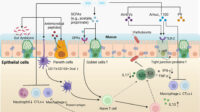
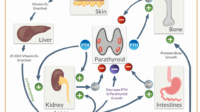
Vitamin D is often described as a nutrient, but in physiology it behaves more like a hormone with far-reaching signaling roles. During pregnancy, vitamin D receptors are present in multiple tissues, including the pancreas, adipose tissue, and the placenta. This matters because insulin resistance—central to GDM—can be influenced by immune tone and by how cells respond to insulin at the molecular level.
Several mechanistic threads intertwine. First, vitamin D is associated with modulation of inflammatory mediators. Chronic low-grade inflammation can blunt insulin signaling, turning glucose regulation into a slower, less efficient process. Second, vitamin D may affect pancreatic beta-cell function, supporting the capacity to secrete insulin when demand rises. Third, placental biology is relevant: the placenta influences maternal metabolism, and vitamin D signaling may help stabilize that relationship.
Not all individuals respond identically. Baseline vitamin D deficiency is common in many populations, and deficiency may prime the system toward dysregulated glucose handling. In that way, prevention research often starts with an important hypothesis: restoring adequate vitamin D levels early enough could lower the probability that pregnancy’s metabolic demands tip the body into GDM.

Prevention strategy spectrum: supplementation, timing, and dosing philosophies
When prevention is the goal, the design of the intervention becomes everything. Vitamin D research in pregnancy typically evaluates supplementation strategies—how much to give, when to start, and how to maintain consistent serum levels. The “timing thesis” is intuitive: earlier intervention may allow insulin pathways and placental adaptations to develop under more favorable biochemical conditions.
Some studies concentrate on standard supplementation regimens. Others explore tailored approaches based on measured vitamin D status. In practical terms, researchers may categorize participants by baseline deficiency and examine whether those with lower initial levels gain more benefit. That is not a trivial detail; it is a pattern-matching exercise between biology and dose-response behavior.
There is also the question of compliance. Vitamin D is fat-soluble; it may accumulate and persist, but adherence still influences outcomes. Trials often track follow-up measurements, ensuring that serum 25-hydroxyvitamin D levels—commonly used as the marker of vitamin D sufficiency—move in the intended direction.
Lifestyle as a partner, not a bystander
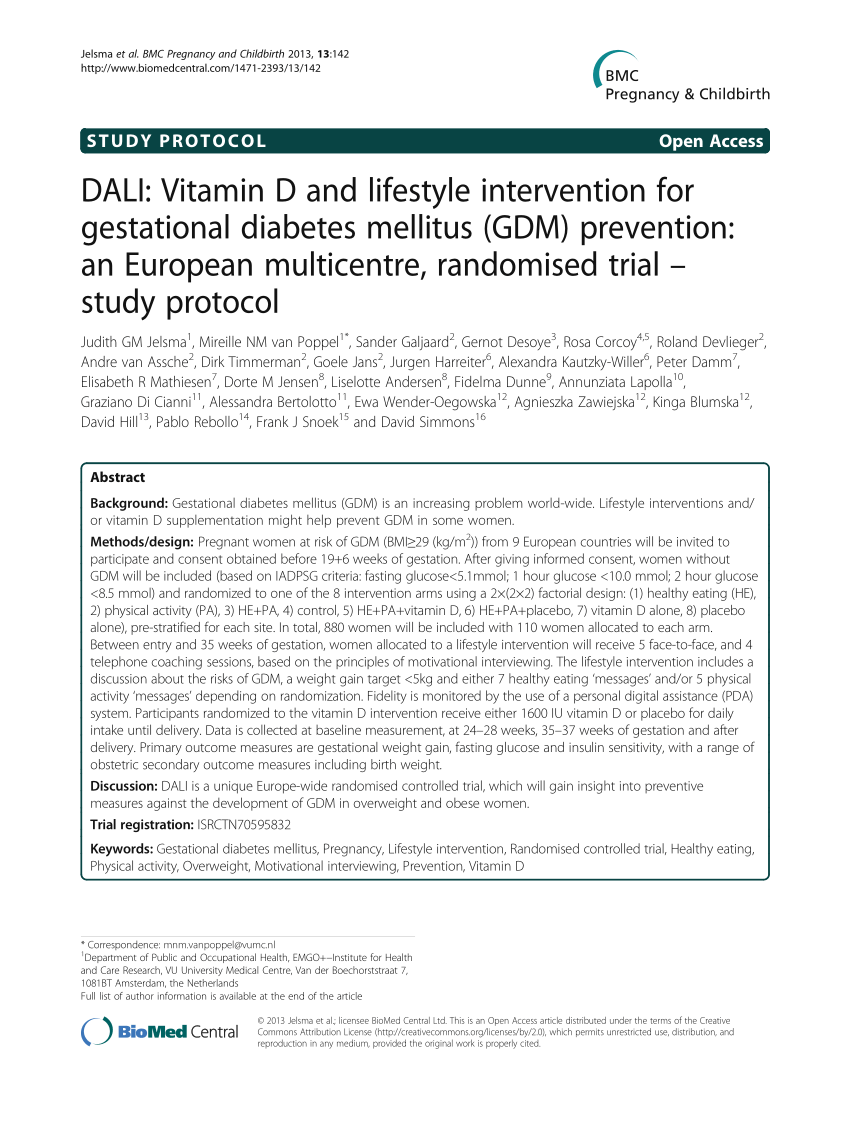
Vitamin D is not operating in isolation. Prevention research increasingly adopts a systems view—acknowledging that nutrition, physical activity, and dietary patterns affect insulin sensitivity and weight dynamics during pregnancy. When researchers pair vitamin D supplementation with lifestyle counseling, they test a pragmatic question: can synergy emerge between hormonal signaling and behavioral change?
In lifestyle-inclusive designs, the intervention may address caloric quality, carbohydrate distribution, and movement patterns. Some programs encourage structured physical activity or targeted dietary shifts. This is important because pregnancy is a moving target. Energy needs change trimester by trimester, and metabolic flexibility varies by individual.
Yet lifestyle programs introduce complexity. Behavioral interventions can vary in intensity and adherence across sites. That variation becomes a statistical challenge, but it also reflects real-world feasibility. A prevention approach that works only under ideal adherence may struggle to translate; a modest yet consistent effect could be more actionable.
Clinical endpoints: how researchers define “prevention”
In prevention trials, endpoints must be clinically meaningful. The central outcome is typically the incidence of GDM as determined by established diagnostic criteria—often during mid-to-late pregnancy. Researchers then evaluate whether vitamin D supplementation alters the likelihood of crossing the diagnostic threshold.
Beyond the headline outcome, many studies also examine intermediate markers: fasting glucose, insulin levels, indices of insulin resistance, and metabolic profiles that hint at the pathway to dysglycemia. This offers a more nuanced view. Even if the final diagnosis rate shifts only slightly, metabolic indicators may reveal earlier changes consistent with benefit.
Some prevention research also explores subgroups. For example, participants with higher baseline risk—such as those with prior glucose intolerance, elevated BMI, or family history of type 2 diabetes—may respond differently. Subgroup analysis, when performed responsibly, can guide future targeting of interventions.
Evidence types that strengthen or challenge the story
Prevention research does not rely on a single scientific lens. Randomized trials test causality more directly than observational studies. Protocol-driven multicenter designs emphasize reproducibility across diverse settings and populations, improving generalizability.
Meanwhile, genetic approaches offer a distinct perspective. Mendelian randomization studies use inherited genetic variants as proxies to infer whether vitamin D levels have a causal relationship with GDM risk. This method can help address confounding and reverse causation—two perennial issues in nutrition research. Bidirectional designs add another layer by exploring whether the relationship runs one way or both ways, recognizing that pregnancy-related metabolic shifts could also influence vitamin D status.
When multiple evidence types converge—trial outcomes aligning with genetic inference and biologically plausible mechanisms—confidence grows. Divergent findings can still be valuable, prompting refinement of dose, timing, and population selection.
Interpreting results without overpromising
Readers often want a simple conclusion: does vitamin D prevent GDM? The most responsible answer is conditional. Prevention research tends to find patterns that depend on baseline vitamin D status, adherence, and study specifics. Some trials suggest beneficial effects; others show null or mixed outcomes. These differences are not merely statistical noise; they often reflect how interventions were implemented.
For example, a trial that enrolls mostly vitamin D–sufficient participants may struggle to detect improvement, because there is less “room” for biochemical correction. Conversely, studies including a larger fraction of deficient participants may see a more pronounced effect. Dosing matters too. If doses are insufficient to meaningfully raise serum levels, the hypothesized biological pathway may not fully engage.
Another interpretive layer involves assay consistency and timing of measurements. Vitamin D levels fluctuate with season, diet, sun exposure, and individual metabolism. Therefore, a trial’s schedule for blood draws can influence the observed relationship between supplementation and outcome.
Safety, tolerability, and practical considerations in pregnancy
Safety is never a footnote in gestational research. Vitamin D supplementation is generally well tolerated when dosed appropriately, but prevention research still monitors adverse events and serum levels to avoid excessive concentrations. The goal is sufficiency—not excess.
Clinicians and researchers also consider how supplementation integrates with prenatal care routines. Some participants may already take over-the-counter vitamin D, while others may not. Trial designs often handle this with inclusion criteria, medication logs, or supplementation standardization.
A practical prevention plan also considers how often serum levels are measured. Frequent monitoring can improve precision but may reduce feasibility in routine care. Prevention research therefore explores a balance between scientific rigor and implementation pragmatism.
Who might benefit most? risk stratification and personalization
Not every pregnancy is the same metabolic narrative. Vitamin D prevention strategies may be most effective for individuals with low baseline vitamin D, higher baseline risk for GDM, or limited sun exposure. Risk stratification helps avoid one-size-fits-all assumptions.
Personalization can also be informed by genetic and clinical context. While genetic findings are not yet a routine clinical tool everywhere, they can guide hypotheses about causal pathways. In the future, a combined risk model—incorporating vitamin D status, metabolic history, and pregnancy factors—could identify those most likely to benefit from early supplementation.
Future research directions: refining the unanswered questions
The next wave of prevention research is likely to sharpen its instruments. Trials may compare different dosing regimens more explicitly, test earlier versus later start times, and evaluate whether lifestyle pairing enhances or dilutes vitamin D’s specific contribution.
Researchers may also refine outcomes beyond GDM diagnosis alone—incorporating detailed metabolic phenotyping and exploring placental biomarkers. Another promising direction is the study of temporal patterns: how changes in vitamin D levels during pregnancy correlate with emerging insulin resistance signals.
In short, prevention research is moving from the broad question of “vitamin D helps?” toward the more sophisticated question of “for whom, when, and under what conditions does vitamin D matter most?”
Takeaway: prevention as a measured, evidence-informed pathway
Vitamin D and GDM prevention research is not an all-or-nothing story. It is a carefully evolving narrative, built from trials, mechanistic reasoning, and complementary genetic evidence. The central promise is plausible: adequate vitamin D may support metabolic stability through immunomodulatory and insulin-signaling pathways, particularly in pregnancies beginning with insufficient vitamin D.
At the same time, prevention is not merely a biochemical correction. It is a choreography involving diet quality, activity, weight dynamics, and clinical monitoring. The most compelling future approaches will likely blend supplementation with thoughtful risk stratification and real-world lifestyle feasibility—turning research insights into dependable, individualized prevention strategies.