It’s an everyday observation: people can take in calcium through food, yet their bodies don’t always handle it the same way. One month the numbers look steady, the next they drift; bones feel sturdier, then somehow not. The quiet orchestrator behind these fluctuations is often vitamin D, a hormone-like nutrient that turns intestinal calcium transport from a passive trickle into a carefully tuned influx. What’s fascinating is that the story isn’t only about absorption—it’s about timing, cell biology, and the subtle choreography of signals that decide how much calcium crosses the gut wall and when.
Vitamin D as a “Permission Slip” for Calcium Uptake
Calcium transport across the intestinal epithelium is often described as having two faces: a passive pathway that follows concentration gradients, and an active pathway that resembles a molecular relay race. Most people notice calcium uptake when dietary intake changes, but fewer notice the deeper lever: vitamin D regulates the active machinery. In other words, vitamin D doesn’t merely “increase calcium.” It grants intestinal cells permission to express the proteins required for efficient uptake. This makes transport more robust during times when the body needs calcium most—such as during growth or when dietary supply is inconsistent.
Even a small shift in vitamin D status can alter how aggressively enterocytes build their calcium-handling toolkit. The gut, which seems straightforward on the surface, behaves more like a responsive control system. Signals adjust receptor abundance. Transporters appear or retreat. Calcium is not simply admitted; it is processed.

The Two Pathways: Passive Diffusion Versus Active Transport
Calcium absorption begins with the simplest option: passive diffusion. When calcium in the intestinal lumen is high, some calcium crosses cell membranes without needing specialized proteins. However, passive diffusion is inconsistent across diets and physiological states. It cannot reliably meet demands when intake is modest or when the body requires rapid calcium acquisition.
The active pathway, in contrast, is vitamin D–dependent and highly regulated. It proceeds through a sequence: calcium enters the enterocyte, is shuttled within the cell, and exits into the bloodstream. This pathway is energetically and molecularly “expensive,” but it pays dividends in efficiency. Vitamin D determines whether enterocytes ramp up this system, making absorption predictable rather than accidental.
This is why a common observation—“I eat calcium, so why don’t I absorb enough?”—often leads back to vitamin D status. Dietary calcium can be present, yet the gut may be under-equipped.
Key Molecular Players: Channels, Chaperones, and Pumps
Active transcellular calcium transport hinges on a triad of functional roles.
1) Entry: Specialized calcium entry mechanisms, often described in relation to channel-like proteins, provide the first step of the relay. Without these, calcium struggles to cross the apical membrane.
2) Intracellular handling: Calcium-binding chaperones buffer and ferry calcium through the cytoplasm. This matters because free calcium is chemically reactive; unbuffered calcium can disturb signaling and enzyme activity. Chaperones act like stabilizing brokers, ensuring calcium arrives at its next destination without causing collateral biochemical chaos.
3) Exit: Calcium pumps and transporters on the basolateral side move calcium toward the bloodstream, where it becomes available for bone mineralization and other physiological duties.
Vitamin D influences the expression of these components. The result is a gut that behaves less like a sieve and more like a regulated gate.
From Sunlight to Hormone: The Journey That Ends in the Nucleus
Vitamin D’s role begins far away from the intestine. The molecule is synthesized in the skin (with sunlight as the catalyst), then converted in the liver and kidney into its biologically active form. This active form travels system-wide and eventually reaches intestinal cells, where it can modulate gene expression.
The “nuclear” aspect is a major reason this topic captivates scientists. Vitamin D is not just an immediate mediator. It reprograms the transcriptional landscape. That means changes unfold over hours to days—not instantly. You can’t always feel the effect in minutes, but you can observe the consequences when vitamin D is chronically inadequate or corrected.
In practical terms, this helps explain why some dietary calcium strategies fail when vitamin D is low. The gut may be waiting for the genetic instruction that turns absorption on.
Regulation by Parathyroid Hormone: A Feedback Loop With Teeth
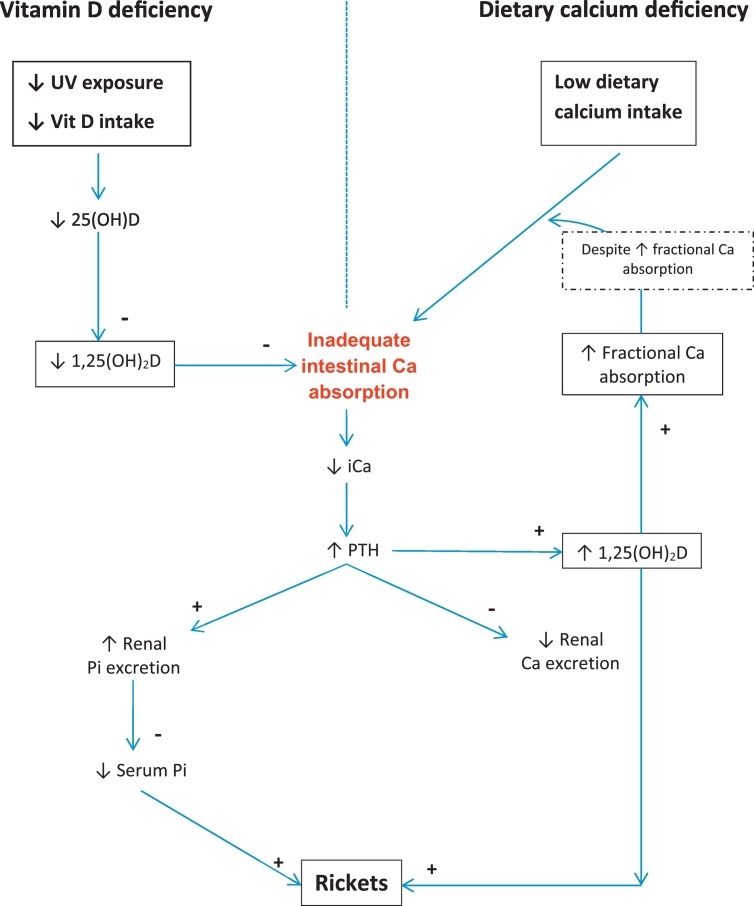
When calcium status drifts, the body activates countermeasures. Parathyroid hormone (PTH) is a central character in this drama. PTH stimulates mechanisms that preserve blood calcium, including effects on bone and kidney handling. It also indirectly influences vitamin D activity. The result is a feedback loop: low calcium triggers hormonal responses, which then adjust the vitamin D axis, which then adjusts intestinal absorption.
This layered regulation is why calcium homeostasis can feel stubborn. The body prioritizes blood calcium even when diets vary. Yet chronic imbalances—especially prolonged vitamin D insufficiency—can overwhelm these compensations, eventually revealing skeletal vulnerability.
Dietary Calcium, Vitamin D, and the Synergy Problem
A frequent misconception is that vitamin D and calcium operate independently. In reality, they form a practical alliance. Vitamin D improves the ability to absorb calcium, while sufficient dietary calcium provides substrate for absorption to matter. If dietary calcium is extremely low, even a “boosted” absorption capacity may not translate into adequate intake.
Conversely, high dietary calcium without adequate vitamin D may lead to partial absorption via passive diffusion, but the active pathway remains underutilized. The combined deficiency scenario—low vitamin D with low calcium—tends to be especially consequential.
That synergy is one reason vitamin D remains such a compelling research subject. It sits at the intersection of micronutrient biology, endocrine signaling, and real-world dietary patterns.
Clinical Relevance: When Transport Falters
When intestinal calcium transport is impaired, the outcomes are not merely numeric. They show up in function and structure. In children, insufficient vitamin D–mediated absorption can contribute to defective mineralization, often discussed under nutritional rickets. In adults, the consequences can shift toward osteomalacia and broader bone fragility.
What makes this clinically poignant is that the gut is often the earliest battlefield. Symptoms may appear late, but the transport deficit can begin early. Bones are resilient, yet they are not magic. When calcium delivery falters, mineral scaffolding becomes incomplete.
Thus, vitamin D’s intestinal role helps connect a quiet biochemical event—reduced active calcium transport—to visible structural outcomes.
Beyond Bones: Wider Implications of Calcium Absorption
Calcium isn’t only a bone-building mineral. It participates in muscle contraction, neural transmission, and intracellular signaling pathways. The intestine’s ability to supply calcium influences the body’s readiness for these processes.
This is why vitamin D fascinates researchers beyond the skeleton. The gut’s calcium transport capacity reverberates through systems. Even subtle variations in vitamin D status may influence neuromuscular performance and broader metabolic signaling, especially in populations at risk for deficiency.
Practical Considerations: Timing, Status, and Risk Factors
Vitamin D status depends on sunlight exposure, skin pigmentation, latitude, seasonality, dietary habits, body composition, and—importantly—absorption and metabolism. Some individuals need more than others simply because their baseline constraints are different.
Intestinal calcium transport responds to vitamin D over time. That means correction is not always instantaneous. Monitoring vitamin D status and ensuring sufficient dietary calcium can help align absorption capacity with physiological demand.
For a body that constantly negotiates “need” versus “availability,” vitamin D is a translator. It converts environmental input and nutrient intake into gene-level instructions that decide how effectively calcium traverses the gut barrier.
A Final Thread: Why This Mechanism Still Feels Surprising
At first glance, calcium absorption seems like a straightforward matter of eating enough. But vitamin D reveals a deeper logic: the intestine is not a passive conduit; it is a regulated organ whose molecular machinery can be tuned by endocrine signals. That combination—diet plus hormonal transcription plus cellular transport—creates a system both elegant and vulnerable.
When vitamin D is adequate, calcium transport becomes efficient, predictable, and supportive of long-term skeletal integrity. When it’s inadequate, the mismatch between intake and transport can quietly set the stage for structural consequences.
So the fascination persists, not because the story is complicated for its own sake, but because it shows how the body transforms a simple nutrient into an orchestrated physiological capability—one cell at a time, one molecular gate at a time.