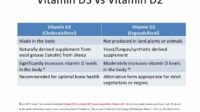
Walk into any U.S. pharmacy aisle and you’ll see vitamin D choices that seem deceptively similar—until you notice the suffixes. D2. D3. Each bottle promises “immune support,” “bone health,” and “better absorption,” yet the fine print tells a more complicated story. The question isn’t merely whether one form is “better.” It’s whether one form can be strategically superior for a particular goal, a particular patient profile, and a particular way of dosing.
Vitamin D: What Your Body Is Really Asking For
Vitamin D is often treated like a single nutrient, but it behaves more like a hormone precursor. Once ingested, it undergoes hepatic processing and then conversion steps that ultimately influence calcium absorption, skeletal remodeling, neuromuscular function, and immune signaling. Without adequate vitamin D status, the body compensates—sometimes quietly, sometimes with fatigue, muscle weakness, or bone density decline.
D2 and D3 both aim to replenish vitamin D stores, yet they begin with different molecular origins and, importantly, different metabolic behavior. Think of it as two keys that can open the same door, but that may fit the lock with different precision depending on how the door is built.
D2 vs D3: The Molecular Difference That Matters
Vitamin D3 (cholecalciferol) is typically derived from animal sources or produced via microbial fermentation that mimics natural pathways. Vitamin D2 (ergocalciferol) is commonly derived from yeast and fungal sources. That origin affects structural nuances and, in turn, how long each form tends to remain effective in circulation.
In everyday terms: both forms can raise blood 25-hydroxyvitamin D, but they don’t always do so with identical persistence. The duration of effect can influence whether a supplement feels “stronger” for maintenance or whether it offers smoother, longer-term leveling.
When D3 Often Takes the Lead
In many real-world supplementation scenarios, D3 is frequently favored for its higher potency persistence at maintaining serum 25(OH)D levels. Patients taking D3 often report fewer “roller-coaster” experiences—those periods where levels rise and then fall more quickly when adherence or dosing intervals are inconsistent.
D3 is also commonly available in a wide range of dosages, from modest daily amounts to higher-frequency regimens. That practical variety supports tailored protocols: daily stability for those who prefer routine, or intermittent dosing for those who need convenience without sacrificing continuity.
For pharmacists, the clinical question usually becomes: “Which formulation is more likely to keep a patient in the target range without frequent rebalancing?” Often, the answer points toward D3 for long-term consistency.
Is D2 Ever Superior? The Honest Answer: It Depends
D2 is not a “bad” form. It can be highly effective, especially when properly dosed and matched to the patient’s circumstances. “Superior” is a moving target. It can mean faster correction, longer duration, cost-effectiveness, better tolerability, or simply compatibility with a patient’s dietary and lifestyle priorities.
For some patients, D2 may be the most workable option—particularly when product availability, insurance coverage, or formulation preferences make D2 more accessible. A supplement that a person reliably takes can outperform a “better” supplement someone forgets.
In other words, D2 can be the superior choice when it wins the practical battle: adherence, consistency, and appropriate monitoring.
Bioavailability and the “Dose-Response” Question
Bioavailability isn’t only about how much of the nutrient is absorbed. It’s also about how the nutrient behaves after absorption—how it circulates, how it’s metabolized, and how effectively it supports vitamin D–dependent physiology. Two forms can absorb similarly yet still differ in downstream effects and duration.
Clinically, that’s where pharmacists consider the dose-response curve. If D2 requires higher or more frequent dosing to achieve the same level as D3, then “superiority” shifts. If D2 accomplishes goals efficiently for a specific regimen, then D2 may be the better tool for that job.
Think of it like two different ways to maintain room temperature: one system runs more steadily, another might require larger adjustments. Both can work; the best choice depends on the environment and the schedule.
Monitoring Matters: When Lab Work Changes the Equation
Serum 25(OH)D is the key marker most clinicians use to guide supplementation. Without periodic measurement, it’s easy to assume a supplement is doing its job. With monitoring, the choice becomes evidence-based.
Some patients start with deficiency and need correction, while others need maintenance. D2 and D3 can both serve either phase, but the target timeline and dosing strategy may differ. Monitoring clarifies whether the regimen is achieving adequate repletion without overshooting.
If you’re switching forms—say, from D2 to D3 due to supply or preference—repeat labs after an appropriate interval. That’s not overkill; it’s precision. Vitamin D is subtle: it affects multiple systems, and dosing errors can accumulate quietly over time.
Special Populations: Pregnancy, Older Adults, and Malabsorption
Not every body processes vitamin D the same way. Older adults often have reduced cutaneous synthesis capacity and may have altered absorption efficiency. Malabsorption syndromes, certain gastrointestinal conditions, and some medications can impair absorption.
In these groups, the “best form” may be less about theoretical superiority and more about achieving consistent serum levels despite absorption variability. D3 is often favored because it is widely used in protocols and tends to maintain levels effectively for many patients.
However, D2 can still be reasonable when it’s dosed appropriately and followed by monitoring. In practice, pharmacists consider risk, expected response time, and the feasibility of consistent intake.
Medications and Interactions: The Overlooked Variable
Vitamin D doesn’t exist in a vacuum. Anticonvulsants, glucocorticoids, certain antifungals, and medications that influence liver metabolism can change vitamin D dynamics. Additionally, when calcium supplementation enters the picture, the risk-benefit calculus shifts.
While both D2 and D3 can be used, pharmacists may adjust the plan based on interaction risk and the patient’s overall treatment profile. Sometimes the superior formulation is simply the one that the patient can maintain safely alongside their regimen.
Cost, Availability, and the Adherence Advantage
Here’s where a pharmacy mindset becomes crucial: the “best” supplement is the one the patient actually takes. D2 may be more affordable or easier to obtain depending on local inventory or formulary rules. D3 may be more standardized in certain product lines.
If cost reduces adherence, the advantage disappears. A well-monitored, consistently taken D2 regimen may outperform an inconsistent D3 approach. That’s not compromise—it’s clinical realism.
Long sentences can obscure simple truths, so here’s the short one: take what you can stick with, and verify results with labs.
Dosing Strategies: Daily, Weekly, and High-Load Approaches
Dosing schedules create another layer of complexity. D2 is commonly used in intermittent protocols in some settings, while D3 is frequently used for daily supplementation, though both can be adapted. High-load dosing can be useful in specific deficiency correction plans, but it requires careful follow-up.
Pharmacists think in terms of stability and safety. A regimen that spikes and then declines can be less desirable than one that gently sustains levels—particularly for patients with symptoms that track with vitamin D fluctuations.
Your best dosing strategy depends on baseline deficiency, target timeline, and your ability to attend follow-up monitoring.
Safety: Avoiding Hypervitaminosis D
Vitamin D toxicity is uncommon, but it is possible—especially with excessive dosing and prolonged use without monitoring. Toxicity tends to relate to high calcium levels, not just elevated vitamin D on paper.
Both D2 and D3 can contribute to excessive stores if overdosed. The key is aligning dose with lab targets and rechecking when appropriate. Pharmacists often emphasize that “natural” does not mean “limitless.” Even vitamins behave according to physiology.
If a patient has conditions that predispose to hypercalcemia or kidney issues, formulation choice should be integrated into a broader safety plan.
Content Readers Can Expect: Practical Guidance in Real Life
This topic can be approached in multiple content styles, each useful in a different moment. Some readers want a direct answer—“Is D2 ever better?”—and need a clear threshold for decision-making. Others need a narrative explanation that reduces confusion about lab markers, absorption, and physiology.
Some are looking for regimen templates: daily maintenance, weekly correction, or monitored transitions between forms. Others want to understand what questions to bring to a pharmacist or clinician, such as: when to recheck labs, how dosing schedule impacts outcomes, and which risks apply to their medication profile.
To meet those needs, the most valuable guidance connects the formulation choice to a plan, not merely a label.
How to Choose: A Pharmacist-Style Checklist
When deciding between D2 and D3, consider: your baseline 25(OH)D level, the clinical goal (correction versus maintenance), your ability to adhere to dosing, your access to follow-up labs, your medication list, and any malabsorption risk.
If you prefer a simple rule of thumb: D3 is often the default for long-term maintenance due to commonly observed persistence, while D2 can be a valid, even superior option when dosing practicality and monitoring align with your needs.

In the end, the “superiority” debate is less about brand-versus-brand and more about fit. Vitamin D2 can earn its place. Vitamin D3 often remains the cornerstone. The decisive factor is not the suffix alone—it’s the total strategy that keeps your body consistently supplied.